Adam Rowe is writing a new book about science fiction art
His first, Worlds Beyond Time: Sci-Fi Art of the 1970s, is a fantastic book
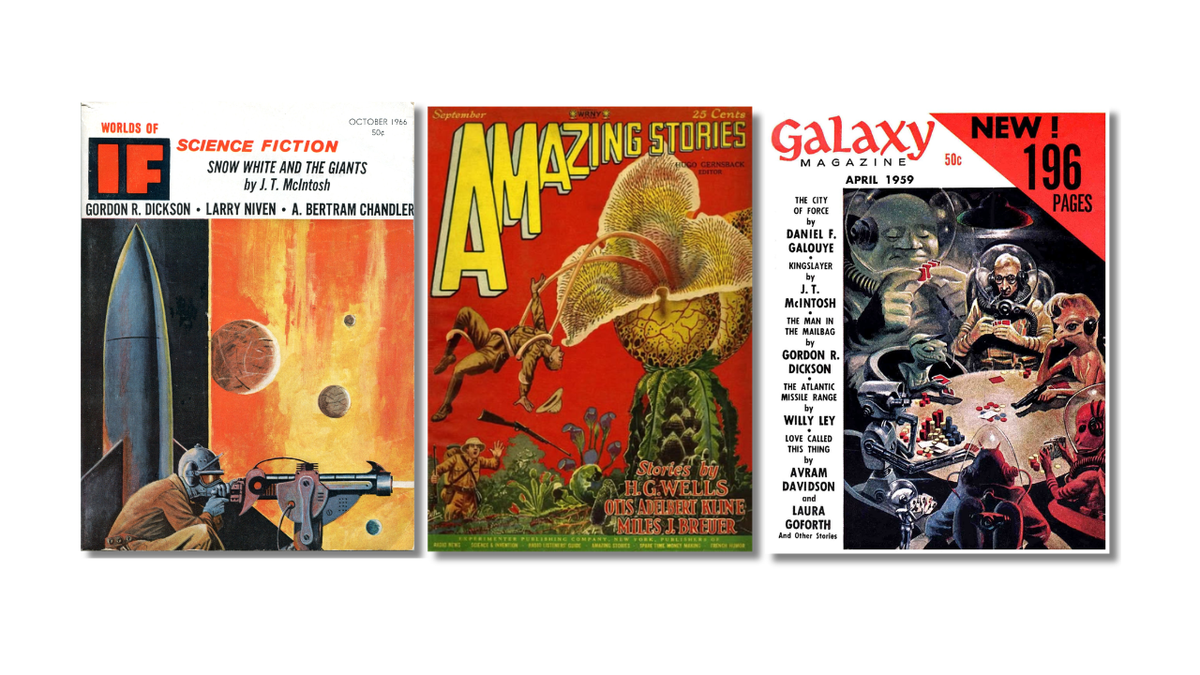
For a long time now, I've been following Adam Rowe and his efforts to spread the word about science fiction artwork via his 70's Sci-Fi Art newsletter and various social media channels. It's been a great way to get away from the chatter and noise of social media, and I've been introduced to so many fantastic artists through it in that time.
Back in 2023, he released his excellent book, Worlds Beyond Time: Sci-Fi Art of the 1970s, and I'm pleased to reveal that he's got an even more ambitious book coming about science fiction art!
He's still deciding on what to call it (The Art of the Future or The Art of Science Fiction) and it's due out in the fall of 2027 from UK-based published Frances Lincoln. Where his first book really looked at a sliver of the art of the 20th century, this one will "cover the whole history of science fiction illustration," and will "include about 200 artists."
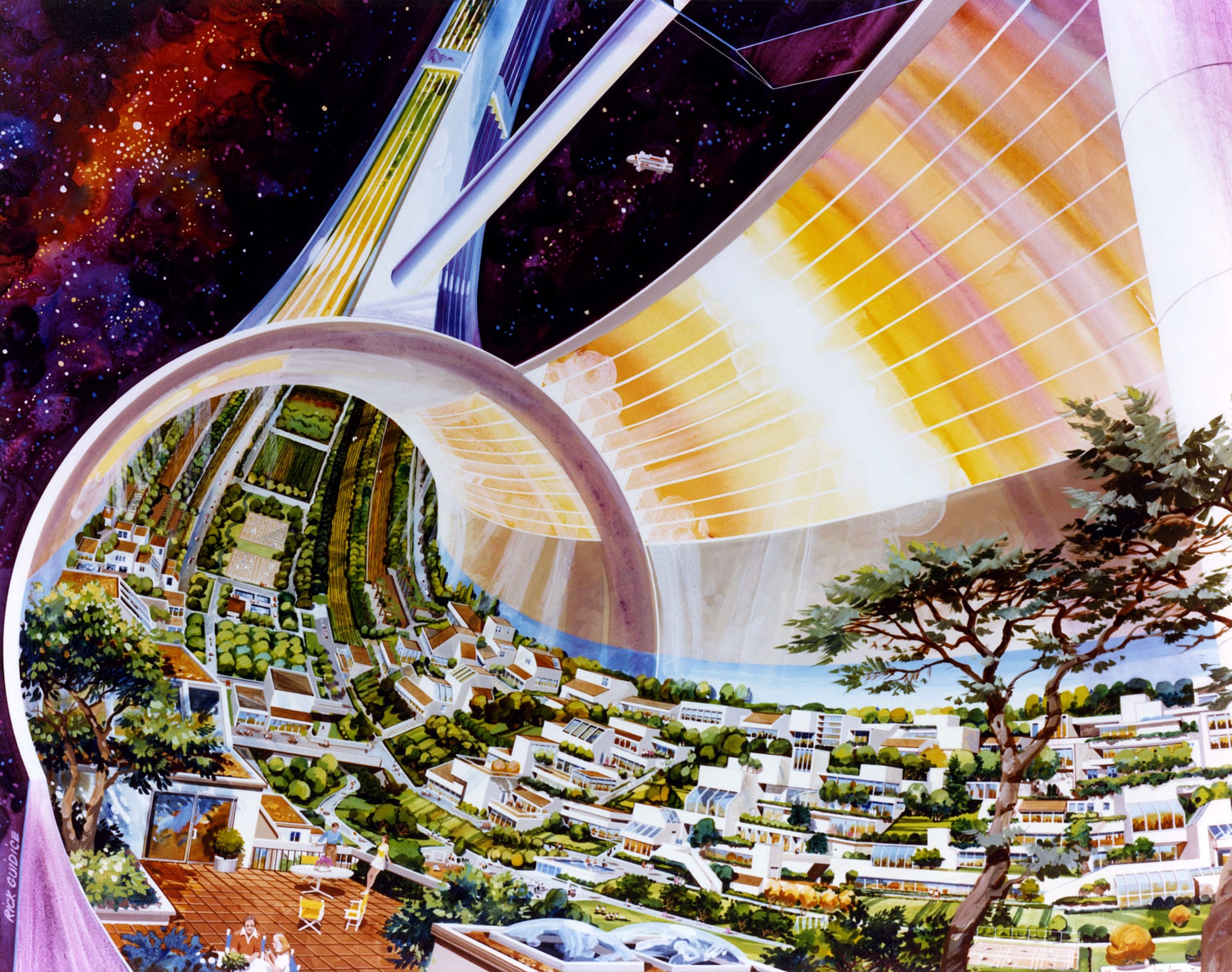
I spoke with him about his plans for the book and what he hopes to bring to readers.
Your first book was Worlds Beyond Time: what will this new book do that you couldn't do with that one?
There’s a great Leo Steinberg quote: “All art is infested by other art.” My first book took a really close look at one slice of science fiction illustration (mostly book covers, mostly 1960s-’80s), so this new one is pulling back to look at the web of influences that went into that era and emerged from it.
I’m covering such a broad area that it’s going to be impossible to include everything, so I’m approaching it more like an art smorgasbord that jumps around between centuries and mediums.
 Andrew Liptak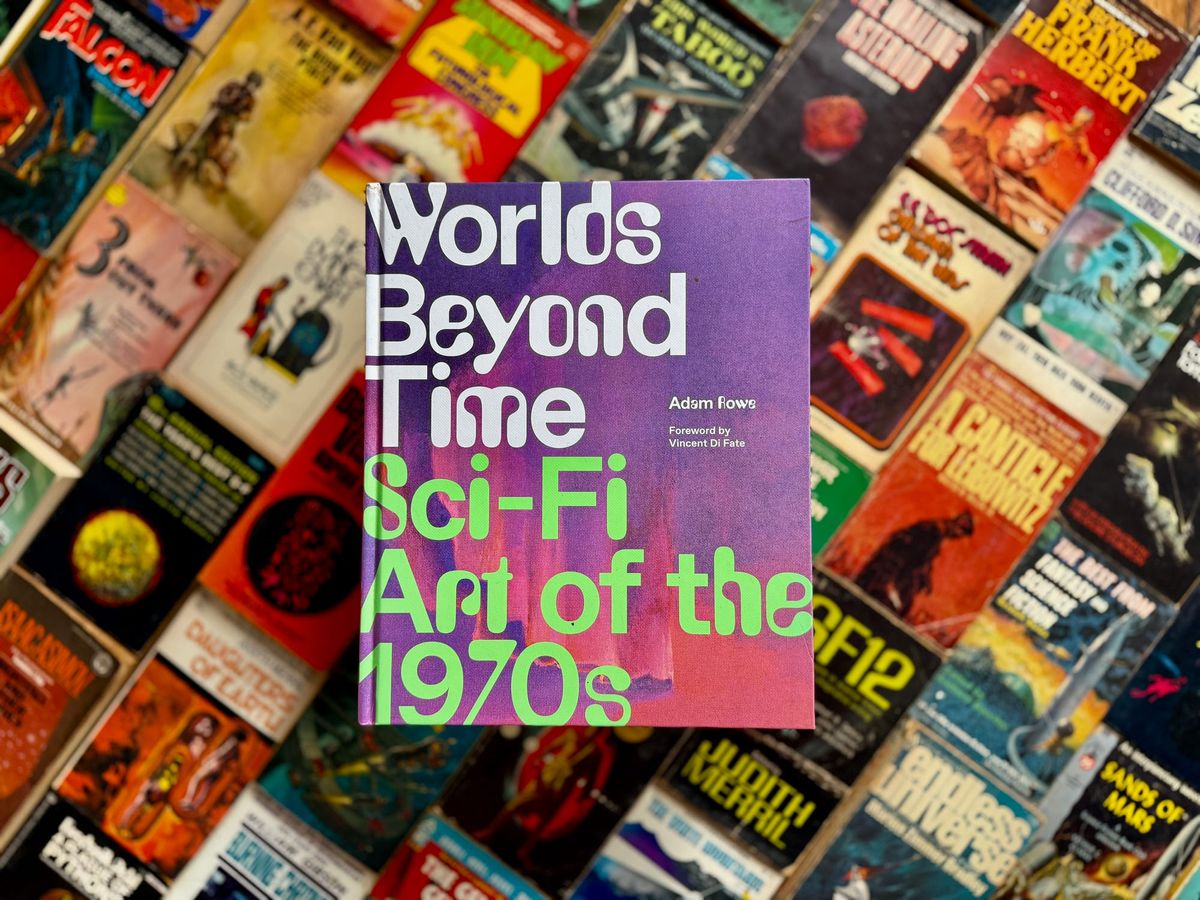
What are you most excited to explore with this book?
I think the variety is the most exciting! One day I’m looking through woodcuts from hundreds of years ago, and the next I’m trying to find the single most representative concept for the 2002 animated movie Treasure Planet.
But if we’re talking about the larger concepts, it’s also great to be able to explore what science fiction means and what it stands for. I love how the way we picture the future has evolved over the centuries. It’s a well-trod cliche to say that science fiction is about the present day, not the future, but it’s incredibly true.
When you told me that you were writing this, I assumed the focus was on books and magazines, but film and television really expands your scope quite a bit: how did the world of art for print publications inform the motion picture world, and vise versa?
The two industries swap artists and inspiration back and forth so much that it's hard to draw a big-picture takeaway from them - Ron Cobb, James Gurney, Ian McQue, many more. Plenty of matte artists or art directors have done book covers. Vincent Di Fate worked on the 60s Spider-Man cartoon.
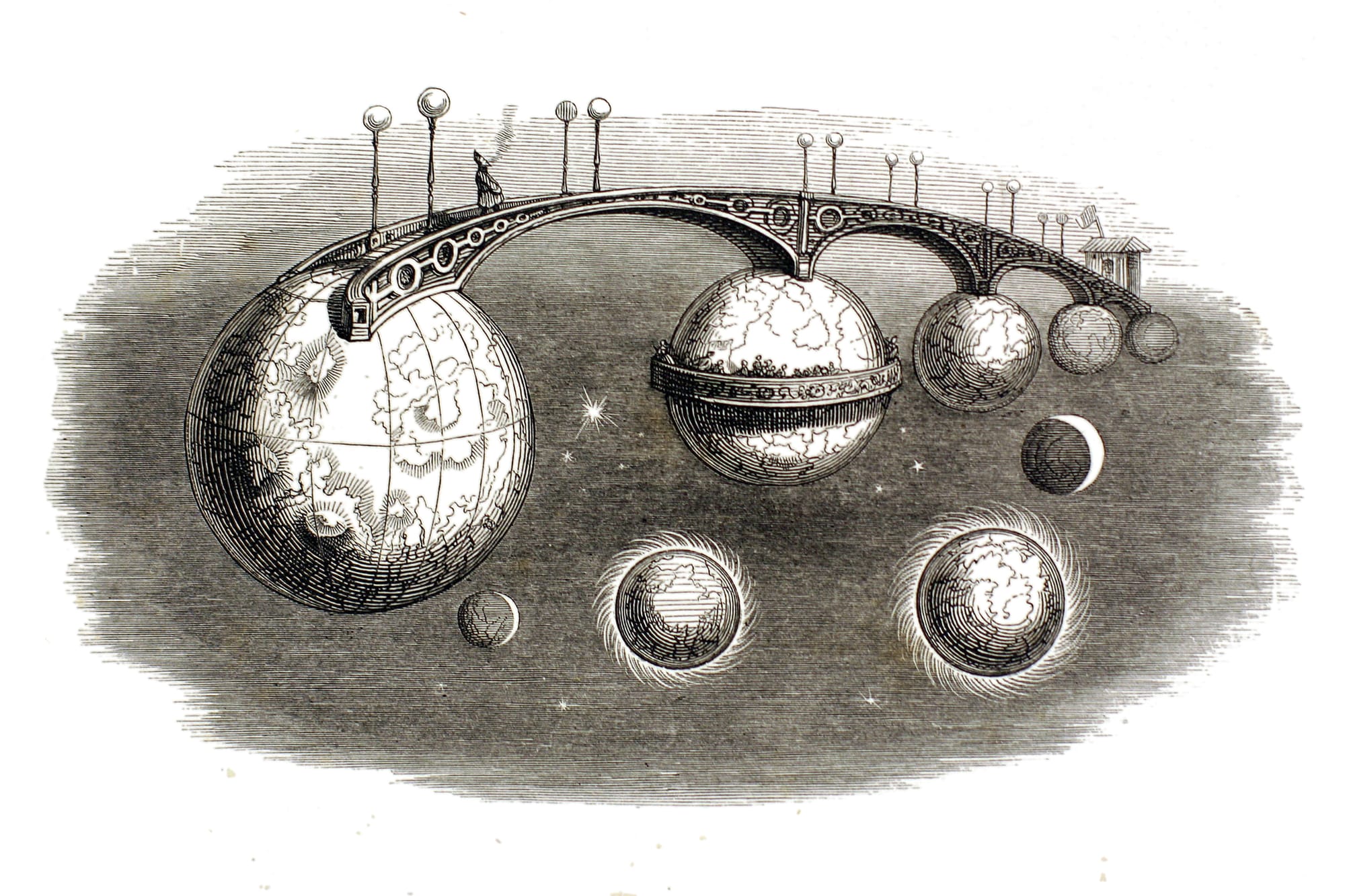
Films draw inspiration from well-known artists often, too, and have for a long time: He's not a science fiction artist, but Gustave Doré's work was a big influence on the original King Kong, which I find really fascinating.
You had started off with art in the 1970s and you've branched out quite a bit over the years: from your vantage point, what are the bigger changes and trends that science fiction art has gone through?
Just off the dome, I’d say it grew out of and blended with adventure and fantasy illustration prior to the 1910s and ’20s, when science fiction magazines began developing a lot of genre iconography. Then paperbacks took it in a more surreal direction in the ’50s and ’60s before pivoting to representational bright colors and sharp detail in the early ’70s for the genre’s more candy-coated era. That more or less lasted until the ’90s, when industry consolidation started reducing risks and digital art arrived.
Many other mediums are on their own trajectories, but influence and are influenced by books and magazines: Film concepts and posters, album art, comic books, and video game concepts.
SF art goes beyond covers: lots of science fiction magazines and fanzines included illustrations by pros and fans. How are you tackling this part of the story?
I’m planning to include some prozine and fanzine art, though not a ton – I have Cora Lee Healy and Alicia Austin on my list. And there’s also crossover from well-known pro artists, like Jack Gaughan, who won the first Hugo for Best Fan Art in 1967.
I’m writing the book now, so there’s still time to add art. If anyone wants to suggest any lesser-known artist or artwork, leave a comment or follow my newsletter!
Something I've always been fascinated by is how different countries market their books differently: the US and UK have very different styles. Why is that?
Hm, I’m not sure I have an informed opinion there. I think that publishers tend to jump on the same market trends at the same times, so perhaps the trends just don’t make it all the way across the pond. I don’t think I could break down specific differences between the markets. For example, Chris Foss was the biggest name in paperback science fiction in the UK when John Berkey was the biggest name in the US, but I don’t think that indicates the US market was significantly more into Berkey-style impressionistic spaceships than the UK. Although I guess it was a little more into them!
Is there one country's style or taste that you find yourself gravitating to?
Hm, if I had to highlight a specific country, France would be high on the list – Mœbius, Philippe Caza, Enki Bilal, and Roy Virgo all have their own unique ethereal vibes. But don’t ask me to choose! I love all my little artwork children equally!
How have you seen technology impact the art that is produced?
The biggest example that comes to mind are the ’90s Animorphs covers. At the time, David B. Mattingly was one of very few artists who both knew the only image-morphing software application that could start the process and could also paint the rest of the artwork.
I’m hoping to cover all the other big shifts in art styles, too, from airbrushing in the ’70s to fully digital art in the 2000s. I’d also love to feature a blacklight poster by Horace Mitchell, although I suspect my publisher won’t spring for using actual fluorescent ink.
How close to the modern day are you coming with this book? I'm curious how you'll approach the modern trend of typographic-driven covers.
As close as I can! I even have my eye on one cover to a crowdfunded RPG zine that won’t come out until next year.
There’s one typography-heavy cover that I’m hoping to include, and it should give me a way to talk about that trend briefly. To be honest, though, even that work still has more illustration than many of those types of covers! This may be an example of an area of science fiction art that won’t be strongly represented in the book, but will be one tidbit among many other flavors. Like I said, smorgasbord.
What are you hoping readers will take away from it?
I think art collections on broad topics like this one work best as primers. It's a big fast-paced collection of radically different artists. Hopefully it'll be a jumping-off point that allows a reader to suddenly realize they need to check out every Syd Mead art book in their local library system or pick up a copy of the Bilquis Evely-illustrated Supergirl: Woman of Tomorrow.
Thanks for reading. I'll be adding this book to my list of anticipated books for 2027.