Overcoming obstacles
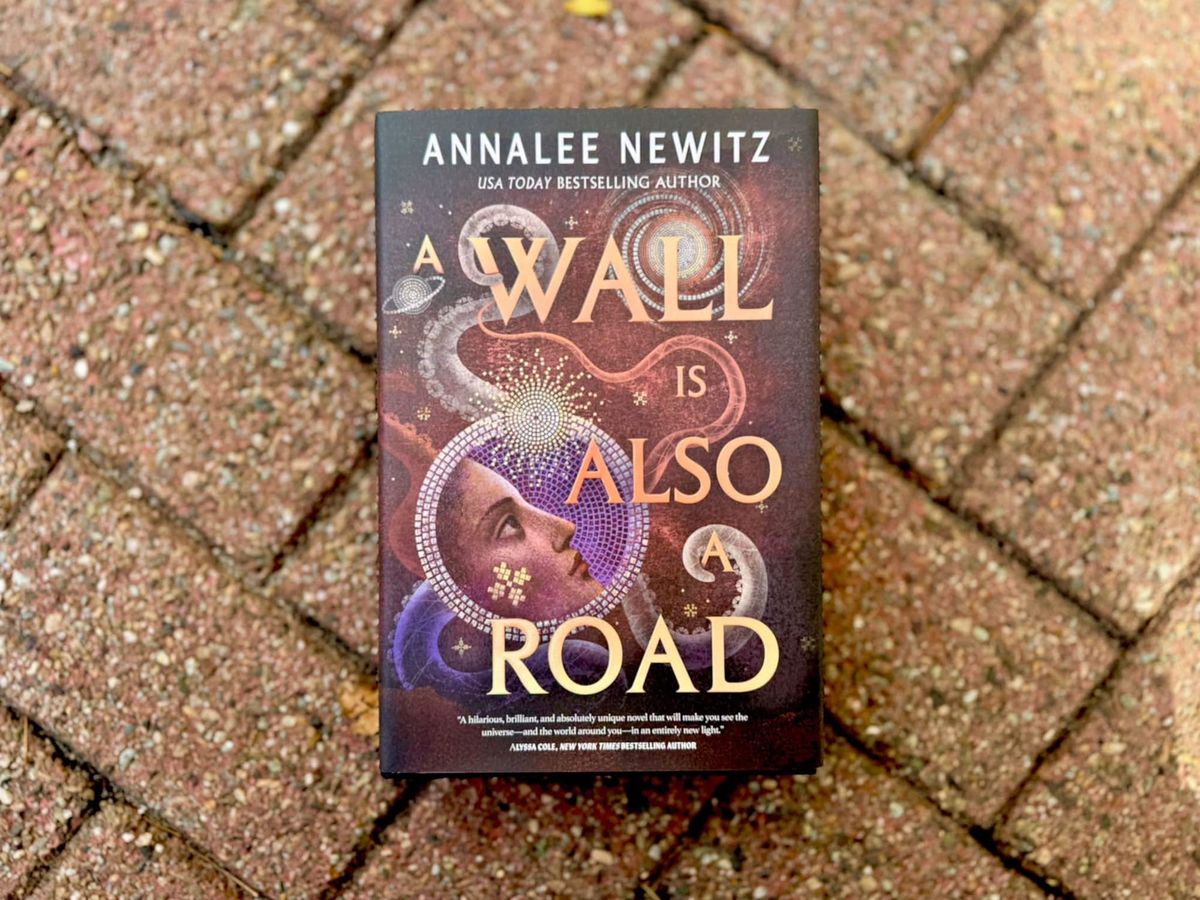
Annalee Newitz's A Wall is Also a Road is a delightful read about the power of community
Way back in 2009, Annalee Newitz brought me on as a Research Fellow for the site that they had recently founded over at Gawker Media, io9. I was very much a baby writer: I was in the middle of my time in graduate school, and they were intrigued by my interest in both science fiction and military history. During its heyday and under the guidance of Newitz and their partner and fellow science fiction author, Charlie Jane Anders, the site was an eclectic mashup of coverage. Real-world science and technology news was there alongside reviews and news of the latest science fiction novels or movies, and other odds and ends from the depths of the genre, from scholarly papers about the economics of interstellar civilizations t0 the best TV endings of all time.
Newitz has since moved on from io9, but their roster of novels and short stories carries along that same eclectic nature, from stories about crow intelligence and healthcare infrastructure to robots starting up a restaurant to how people recover after disasters to people pushing back against the megacorps terraforming planets, and quite a bit more.
Their latest novel, A Wall Is Also A Road, follows in that line, incorporating the various ideas that they've picked up along the way. It's a fascinating read that bounces between musing about power in academic circles to the wonder and excitement of exploration and discovery, love and relationships, and a solid dose of alien sex. All of that is intertwined in many of the themes that Newitz has been exploring in their work: the value of community and friendship in difficult times.
Some minor spoilers ahead
As in many of their books, Newitz relies on a suite of non-human characters, telling me that they had often felt like they had to "put on my 'normal human' mask in social situations," and that it felt "natural to write characters who wear literal human masks to hide their alien bodies and predilections."
Here, we're introduced to Gardenpath, a sentient, single-cell slime mold from from a distant civilization that calls themselves the Rational People who's engaged in a graduate science program in a university called the Rational Memory. Their curriculum entails five steps, the last of which requires them to make a novel discovery, something that will make them stand apart from the rest of their peers. Gardenpath has turned their eyes on a remote arm of the Milky Way – our own planet, where they believe that they've discovered signs of some sort of life in an area believed to be completely devoid of it.
As it turns out, there is life on Earth – Gardenpath makes the trip and is stunned to find that there's a complex system of multicellular life living on the planet, and they set about trying to understand it as they work on their initial exams. They settle on a study about the food networks around a particular volcano, and thanks to a special piece of equipment – a galaxysuit – they can pass as a human.
Gardenpath begins learning about the people they've encountered, first learning their language, and then slowly, their culture. They meet Murtis, a sex worker in Pompeii – a person referred to in real-world graffiti in the city's ruins – and falls in love with her. While this is happening, Gardenpath has to contend with some academic skullduggery at Rational Memory, as they and their fellow students come up against a malevolent senior instructor.
Over the course of several of their novels, Newitz has been playing with a major theme that I've really been taken with: when people come together to try and accomplish a task, they can do great things. In The Terraformers, the inhabitants of a terraformed planet called Sask-E find that the company behind the project is now working to gentrify them out of the only home they've ever known. In Automatic Noodle, a band of robots take over a ghost kitchen as they attempt to build a community in the face of hostility and recovery after a conflict. And in Four Lost Cities: A Secret History of the Urban Age, they look at the reasons for why cities come together and eventually fall apart.
Urbanization and collaboration go hand in hand, and in A Wall Is Also a Road, Newitz explores how people from very different walks of life come together. Newitz takes us through a fascinating journey as Gardenpath elects to study Earth's lifeforms, recognizes that it's covered in life and systems that are utterly alien to them, learns to communicate with the humans they encounter, and somehow through all of that, falls in love with Murtis and has to contend with their enormously unconventional relationship.
At the same time, in their academic life, Gardenpath and their classmates have to contend with a very different journey: the path to academic success, and all of the hurtles that entails. Academic life has been something of a focus for fantasy authors recently, and in some ways, this book mirrors some of the arguments that R.F. Kuang made in her recent novel Katabasis: that academia isn't the end-all and be-all of one's existence, and that it's far too easy for people to secure and abuse power within these systems.
Both halves of Gardenpath's life have echoes of this: as they work to understand the world that Murtis inhabits, they try and make sense of Roman society's gender imbalances and roles, while back in the Rational Memory, they're contending with an instructor who abuses and belittles them, while also trying to come to terms with the ethical natures of their research: how do you observe without interfering?
Through these arguments, it feels like Newitz's focus is on the way that we erect these systems and power structures throughout various points in our lives, and that while they sometimes have a practical purpose, they're often constructed by people looking to hold onto what power they've gained, often at the expense of progress or an individual's happiness.
It's a thoughtful take in a world that's defined by seemingly insurmountable systems, from the upper tiers of government to the random and sometimes counter-intuitive rules and procedures we have to endure day to day. At its core, it comes back to the idea that Newitz has been playing with over the last couple of books: sometimes, the trick to overcoming those obstacles is to face them with friends and family by your side.