Doctor's out
The long-running British series is going dark for the foreseeable future
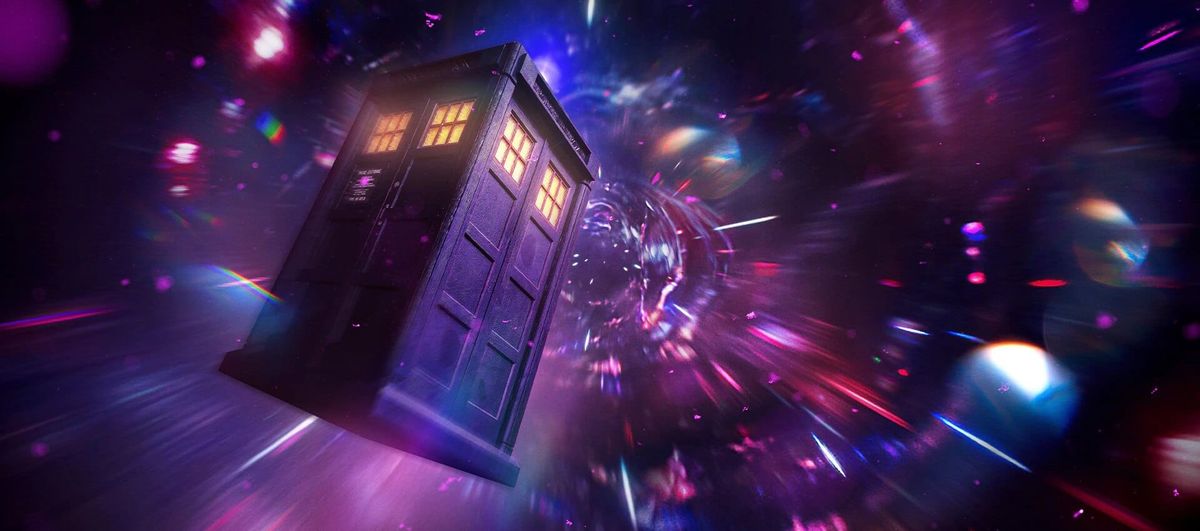
Earlier this week, the BBC made a big announcement: Doctor Who showrunner Russell T. Davies and production company Bad Wolf are stepping away from the long-running science fiction television series, nearly a year after the show was on the air. The BBC explains that a previously-greenlit Christmas special for 2026 has been cancelled, and that it would be putting the series "out to competitive tender this year" – inviting other production companies to take over the next iteration of the franchise. It's unclear when the Doctor and his companions will show up again on television screens.
Doctor Who is the longest-running science fiction television series in the world – it first aired on November 23rd, 1963, envisioned as a series that could teach British children concepts of science and history. It follows a central character – The Doctor – a time travelling alien known as a Time Lord who visits Earth in a time travelling spaceship known as the TARDIS (which looks like a British Police box), and who bounces around throughout time and space, often with a human companion or two.
Part of the show's longevity comes down to a central conceit: The Doctor periodically "regenerates", transforming into a new form – whenever the actor portraying him steps away and a replacement comes in. Over the show's long history, there have been 14 actors who've played the part, the most recent being Ncuti Gatwa, who portrayed the 15th Doctor. (David Tennant played the 10th and 12th iterations).
The series has gone on and off the air throughout its 60+ year run: it ran more or less continuously between 1963 and 1989, after which point the BBC cancelled it. In 1996, it returned briefly with a television movie in the US, and in 2003, the broadcaster announced that it would be reviving the series, with Davies tapped as showrunner. The series officially returned in 2005 with a new Doctor (Christopher Eccleston), and a new companion, Rose (Billie Piper).
The revival was a hit and kicked off a new era for the franchise, but Eccelston only lasted for a single season. In the following year, he was replaced by David Tennant. In the years that followed, there would be some additional departures: Davies left and was replaced by Stephen Moffat, while Matt Smith, Peter Capaldi, Jodie Whittaker, and Gatwa all put their own spins on the character.
The series brought several of those characters together for various anniversary episodes – Smith and companion Clara (Jenna Coleman) were joined by Tennant and Piper, along with John Hurt (who played a previously unseen version of the Doctor), while the 60th anniversary of the series was marked with a special episode marked the return of Tennant and Donna (Catherine Tate). The 50th anniversary also saw the release of An Adventure in Space and Time, a 90-minute drama about the show's creation and early years, which saw actor David Bradley portraying William Hartnell, who played the show's first Doctor (and which came with a gut-punch cameo from Tennant.)
While the revivals have been popular, the series has been experiencing some difficulties and challenges in recent years. Whittaker starred as the franchise's first female Doctor (which attracted criticism from predictable corners of the internet and social media), while Gatwa was the first Black actor to portray the character. Ratings for the series have consistently fallen since the show was relaunched in 2005, marked by changing viewer habits and a more polarized online fandom.
On the production side, the series has encountered other troubles: the BBC partnered with Disney+ in 2022, which would help the BBC distribute the series to audiences around the world and bring it to new heights as it's done with its other franchises. But that partnership quickly fizzled: in 2025, Disney left, with various people pointing to low ratings, cultural issues, and a general lack of enthusiasm from the company as reasons.
At the same time, Gatwa stepped away from the role, with the final episode ending on a moment where he regenerates into what appears to be Rose – Billie Piper's companion to the 9th Doctor.
With the collapse of the show's ratings, Disney's departure, and the lack of a new Doctor, it seems that Davis, Bad Wolf, and the BBC just didn't have a plan for where to take the character and the franchise. All of those factors point to a need for the BBC to make some sort of change to the franchise, because it doesn't appear that it's resonating with viewers in the way that it did two decades ago.
In a new report, Deadline spoke with a handful of British producers, who pointed out that there are a considerable number of challenges that anyone would face jumping into the franchise, ranging from said company not owning the rights, and funding.
I've been an off-and-on fan of the series since it restarted back in 2005 – I've always thought that it had moments of greatness in between dull or tedious episodes, and eventually gave up watching because of how uneven I found it, and then found that it was just hard to jump back in. My general sense is that the BBC and whoever they partner with needs to step back and give the show an overhaul – not to change the core, iconic elements, but to really think through their approach, storytelling, and writing in a way that appeals to a broad audience that goes beyond the show's dedicated fanbase. I also get the sense that getting locked into an annual schedule just isn't a healthy approach for something like this – at what point do you begin to write episodes just to have episodes and new content to fill the schedule?
History shows that this is an appealing concept – time travelling Doctor and companions leaves open plenty of possibilities, but at the same time, it's also possible for one's storytelling to drift to appeal to an increasingly specific audience, and I think that's what's happened here.
I don't have any doubt that it'll be back: it's too enduring of a character and icon for television audience. But hopefully, a years-long break will be an opportunity for the franchise to recharge its creative batteries and room to breathe for audiences to rediscover.