For the historical record
UC Riverside's Special Collections & University Archives are digitizing Jay Kay Kline's vast collection of fandom photographs. It's a daunting and important project
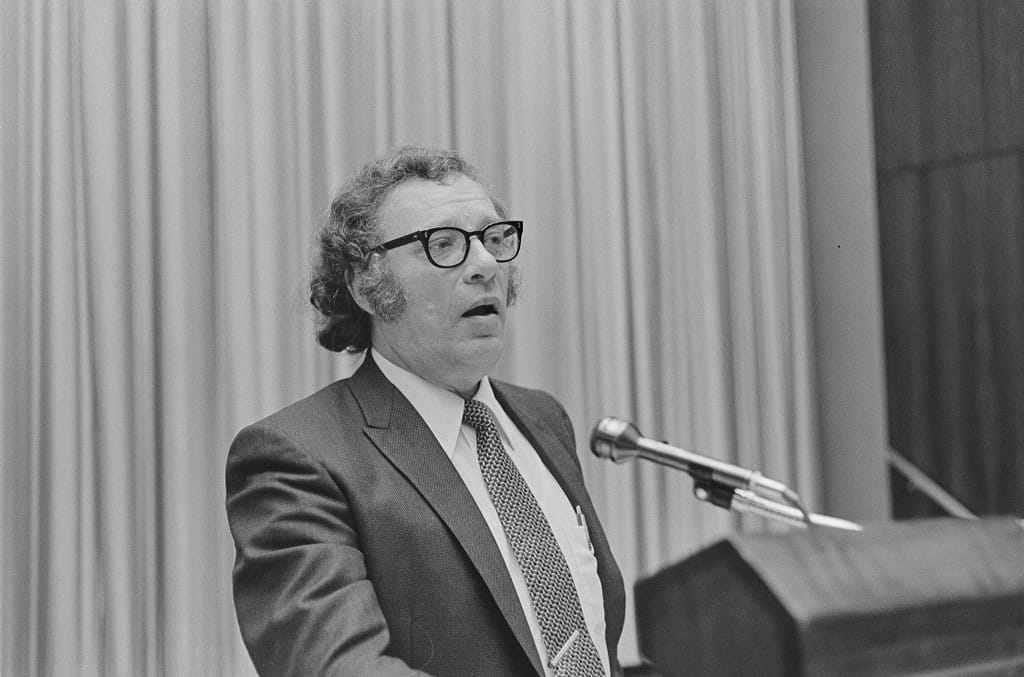
If you want a sense of what SF fandom in the 1960s and 1970s looked like, one invaluable resource is the Jay Kay Klein photographs and papers on science fiction fandom collection at UC Riverside's Special Collections & University Archives.
Kline was a photographer who began attending conventions and contributing to fanzines starting in 1945. In the decades that followed, he brought his camera with him to photograph the attendees and activities, publishing them as annual photo guides, in magazines, and presentations. He died in 2012 at the age of 80.
Before his death, Kline donated his vast collection of more than 65,000 film negatives to the archives, which began digitizing them in 2017, releasing around 6,000 images on their digital platform, Calisphere, where they solicited community input to add information to the images.
That publicly-available collection just got a bit bigger. Last week, Phoenix Alexander, the Klein Librarian for Science Fiction and Fantasy at UC Riverside (and author!), announced that his team had released another 2,000 images that made up the first eleven boxes from Kline.
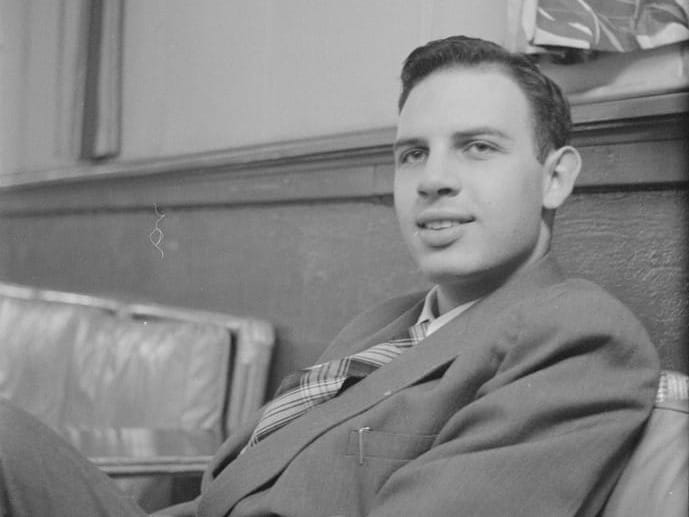
In an email, Alexander told me that their main priority for this digitization project is to get the images before the public, which they hope will be able to help with identifying the subjects in the images. "The metadata for these many thousands of images will take years to complete, and we didn't want to wait that long to make the images accessible. We'll be continuing to work on descriptions and names over the coming years, incorporating community feedback."
This is a daunting project: after this latest batch, Alexander noted that they have around 55,000 images to go, and noted that while the COVID-19 pandemic slowed them down, he "anticipate[s] a quicker timeline for these remaining images."
Alexander explained that the library's digitization department starts the process, capturing the negatives in their studio, which they then clean up and upload in batches sorted by convention as high-resolution JPEGs for the platform.
After each image is uploaded, Alexander and a pair of archival professionals then add the metadata for each image. "We're following Jay Kay Klein's organization," he said. "he organized the negatives in eleven boxes, and we are currently on number four. The boxes are roughly (but not exactly) chronologically arranged (by convention date.)" This latest batch of digitized images spans the years 1950 to 1967.
In his announcement, Alexander noted that they've "decided to implement a two-phase approach to our descriptions. Some photos from the new box will appear with basic information about the convention or event they belong to, with Klein's original identifiers for his images as temporary titles. These will be updated later with more details about the people and topics depicted. Other photos will have descriptions already enhanced by myself and Andrew Lippert, both subject specialists (albeit not infallible ones!)."
To get information from the general public, they've set up a website that explains their commenting policy, and notes that they're hoping to get details about "the lesser-known individuals in the photographs, in particular, fan attendees," as opposed to high-profile figures such as Isaac Asimov or Robert Heinlein. Comments can be added directly to each image.
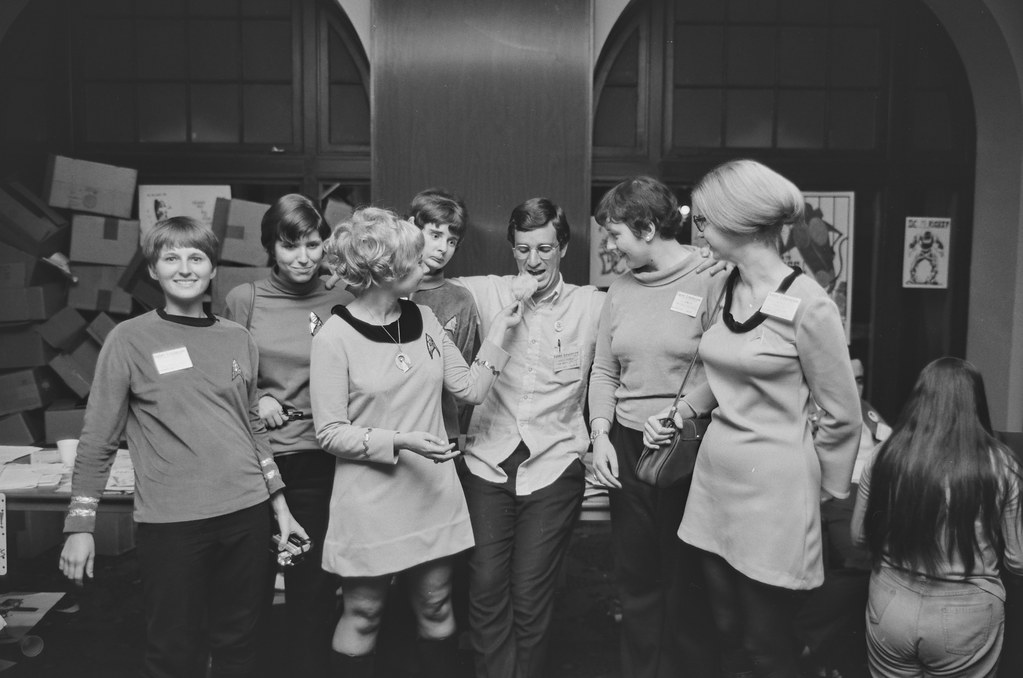
For researchers, these photographs represent a profound glimpse into this community. "A lot of researchers have been particularly interested in the cosplay photographs, particularly around Star Trek, given its prominent place in twentieth-century SF fandom," Alexander says. "Such research also allows for a kind of forensics of literary genealogy: which writers were in contact with one another, which editors or publishers were present, and so on."
These "photographs offer a visual record of the history of fandom, and it is my hope that fans can look on these images and remember, with fondness, happy times, in which the future was literally being created over a clutch of drinks, a room party, or a particularly inspiring panel."
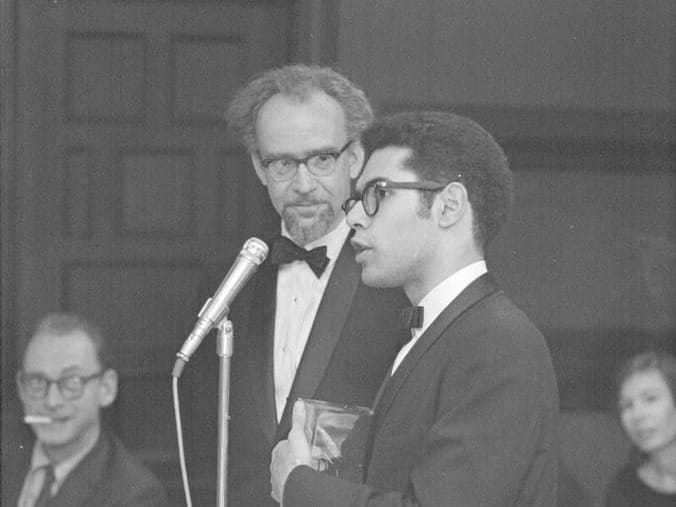
Another joyful experience, Alexander says, is that way photographs serve a way for a community to remember its past. "I am hoping that people will be able to look at these photos for enjoyment and education: either seeing themselves and/or old friends in the images, or encountering for the first time, perhaps, the people and programming that sustain literary, cultural communities."
It's a really lovely mixture of personal photos — of the Kleins (Doris and Jay Kay), cats, squirrels, landscapes, buildings — as well as, of course, conventions and gatherings bringing together both famous and lesser-known figures from the history of SF. I personally love seeing how communities are sustained over the years, and tracing the shifts in fashion (hairstyles, clothes) and technology, as you see what kinds of setups and devices people are using. The cosplay competition photographs are wonderful, too.
Speaking as a researcher specifically interested in the history of cosplay, the Kline collection really helps viewers visualize these elements of fandom. I specifically used a pair of images in my book, Cosplay: A History because of the quality and variety of the collection, and I now want to go back through the book and check to see what images Kline might have taken of some of the people pictured in other collections.
Exploring this era of history is important, not just as fans and readers, but as genres like fantasy and science fiction have grown in prominence throughout popular culture. Genre fiction is more popular than ever, and it's all built on this foundation of enthusiasts, professional and semi-professional writers, and industry pros who came up with these fantastic worlds that we're either drawing from or are influenced by. These images help show the environment in which these stories were influenced and conceived, another layer of detail that we don't have to leave to our imaginations.