Wartime lessons
The fall of Afghanistan brings to an end two decades of warfare. It also brings a key lesson for writers: acknowledge complexity.
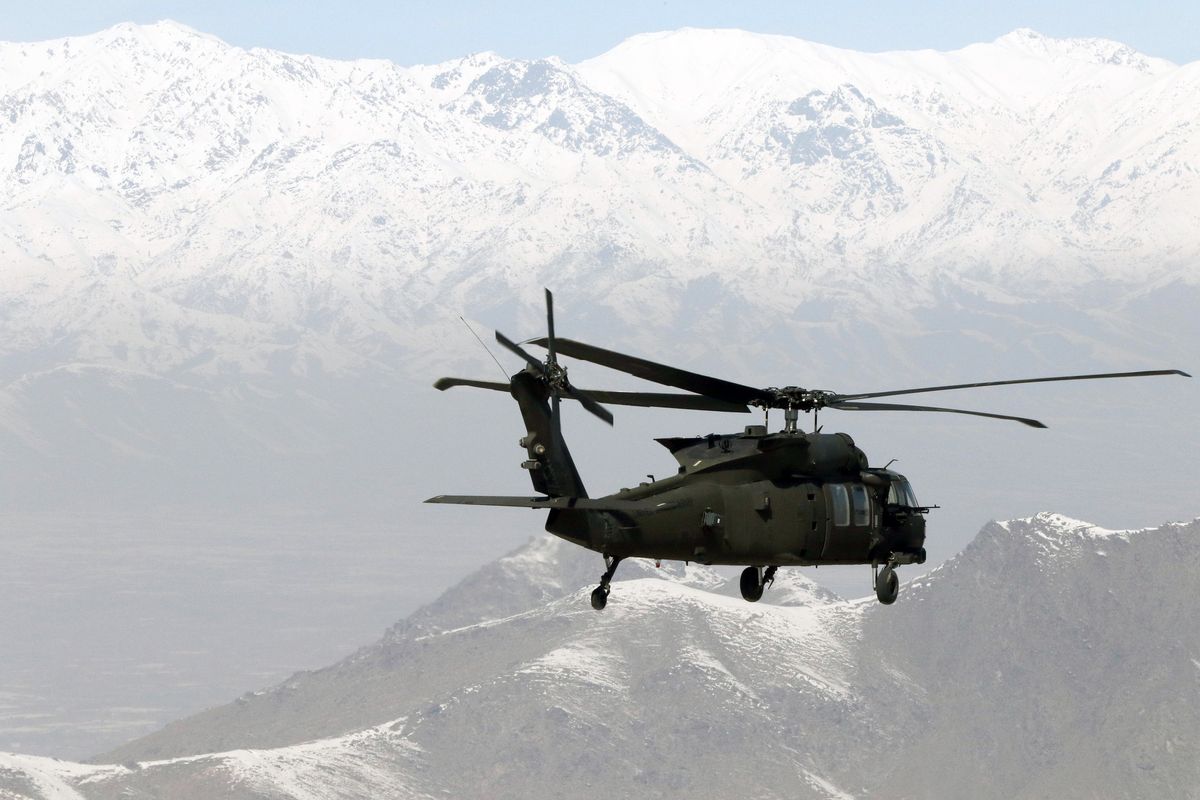
I spent much of this weekend consumed with the fall of Afghanistan, and it's left me in something of a dull rage. The country's longest war has run for as long as I've been studying and writing; I was in high school during 9/11, and I ended up at Norwich University for college, America's first private military academy. I was a civilian there, but it was impossible to escape the impact of the wars raging in Iraq and Afghanistan. Classmates of mine would vanish for semesters at a time, talk about enlisting, mourn those friends who they lost in combat.
Like it or not, the global war on terror has shaped how I see the world, and it's informed how I've approached everything from science fiction to history. The fall of the country has brought about a bracket to that time: a solid point in the timeline that is history that we can point to as a moment with a before and after. That's not the full story, of course: the ramifications of what happened in the last twenty years will play out for years and decades to come.
But it's a moment that bears reflection, and I've been thinking about how the real world of warfare and military science fiction intersect, and how military SF has largely failed to grasp the complexities that have spilled out this weekend.
A decade ago, I wrote a piece for io9 called Your Military Science Fiction isn't Really Military Science Fiction. I'd just completed my masters in military history, and as I'd been reading some military SF novels, I was finding something of a paradox: the genre is tailor-build for depicting war, but the stories that I had been reading were focused on the most superficial elements of warfare. They looked at the combat, tactics, the closed-knit group of soldiers who were brought together by their horrific shared experiences.
Warfare has been part of science fiction for much of its existence — H.G. Wells' War of the Worlds showcases what happens when a technologically inferior force goes up against an inferior one, and more than one early pulp magazine was dedicated to newfangled military technologies like airplanes and missiles.
Robert Heinlein's 1959 novel Starship Troopers formalized the genre, mashing together a coming-of-age story with military adventure and conquest, advanced technologies, and musings about civic responsibility, service, and nationalism. Starship Troopers has spawned plenty of imitators and counterpoints like John Steakly's Armor or Joe Haldeman's The Forever War. Authors like David Drake, David Weber and John Pournelle built their careers on stories about soldiers fighting against heroic odds.
Orson Scott Card's Ender's Game remains a classic about the toll that conflict takes on a person (it's still a book I treasure, despite Card's personal politics), while newer works like John Scalzi's Old Man's War, Linda Nagata's The Red trilogy and The Last Good Man, Marko Kloos's Frontlines series, or Kameron Hurley's The Light Brigade all cast a similar look for the reader. Indeed, the thesis of the anthology I co-edited, War Stories: New Military Science Fiction was essentially "how does war affect those caught in it?"
None of these are bad books or necessarily wrong. But if the war in Afghanistan or the entire genre of World War II memoirs shows us anything, it's that the combat story is just one piece of a much larger puzzle; that while we're looking at a story of heroics against impossible odds, the reality is that we're facing an iceberg. Most of the story that leads up to and informs those heroic odds is a much greater story about the failure of geopolitics and strategy.
US efforts in Afghanistan have been something of a house of cards, especially after the Battle of Tora Bora, when Osama Bin Laden escaped into Pakistan in December 2001. There will be plenty of postmortems about the US's systemic failures in the coming months, years, and decades, but I remember a feeling of conflict about the nature of the war that became more embedded as the years went on.
This, I think, is the crux of our issues in the country: a mismatch of power and definition of success for both sides. On one side, you have the Taliban, which has always looked to retake the country, and over the last couple of weeks, we've seen them plow through the country as the US has pulled back. They accomplished a successful war by retaking political power in the country. The US's objectives for the country have been complicated: establishing a stable democracy, driving out Al-Qaeda, or building up a western-styled military force to prevent the country from becoming a safe place for extremists to regroup and launch attacks from.
The US didn't execute those goals well; retired NATO supreme allied commander Admiral James Stravridis spoke to NPR on Sunday with a good overview of what happened: "We failed, I believe, in - and this is in retrospect now - in not creating an Afghan force that looks more like the Taliban," and that "we underestimated the leadership and the will of the Taliban." Leaders might have underestimated their foes, but the soldiers carrying out the war certainly didn't: over the years, I've spoken to plenty of people who've been in Afghanistan, and who've said that they rarely trusted their counterparts in the Afghanistan National Army.
America's recent military history can likely be described in those broad terms: entering conflicts to protect our interests in reactive ways: jumping before we think about whether or not it's safe or advisable to do so. And once we get embroiled in a conflict, we don't take the time or effort to learn anything about the local culture or political structures that are in place. I think that in many cases, a lot of the military SF genre carries many of these same tendencies with it: a focus more on the characters, what's before them, and how they survive, rather than examining or taking into consideration the larger story that they're part of.
If there's a lesson that authors can glean out of the fall of Afghanistan, it's that mission drives the nature of the conflict, and success depends upon recognizing and being realistic about one's wartime objectives. If one's unclear about their mission or objectives, it's hard to succeed in any meaningful way.
The fall of Afghanistan showcases how those complex motivations for going into the country — justified or not — can get skewed in how they're carried out when the rubber of foreign policy meets the figurative road.
My io9 piece earned some criticism from authors: Scalzi didn't agree with my thought-process and I've heard him talk about the role that storytelling plays as a mode of entertainment rather than examination of the real world — and I had a bunch of right-wing authors yell about it on their blogs — but while the piece has certainly aged, writing-wise, I can stand by the central thought behind it: if military science fiction is to remain relevant and informative, authors need to look beyond the wartime experiences of their characters, and understand the complexities that deliver them to that moment in time.
That context doesn't necessarily need to sit on the surface of the story for it to be successful, but enough of it needs to be running under the hood to inform not only the character's decisions and motivations, but also the underlying systems that build up the environment that led to war around them.
Understanding complexity is critical, because underlying that understanding is being able to visualize the nature of the conflict from all sides rather than framing a conflict as straight black and white polar opposites. That doesn't necessarily mean sympathizing with one's adversaries, but recognizing that people have complicated and simple reasons for picking up a gun and going to war. The Taliban have a vision for what they want their country to look like. The US has its own vision for global security. Both visions trickle from executive commanders down through the ranks to those who stand on the front lines.
Fortunately, I think that there are some books out there that do accomplish this. Despite my misgivings at the time about Scalzi's Old Man's War, I felt like his mosaic novel The Human Division and The End of All Things did a good job looking at the larger world and political context that framed the war for humanity. Nagata's The Last Good Man is another good example, one in which a bunch of contractors are pulled into a brutal conflict in the Middle East, drawn in by a complicated governmental coverup. Hurley's The Light Brigade nicely updates the formula that Heinlein used in Starship Troopers to look at the bleak nature of corporatized warfare.
In the long run, I think the failures that took place in Afghanistan will provide a useful lesson for both policy-makers and writers alike: war is always a complicated affair, and the success or failure of one side depends entirely on how well one can wrap one's arms around the mission and the stakes it brings.