Fly me to the moon
NASA made some big changes to the future of the Artemis program
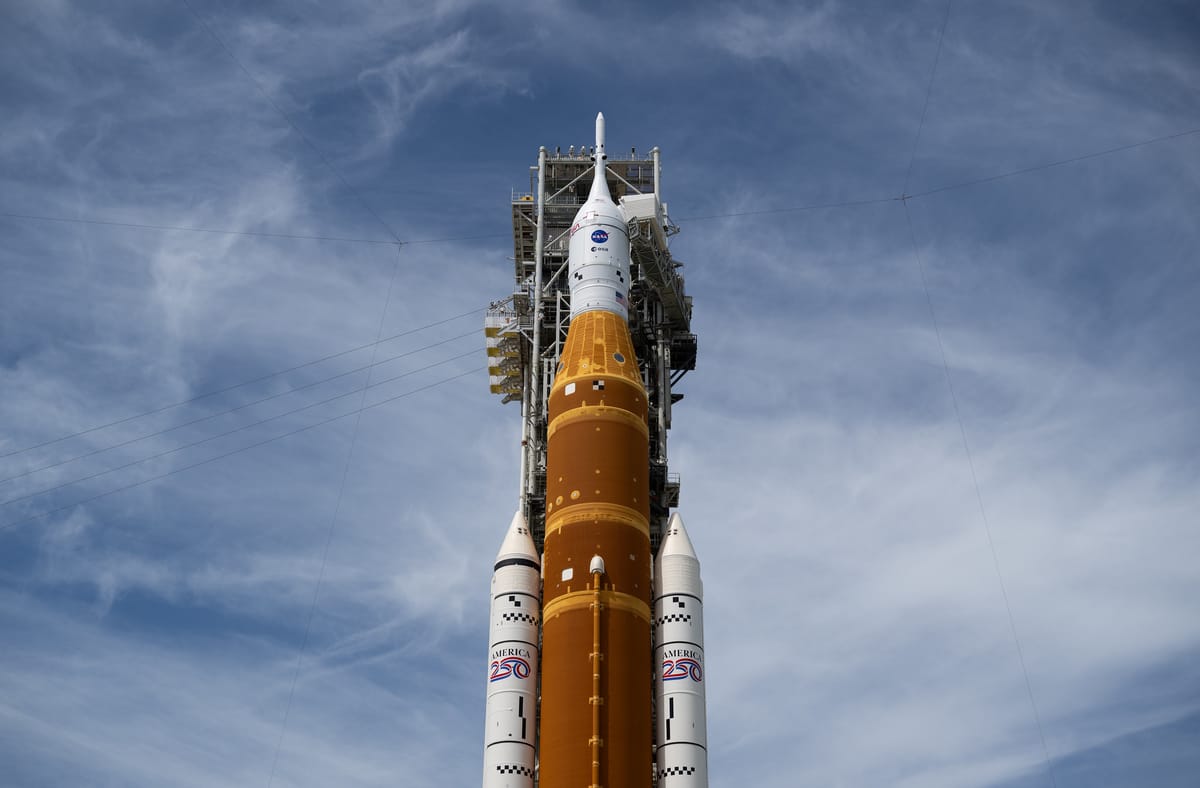
There's a reason why we haven't landed people on the Moon since Apollo 17 in 1972: it's hard. Later tonight, the Artemis II mission will lift off, carrying Commander Reid Wiseman, pilot Victor Glover, and mission specialists Christina Koch and Jeremy Hansen on a ten day journey to the Moon, where they'll test out the hardware, conduct some experiments, and hopefully take some incredible pictures of the lunar surface. If all goes to plan, the mission will be the start to a new and lasting foothold for the United States in space.
The mission's launch window starts at 6:45PM eastern time, and it'll be an exciting moment in the history of space exploration – the first time we've been do the Moon in more than half a century! But programs like this don't happen overnight, and their longevity comes down to a lot of complicated factors, ranging from the political to the technological. With the countdown underway, it's worth looking at how and why this has been a moment long in the making, and what's to come.
During the heights of the space race, scientists and space enthusiasts believed that the Apollo program was the beginning of a new era of humanity's future in space. NASA had plotted out the Apollo 18, 19, and 20 missions early on, and had constructed the hardware for them when the program was cancelled in January 1970. Others involved in the space program had sketched out ideas for reaching Mars and for permanent space stations in Earth's orbit.
It wasn't to be: the landing of Apollo 11 in July 1969 effectively stopped the momentum for the space program, and with dwindling public support and other costly government programs competing for taxpayer dollars, NASA changed its focus from exploration of the solar system's other bodies to reusable platforms and research closer to home.
In the years that followed, successive presidential administrations made plenty of promises that they never followed through on: returning to the Moon (or landing someone on Mars) was always a goal that would come safely after a president had left office.
There were further setbacks: Following the destruction of the Columbia Space Shuttle in 2003, President George W. Bush announced the following year that NASA would end the shuttle program once the International Space Station was completed. The shuttle's last mission in July 2011 brought that era of space travel to a close when Atlantis touched down, leaving the US without a means to reach orbit.
To anticipate that, the US began developed a successor in 2004, Constellation, which would serve as a platform that could help the US reach the ISS, then the Moon, and eventually, to Mars (with the stated goal of reaching the planet by 2020). However, a review committee found in 2009 that for the program to succeed, it would need a substantial increase in funding. In the wake of the 2008 housing crisis, that was a nonstarter, and President Barack Obama ended up canceling the program in 2010.
In the subsequent years, an entire industry has grown up to fill the void: SpaceX pioneered access to orbit with its reusable rockets, while others, like Blue Origin, have helped drop the cost to get to orbit, sending up not only their own satellites, but the ability to bring people and cargo into space on a regular basis. Private companies like Boeing and United Launch Alliance had been supplying rockets for satellites, but these new companies were bringing a slew of new innovations to the field that turned them into viable partners to take on significant chunks of this work.
The United States turned its attention back to the Moon in 2017 when President Donald Trump issued Space Policy Directive-1, which called for NASA to "lead an innovative and sustainable program of exploration with commercial and international partners to enable human expansion across the solar system and to bring back to Earth new knowledge and opportunities.”
This new program was Artemis, and it would recycle some of the hardware and technology that had been used in the Space Shuttle and Constellation programs. Artemis 1 launched in November 2022, an uncrewed flight that tested the Space Launch System (SLS), the Orion spacecraft, and the European Service Module as it flew out to the moon and back.
From there, the plan was for two additional missions: Artemis II, which would send a crew of astronauts around the moon for a three-week mission in 2023, which would then be followed by Artemis III in 2024, which would touch down on the Moon. Successive missions would follow, and there would be an additional piece of hardware: the Lunar Gateway space station, which would serve as a support facility for the ground missions.

While the Apollo 11 mission gets all of the attention for the space race, it's worth remembering that it was the tail end of a deliberative series of steps that included two other dedicated spaceflight programs: Mercury and Gemini.
It's helpful to think about these programs as a sort of ladder, with NASA discovering certain things with each step. Mercury showed that people could go into space in a capsule on top of a rocket and return safely. Gemini built on that by figuring out how to do some complex tasks like long-duration spaceflight, space walks, and rendezvousing and docking two spacecraft together – all essential techniques if you want to land on the Moon.
Apollo was also deliberative: it included a series of test flights of the various rocket stages, then launched a trio of uncrewed missions (Apollos 4, 5, and 6), before finally launching crewed ones. Apollo 7 tested the mission hardware in Low Earth Orbit, Apollo 8 tested the systems in Lunar orbit, Apollo 9 practiced with the command and landing modules in Earth's orbit, and Apollo 10 served as a dress rehearsal for the eventual landing. This was all unknown territory, and each step along the way imparted plenty of lessons that led to the next step.
 Andrew Liptak
I've always felt that the quick pace of the Artemis program from 2019 was somewhat rushed: an initial uncrewed test mission, followed by a crewed Lunar mission and then a landing mission. That's a lot of ground to cover, and while we've gotten better with rockets in the 50 years since, the Artemis mission is utilizing a lot of new and untested hardware and configurations. The SLS had its share of issues with its hydrogen fuel systems, while the Orion capsule's reentry during the Artemis I mission revealed some significant areas of concern with its heat shield.
NASA has long faced a troubling dynamic: it has to work fast to achieve its goals, but if it goes too quickly, the consequences can be deadly. Apollo 1 went up in flames during a test, killing its crew, while the crew of Apollo 13 almost met a similar fate when a short in an oxygen tank in the service module exploded. The Challenger spacecraft disintegrated shortly after launch and Columbia burned up upon reentry.
The Artemis II mission was supposed to launch earlier in February, but after NASA’s planners detected issues with the rocket’s hydrogen fuel system, they pulled it back in to fix whatever was leaking. While they worked out those issues, NASA's administrators also took another look at the program and made some big changes to its future.

At the end of March, NASA held an event that it called Ignition, in which they laid out those changes. “If we concentrate NASA’s extraordinary resources on the objectives of the National Space Policy,” Administrator Jason Isaacman said “clear away needless obstacles that impede progress, and unleash the workforce and industrial might of our nation and partners, then returning to the Moon and building a base will seem pale in comparison to what we will be capable of accomplishing in the years ahead.”
Part of that realignment is a new launch cadence and changes to the Artemis program, which includes “standardized vehicle configuration” and an additional launch in 2027.
 Andrew Liptak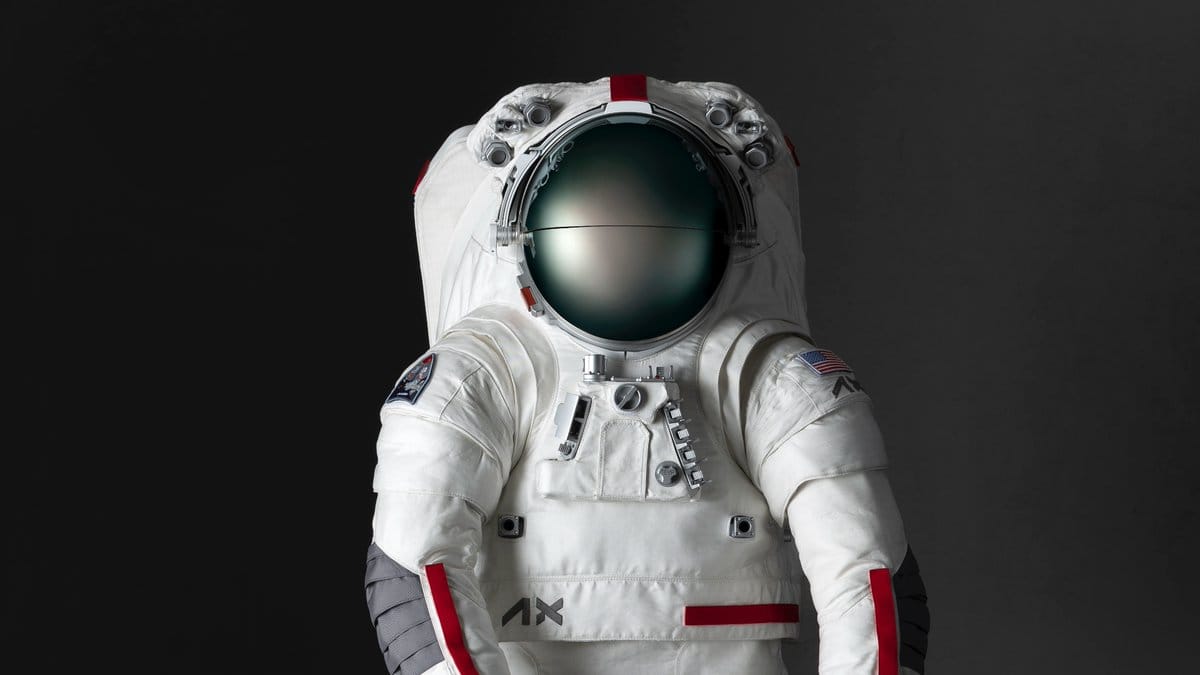
The big news here is that Artemis III’s mission is changing again: initially, it had been slated as an initial landing mission on the Moon’s South Pole, but in the years since the start of the project, it’s been continually pushed back for a whole variety of issues that include funding cuts to the program, a lack of space suits, technology issues, and Orion’s heat shield. It had been bumped to 2028, but now it’s been moved up to 2027, and will be “designed to test out systems and operational capabilities in low Earth orbit to prepare for an Artemis IV landing in 2028.” That mission will include testing out the landers that are coming from SpaceX and Blue Origin and all of the other systems that they’ll need for the actual landing: sort of like what Apollo 9 did back in 1968.
The addition of Artemis IV in early 2028 means that we’re not going to go through long, two-year waits between launches and for Artemis V (launching in late 2028) and beyond, Isaacman noted that they’ll be working to fold in more hardware from the commercial providers to increase their launch tempo, with the goal of returning to the Moon every six months. That's another quick pace, but a cadence that feels like they'll be taking a slightly more deliberative approach, rather than shoving every test into a smaller number of missions.
As part of that, NASA is ”pausing” the planned Lunar Gateway space station, in favor of a lunar base that they’ll phase in over time. The initial plan is a three-phased approach, with the first getting down to the surface and testing out vehicles and technology, the second setting down “semi-habitable infrastructure and regular logistics” and the third featuring heavy infrastructure for long-duration missions. Plenty of people aren't happy about it, because it doesn't feel like a next step so much as a giant leap that we aren't ready for. I’d expect that to change even under the best of circumstances.
A space program is a difficult thing that requires considerable commitment from policymakers and contractors. Artemis is a very, very ambitious project, and it’s driven in no small part because of the efforts and ambitions from China (and I’m sure in no small part because of Trump’s ego — the possibility of being the president that oversaw the return to the Moon is probably too good to pass up.)
The Space Race was driven entirely by geopolitical concerns — the Moon was the ultimate symbolic high ground when it came to delivering nuclear bombs to one’s opponents. With the initial landing in July 1969, the urgency that the country felt in reaching the lunar surface evaporated, and the subsequent arms controls measures in the 1970s and 1980s and collapse of the Soviet Union lessened it further, allowing NASA to focus on its scientific and Low Earth Orbit missions.
China has established itself as a major world power, and while the urgency this time around isn’t the result of an arms race, the combined industrial and technological base that can produce and deliver a lunar landing is an enormously symbolic and consequential accomplishment. China has spent the last couple of years building up its capabilities in LEO and with landers and orbiters for the Moon’s surface. It’s believe that they’re targeting a crewed landing for sometime in 2029 or 2030, but it’s hard to say for sure how far along they are. Space is hard, after all.
Those plans — realistic or otherwise — are likely what’s helped NASA and policymakers with the recent adjustments for Artemis. If they want to reach the Moon ahead of China, the steps that they need to take aren’t ones that they can take overnight. Today’s launch is another step, one that will hopefully take us a bit closer to the goal of planting the American flag on the lunar surface.