Patrick Nielsen Hayden is retiring from Tor Books
A longstanding figure in the SF/F world
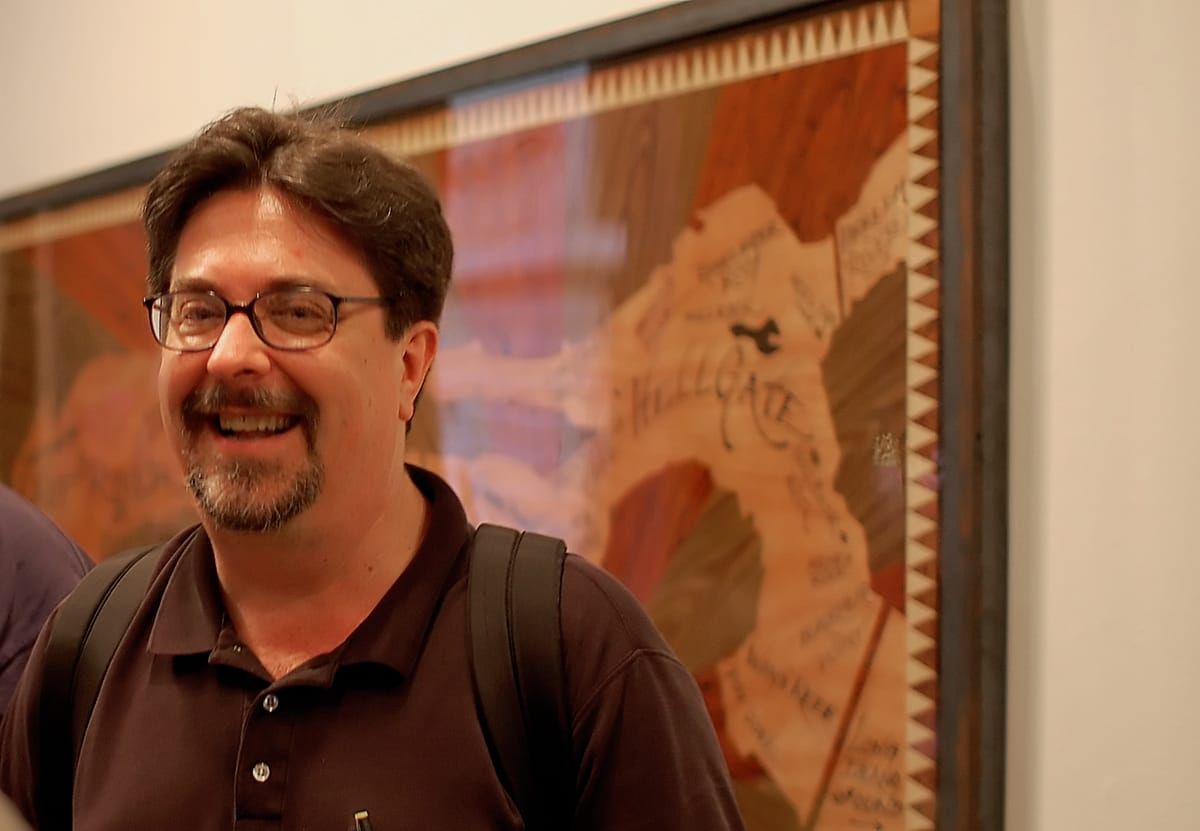
Tor Books editor Patrick Nielsen Hayden has announced his retirement, effective today. He noted that it's been in the works for a short while, and that after finishing up a couple of projects with the publisher, he'll be moving on to other things. It's a huge move in the world of SF/F publishing: Nielsen Hayden has been a towering figure at Tor for decades, and has certainly shaped the modern form of the genre in that time.
Born in 1959, Nielsen Hayden first became involved in SF Fandom in the 1970s, publishing a fanzine in the 1980s along with his wife, Teresa Nielsen Hayden, helped establish the The New York Review of Science Fiction, and was involved in various early internet watering holes in the 1990s.
After working in a variety of roles at various New York publishers, he began working for Tor Book as a freelancer before coming on full time at the end of the 1980s as an assistant, and worked his way up the ranks to eventually become editor-in-chief in 2018. In that time, he acquired and edited a ton of the genre's best-known authors, including Charlie Jane Anders, Poul Anderson, Glen Cook, Charles de Lint, Cory Doctorow, Terry Goodkind, Jonathan Lethem, Ken MacLeod, George R. R. Martin, Laura J. Mixon, Ada Palmer, John Scalzi, Harry Turtledove, Jo Walton, David Weber, and many others. He also edited a number of the shorter fictional works that appeared on Tor.com.
He also edited a handful of short fiction anthologies during his tenure, such as Starlight (1996, 1998, and 2001), New Skies: An Anthology of Today's Science Fiction (2003), New Magics: An Anthology of Today's Fantasy (2004), The Year's Best Science Fiction and Fantasy for Teens: First Annual Collection (2005) and Twenty-First Century Science Fiction (2013). In the latter, he wrote in the preface, that while he and co-editor David Hartwell didn't share identical tastes, "we can fairly well agree on good writers and good stories."
"And we are both students of the history of SF without holding all the same opinions about it. Neither of us is especially interested in being genre policemen, dictating what is and isn't proper SF. And yet, both of us emerge from the core SF audience of the twentieth century – the SF subculture, professional, and fannish, that emerged from the earnest and urgent desire to defend and encourage quality SF in the face of a dominant culture that seemed to hold it in contempt."
What I've found notable about Nielsen Hayden is how he's long felt like a figure that's sat in the background of much of the field since the 1980s: he was part of the team that helped set up Tor.com (now Reactor), has served for years as an instructor at Viable Paradise, giving him a front row seat to the talent who were arriving to the shores of the professional publishing world. I only met him once or twice at conventions, and I've found him to be a no-nonsense, opinionated, and deeply-principled individual, someone who was dedicated to not only guiding good stories, but also ones that were pointed and principled in their visions of the world.
It's this background, one foot firmly planted in the culture of science fiction and the other as a professional, that I think helped him guide and really define the boundaries of the science fiction and fantasy genres that we draw so much inspiration from.
Authors get a lot of the attention from fans because their names are on the cover, but it's people like Patrick, especially ones who have been in the field for so long, who are really worth paying attention to, because they wield so much influence over what gets a cover. I don't know that he's had a huge, direct influence in recent years, given his larger role as editor-in-chief, but his contributions will certainly be felt for years.