Storytelling machine
Hazelight's co-op game Split Fiction is a real delight
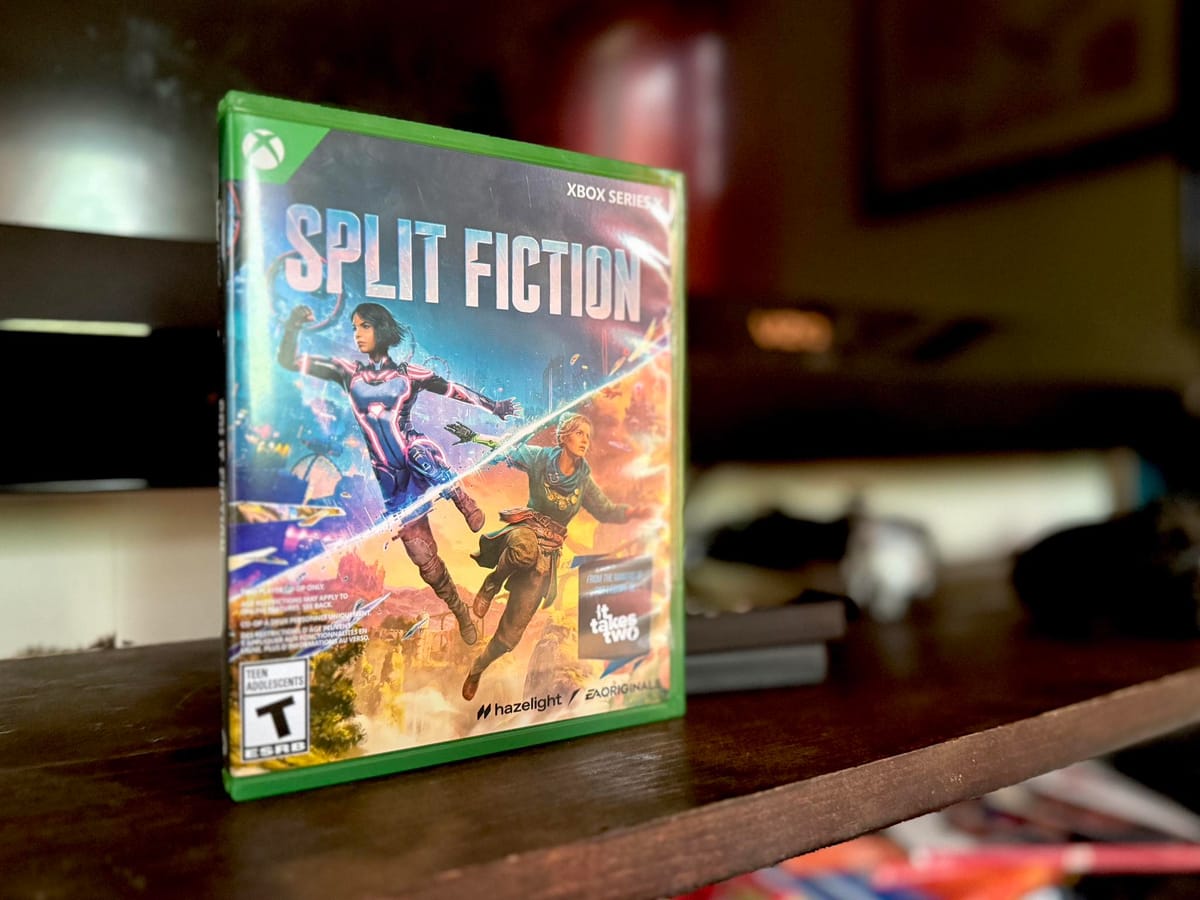
Imagine if you will: you're a writer who's been working for years grinding away with story after story with little success. You're gearing up to find a publisher for your first novel and you get the call from a mysterious startup tech company to test out a newly-developed machine, with a promise of payment and the hope that it will lead to the big break that you've been looking for.
That's the premise that kicks off the story in Hazelight Studios' latest video game, Split Fiction. Tech company Rader Publishing invites a handful of aspiring authors, including Mio Hudson (voiced by Kaja Chan) and Zoe Foster (Elsie Bennett) to test its flagship invention: a machine that allows users to experience their stories as though they were in them, promising to bring about a revolution in storytelling and publishing.
It's a scenario that doesn't actually feel that far from reality: in the last couple of decades, we've seen the introduction and proliferation of eBooks, and there's been and no shortage of tech companies looking to disrupt publishing through serialized storytelling and microstories on social media platforms, not to mention new device categories such as Apple's Vision Pro or Meta's Quest devices, and the entire question about how AI will figure into all of this. These new technologies and delivery platforms have enabled plenty of enterprising authors to find new ways to bring their stories to their audiences.
Zoe (a fantasy author) is excited and optimistic about the possibilities that the company offers, while Mio (who writes science fiction) is cynical and reserved. They and a handful of other authors are gathered to hear a presentation and demonstration by the company's founder and CEO J.D. Rader. The authors are stuck into a bubble that allows them to interface with the machine, and when Mio tries to back out of the experiment, she and Rader get into a fight, which ultimately leads to Mio getting stuck inside of Zoe's bubble.
It starts off simply: Zoe and Mio find themselves trapped in one another's fictional worlds, first in one of Mio's science fiction worlds, then into one of Zoe's fantasy ones. The game puts you through a ton of dynamic levels: running through streets, across platforms, swimming through pipes, or flying through the air. As we run through the levels, the two characters are chattering back and forth about their stories, where they came from, muse about the nature of the genres that they're attracted to and why they're driven to to write down their stories.
The game's developers aren't afraid to get weird, too: one side-quest takes you into one of Zoe's earliest stories, where you start off playing as happy, farting pigs on a farm, only to get turned into hot dogs that you have to grill to perfection. Another turns you into sugary treats that have to navigate a hazardous candy land before fighting off a sadistic dentist. Others are a little more conventional: exploring fantasy villages or playing in cyberpunk-inspired battle arenas, dodging a maniacal robot that after you for unpaid parking tickets.
What really grabbed my attention was the overarching story and stakes from the real world as Rader isn't willing to turn off the machine. As the game goes on, we find that he'd rather hoover up their ideas for IP for his own purposes, the safety of the players trapped inside be damned. As Zoe and Mio quickly realize this, they're forced to run through their stories and find system glitches that'll allow them to evade Rader and find a way to destabilize the machine to escape back into the real world.
This is something that I feel like I see everywhere: an intense commodification of popular culture: beloved books become big-budget adaptations, and studios become repositories for IP that they can endlessly mine and remix into new products. Rader's company is the beneficiary of entities like Disney, EA, Microsoft, Netflix, Paramount, and many others, not as a creative endeavor established to entertain, but to serve stockholders and squeeze out every last time from the creativity of artist and writers. It's a warning – in product form, mind – of the state of the creative field and how difficult it is for creators to really break through to their audiences.
There's a term for it: Enshittification, coined by Cory Doctorow, which broadly describes the decline in quality as platforms and institutions mature, starting with high-quality products or features, but which eventually erode as they focus on profits and serving an ever-widening range of customers. You see it everywhere, from platforms like Facebook and Twitter to streaming services like Prime Video or Netflix and companies like Amazon. Rader's company has essentially jumped the line, looking to bypass the creative stage and just jump right to a pool of intellectual property that he can monetize, if only he can get those blasted kids out of his machine.
It's a nice encapsulation of all of these things that I'm really fascinated by: not only is it fun to see some writers put first and forefront into their own stories, but it's a story that I think plenty of writers can see themselves in: facing a world with enormous uncertainty with where we'll end up. Will people enjoy our stories, if we can break through and get them before them? Or are we writing for audiences that are slowly becoming used to the enshittified slop that's easier to produce and distribute? Hopefully, the world that Rader envisions for his company isn't the one that we'll be living in – all the more reason to keep telling new and interesting stories, even if we have to break the machine and figure out different ways to go about doing it.