Unrealized glimmers
Hidden in The Mandalorian & Grogu are the bones of a much better film

10 years ago last December, Star Wars arrived at a curious transition point. J.J. Abrams' The Force Awakens debuted in theaters, ushering George Lucas's franchise into a brand new era and under new corporate ownership. Its arrival was the start of a flood of projects that dramatically expanded the Galaxy Far, Far, Away, not only by filling out the long-imagined final trilogy of trilogies, but with additional standalone films and a slate of animated and live-action television streaming shows.
Now, the franchise has arrived at another pivotal moment: in January, Lucasfilm announced that President Kathleen Kennedy, who presided over the company following Lucas's departure, was stepping down and would be replaced by Dave Filoni and Lynwen Brennan, who would serve as President and Chief Creative Officer and Co-President, respectively.
Capping off that era is a new film, The Mandalorian & Grogu, a spinoff from the franchise's first live-action series The Mandalorian. It debuted in theaters last week, and which not only feels like an encapsulation of this initial Disney era, but also for what the franchise could look like in the years to come. If it's anything to go by, there's cause for concern – but maybe there's some room for optimism.
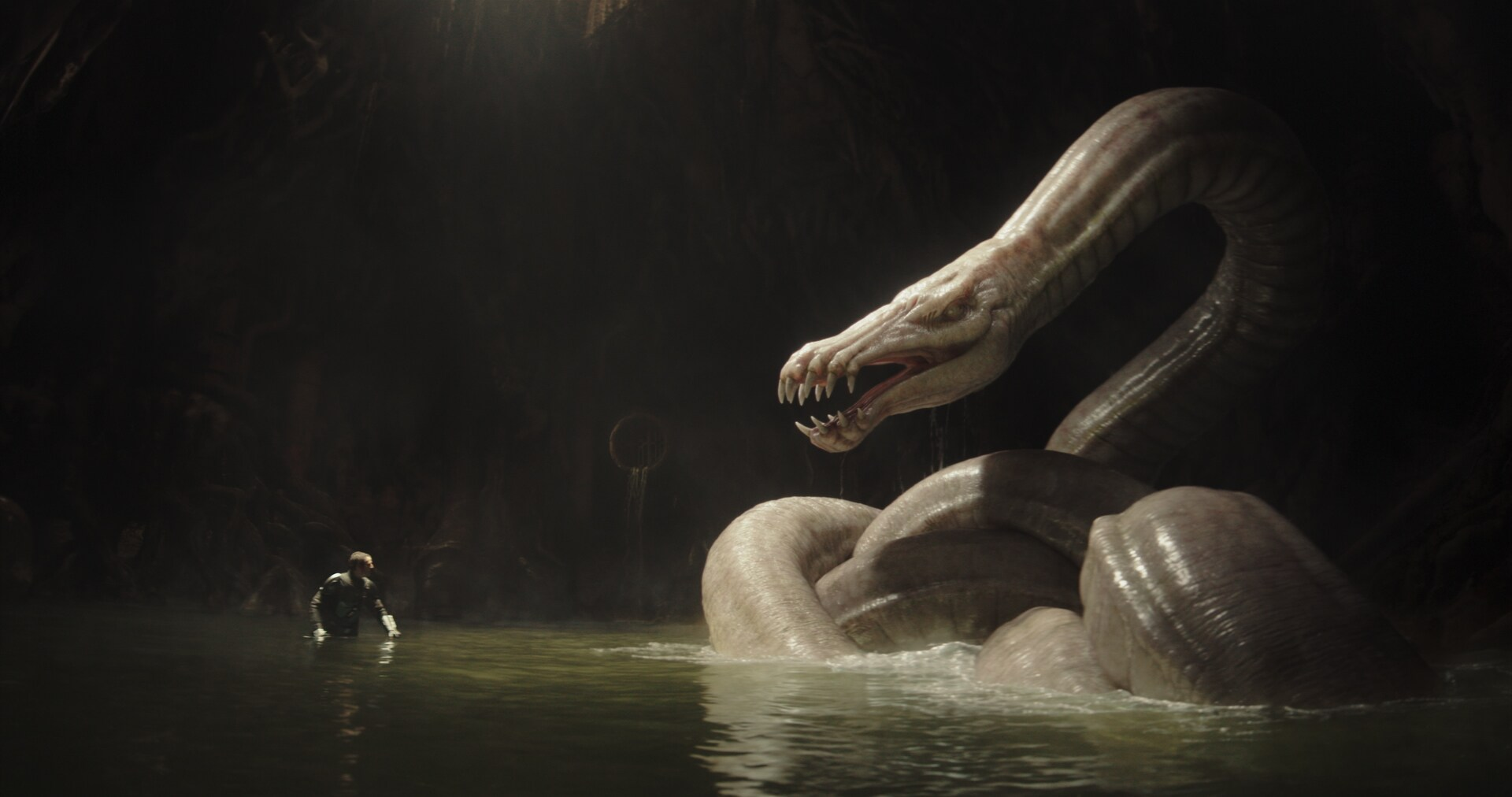
The Mandalorian & Grogu is a weird little film.
Coming after three (ish) seasons of The Mandalorian series, it's not the type of super-sized episode that serves as a series finale, and it also doesn't really feel like it's a season that's been condensed down to shove into a movie theater (although there are some beats that feel like like they could be TV cliffhangers.) At times it's cinematic, but it doesn't have the gravitas one of its bigger cousins, and while it's a standalone, it feels very much like it's part of a bigger, ongoing narrative.
At its worst, it's a film ordered from Disney's C-suite: "we need a film in theaters. Here's your super-popular characters, go have at it." But at its best (fleeting) moments, it captures the charm and delight that I saw in the original films when I first saw them as a kid decades ago. It's something new, not really good, but not awful.
Spoilers ahead for the film
It opens with a brief introduction that explains that the New Republic has been hunting down remnants of the Empire, before jumping to an unnamed Imperial warlord who's in the middle of extorting an assembled group of subjects for protection money. They're interrupted by the titular duo: Din Djarin storms the base, taking out Imperial snowtroopers in the base one by one before commandeering an AT-RT walker and taking out a trio of larger AT-ATs, and eventually, the bad guy.
Since the events of the show's third season, Din and Grogu have been taking on those Imperial targets for the New Republic. When he returns to their base after this mission, he's given a new mission: an Imperial warlord who's kept a low enough profile that the New Republic doesn't even know what he looks like. They have a lead: a pair of Hutt crime lords called The Twins, who've had some dealings with him. They'll be willing to point the New Republic in the right direction, provided they get something in return: their nephew Rotta, who was apparently kidnapped by another crime boss named lord Janu.
So, Din and Grogu rocket off to Shakari, where they find that Rotta's been pressed into service as a gladiator. After a couple of obligatory fight sequences, they free him and learn that Janu is the mysterious Imperial that they've been trying to track down. Another action sequence and they have him in hand, while Rotta convinces them to let him go, because his aunt and uncle really want him dead.
Going back on their deal angers the Twins, who capture Din and Rotta, and try to kill them. They nearly succeed, but Din and Grogu escape and manage to turn the tables, save Rotta, take out the Hutts, and leave a little on the table for whatever's next for the characters.
Let's get the big, bad part out of the way: The Mandalorian & Grogu is a mess from beginning to end, and I spent an inordinate amount of time thinking "how did someone watch this and think, 'ah yes, this came out great?'" while watching it.
It's a film that confidently revels in the pulpy nature of the franchise, but writers Jon Favreau, Dave Filoni, and Noah Kloor never really take the time or energy to understand what the film was before cameras started rolling.
The film careens from set piece to set piece: a battle on an icy planet takes them to another action sequence on Shakari, which leads them to another handful of fights on Nal Hutta, each separated by interludes where the titular characters are told where to go and what to do.
Those action set pieces are quite a bit of fun – watching Din and Grogu take out Imperial troopers, battle in a live Dejarik game, and fight against a horde of Hutt underlings provides plenty of good visuals and dynamic action, while Favreau and Filoni's tendency to do that "let's pull the action figures out and see what we can do" with various troopers and spaceships makes for plenty of deeper connections to the larger universe and for some good nostalgia trips. It's even worth catching on a bit screen to take in the spectacle and the moments where it's clear they loved a piece of concept art and had fun bringing it meticulously to life.
It's everything in between when the action slows when the problems show up. From the opening (a monologue from the nameless and cardboard cutout Imperial warlord is just a pile of clichés, from his demands for more money and his casual execution of one of his subjects) to their instructions to head off to the Hutts to find their warlord (more monologuing) and off to a Chicago-esque crime world where they beat up a bunch of Lord Janu's henchmen in his bar (after which they're given more clichéd monologuing, along with Janu telling Din that he should consider taking part in one of his matches three times in the same scene). All of it feels like the types of lines you'd accompany with a reminder that it's all placeholders that need to be needs to be punched up for more pizazz. It's all delivered with heavily ADR'ed dialogue (which I couldn’t help but spot, thanks to Going Rogue) and wooden performances from just about everyone involved.
It's incredibly frustrating to watch, because it's so clear that it's these interstitial moments that should be driving the action scenes, rather than the other way around. It's where a good screenwriter can lift mountains to capture a film's soul – moments that drive home some central tenet that underpins the entire adventure, and where actors can come in to bring those little moments to life.
And there are those moments, fleeting as they are: in the middle of the film, Grogu catches up to Din after his capture and escape, and tends to him in the middle of Nal Hutta's lush jungles. It's here that the film genuinely shines: the care and attention that the crew took filming these sequences capture so much of the magic that we go to the movies for. It set up the final act wonderfully and powers the film through to the end, where we're treated with another delightful stop-motion sequence where Din and Grogu take on a pair massive droids guarding the Hutts.
These sequences show that there are the bones of a good, emotional story hidden somewhere in there. It's about fatherhood: recognizing that your kid is growing up and that they're becoming their own person, while the kid realizes that their father only ever has their best interests at heart, even if they're a little overprotective.
Scenes like Din scolding Grogu for touching the buttons on his new ship could have been a bigger moment, but it's treated like joke: a juiced-up toddler getting to touch the colored blinky lights, rather than a moment of a father worried out of his mind about his kid's safety. Rotta's entire presence in the film is an embodiment of a troubled father/son relationship that runs parallel to the A storyline.
Treated properly – or even recognized – that's a solid, emotion-driven plot: two characters who find themselves increasingly at odds with one another because of their actions, who're separated and forced to the realization that the other is valuable and worth going to enormous lengths to save. It's a dynamic and story that would have fit naturally into this story.
But Favreau never takes the time to develop those character moments. If I had to guess, it's in part because Disney needed a franchise film in theaters ASAP and didn't have enough time to properly cook and a reluctance to really let the characters change in a meaningful way. The characters spend most of their time instead as blank slates, going from point to point because that's where they're supposed to go to move the action forward.
I think there's an element of wanting to harken back to the Saturday morning adventure serial adventure that Star Wars was always supposed to be, but I think there's also an element of this where nobody is really sure where this fits in the larger picture of what the franchise is, and it feels very much like it's designed to be a standalone adventure where nobody wanted to change anything for fear that audience members will be left behind. If that's the case, it's doing its story – and the larger franchise and world – a disservice. The films that really stand out lean into their story's emotional elements and push their characters to learn something from their experiences.
Here's an example that came to mind: I recently rewatched Stephen Spielberg's Close Encounters of the Third Kind, and thought back to how there are a whole bunch of bigger, dramatic moments that lead up to the finale, but how there's all these smaller moments that really build up those characters that get you to care about them and understand where they're coming from. You understand the depths of Roy's obsession not from the people who're telling him that he's crazy, but by seeing how much he changes from the father who was goofy and mischievous and playful with his kids. It's those smaller moments that add to a film's runtime, but which either gives a character a reason for their actions, or provides the audience with context for those actions, and thus gives those actions real weight, because they have consequences and a reason beyond "we were told to go to this planet." Maybe they didn't want to overthink things, and decided to keep it as a pulpy adventure, but that's not really a good excuse: pulpy adventure films can come with plenty of heart and soul!
And that's what's really wrong with this movie: the characters don't really learn anything, they make any actions or decisions that aren't dictated by the plot in advance, and they aren't changed for their experiences. I can't tell if this is simply something that the filmmakers just didn't understand or fully realize during the film's production, if they did executed it poorly, or if it was chipped away because of notes from executives that didn't trust their audience to pick up on it. Either way you cut it, it takes a promising concept and makes it into a forgettable piece of content.
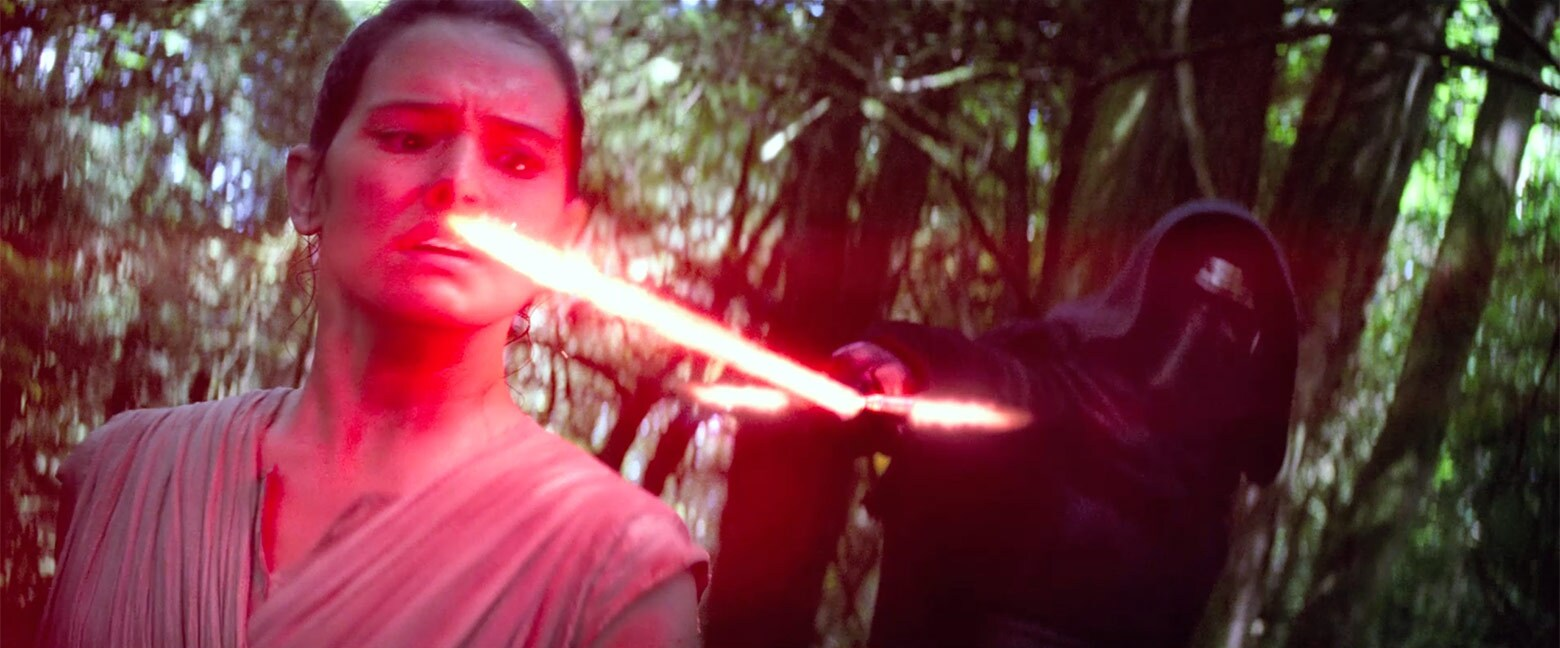
In a lot of ways, The Mandalorian & Grogu feels like it's part of a longstanding, systemic problem with the Star Wars franchise. Post-acquisition, it's never really felt like Lucasfilm and Disney knew what to do with it, other than that they knew that had to do something.
For decades, it was easy to sum up what Star Wars was: the story of a Skywalker coming to terms with their special powers and place in the larger universe, so clearly, whatever you planned to do would include that core group of characters. And, in the post-Return of the Jedi era of the 1990s, Lucasfilm continued the story through a long-running, interconnected franchise of books, video games, and comics.
Lucas had long alluded to the franchise as a nine-film saga, so a continuation from Return of the Jedi in the form of a new trilogy was a good guide, and The Force Awakens kicked off that new era of storytelling. But when it came to what the sequel trilogy would do, it seems that Lucasfilm never bothered to map out an overarching plan for the barest idea of what type of story it should tell, instead opting to leave that direction in the hands of the directors and screenwriters hired for each installment, and as a result, the sequel trilogy never felt like it had a bigger purpose or thing that it wanted to say. It lost its way as the story bounced around from film to film.
Beyond the sequel trilogy, they threw a lot of ideas out there: would standalone films featuring major characters (like the origins of Han Solo and Chewie in Solo) or canonical moments (the capture of the Death Star plans and rise of the rebellion in Rogue One and Andor) work? Could they build off of the suite of characters from The Clone Wars and Rebels (as seen with Clone Wars season 7, The Bad Batch, Ahsoka, or Maul: Shadow Lord)? Should they jump to a new era entirely (The Acolyte and The High Republic) or should they lean into nostalgia for the movies and filmmaking of the 1980s (The Mandalorian and Skeleton Crew) or the sheer fandom for some characters (Book of Boba Fett)? All of those projects have varying levels of success, with some executed better (Andor) than others (Book of Boba Fett), and continued to expand the world in various ways.
The Mandalorian & Grogu fits solidly into a couple of those categories, and as I noted when the film was first announced, it felt like an easy sell: you can't drop a radically-different take on the franchise into theaters after a seven year absence, you want something that feels like Star Wars. The Mandalorian did that well, the characters are super recognizable, and what we got doesn't require a ton of explanation: the characters go off on an action-packed adventure.
I think that's fine: going into this expecting a saga-class film like A New Hope or The Force Awakens will set you up for disappointment. I think that there's space for Star Wars to be more than one thing. I also don't think that comparing this to something along the tone of Andor (the more serious, adult-oriented take on the galaxy) is worth doing: both have very different mindsets behind them and a pulpy action-adventure romp lines up with George Lucas's original intent pretty squarely.
But for decades, seeing Star Wars affixed to a movie poster meant that you were in for an event at your movie theater, rather than content. To some extent, I think that scarcity is part of what forms that impression – having a film come every couple of years certainly makes them hit differently than when you can expect new Star Wars films or television shows on an annual basis. There's a line somewhere in there between artistic endeavor and content, and if Disney's era of films amounts to anything at this 10-year mark, it feels like it's drifted into the "endless stream of content" side of the equation. Some of that content is really good – the first couple of seasons of The Mandalorian or the final season of The Clone Wars hit that for me, while shows like Andor eclipse it by a wide margin. (And others, like Ahsoka, The Book of Boba Fett and Obi-Wan Kenobi, fall under the bad to "eh, it's fine" spectrum.)
The Mandalorian & Grogu? I can see how it aligns with Lucas's original vision, it's at times fun, but it feels like it was designed as content when it could have been dialed up to something that could have been a lot better, and that's unfortunate.
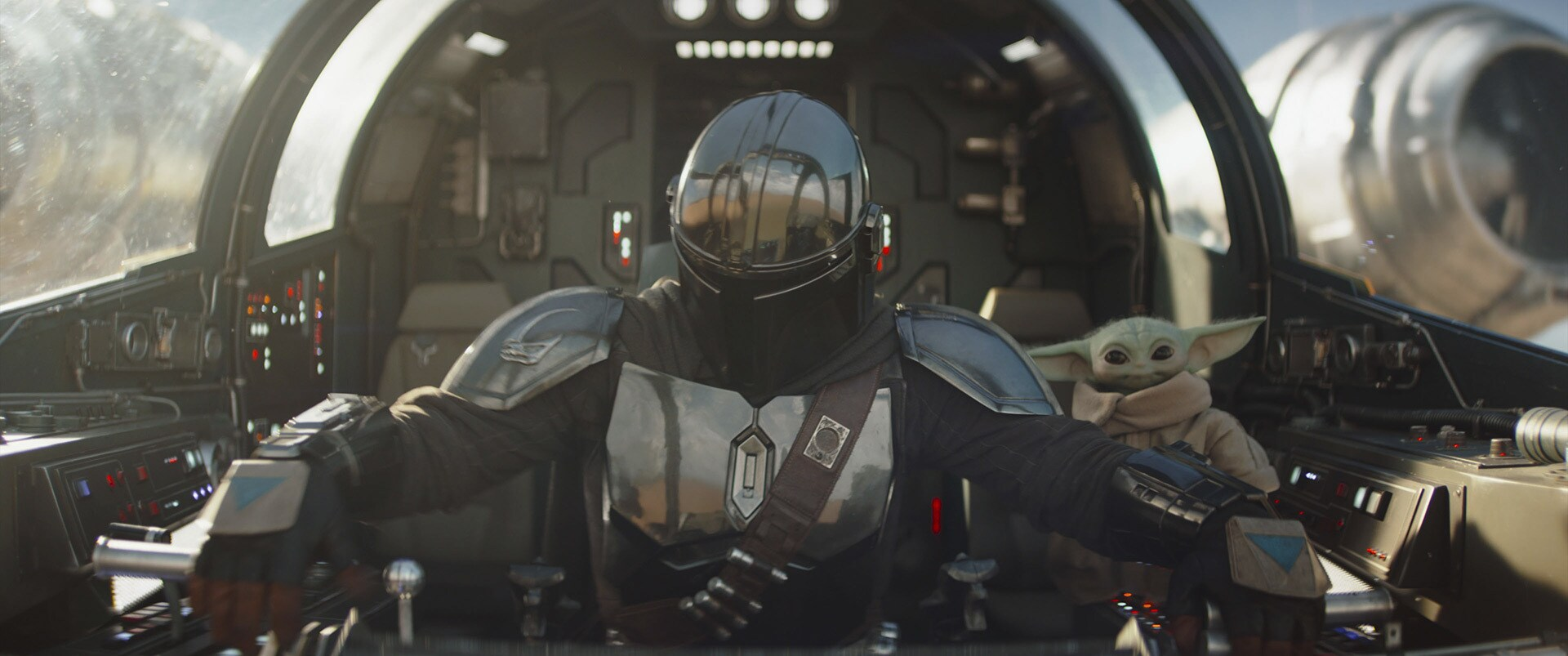
If I could provide a note to the studio for this film, it would be simple: lean into that idea of fatherhood and trust that your audience will understand it.
The action – the assault on the imperial fortress and the mission with the Hutts is the perfect hook to drive a wedge between them and get them frustrated with one another, and the perfect way to get them to realize that they still need one another. It's their actions that come out of that conflict that should be driving them from action sequence to action sequence, with Rotta's B-plot there to reinforce it as a cautionary tale. All of those elements are there, but they're never realized.
I hate to keep beating the dead horse, but the one time that a Star Wars story really succeeded was when it had a clear mission and purpose: Tony Gilroy's Andor, and I wish that Lucasfilm had taken some cues from that process. I don't mean that The Mandalorian & Grogu should have been this type of hard-hitting, adult story – it's not that type of story, but I think it would have benefitted from someone taking a look and breaking it down to its simplest, core component, like what Gilroy had found for Rogue One, and make a film that would have taken the risk to push its characters and story.
 Andrew Liptak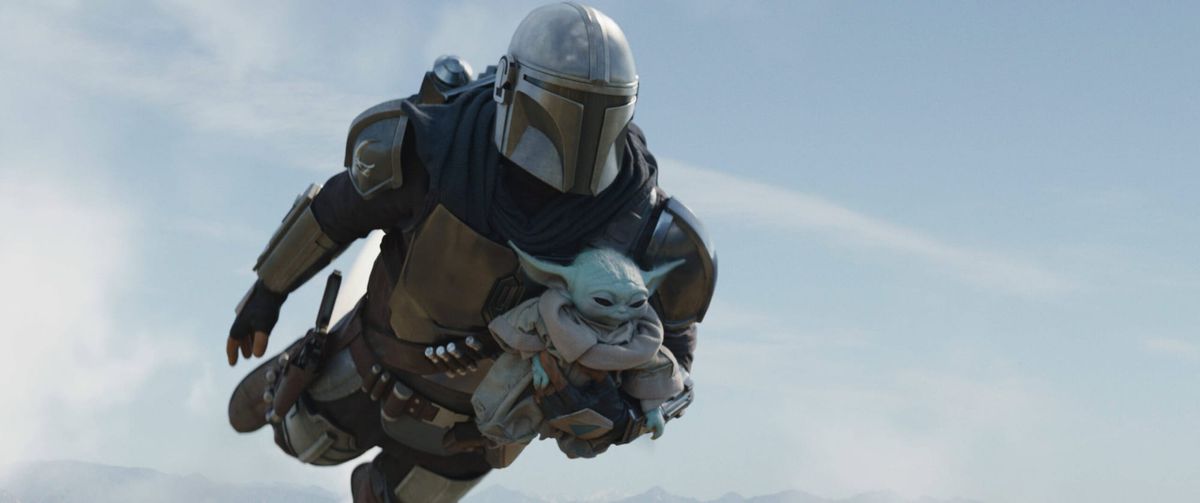
This is a film that could have been better – a lot better. This isn't one of the big, backbone saga movies – it doesn't have to have consequences that ripple out to the galaxy – but simple and straight-forward doesn't mean skipping the basics to deliver something that feels like it's just going through the motions. It feels like they figured "good enough" was good enough.
I don't know what this means for the future of Lucasfilm and Star Wars in theaters: it feels like it could go either way. I hope that this approach doesn't become the norm: but I'm heartened that there does appear to be this better film somewhere in there. I just hope that Lucasfilm and its creatives can figure out how to deliver that. That said, I suspect the real test will be 2027's Star Wars: Starfighter, and I'm eternally an optimist. You never know what's just around the corner.
I spent a long time thinking that The Mandalorian & Grogu doesn't know what it is, but I've come to realize that it knows exactly what it is: a piece of content, served up to fill a slot in the box office and hold its place to remind the general public that Star Wars exists. I didn't love it, but I didn't hate it. I just wish it had core that would have moved me in either direction.