Legendary magazine Starlog is being resurrected
The classic magazine is being relaunched
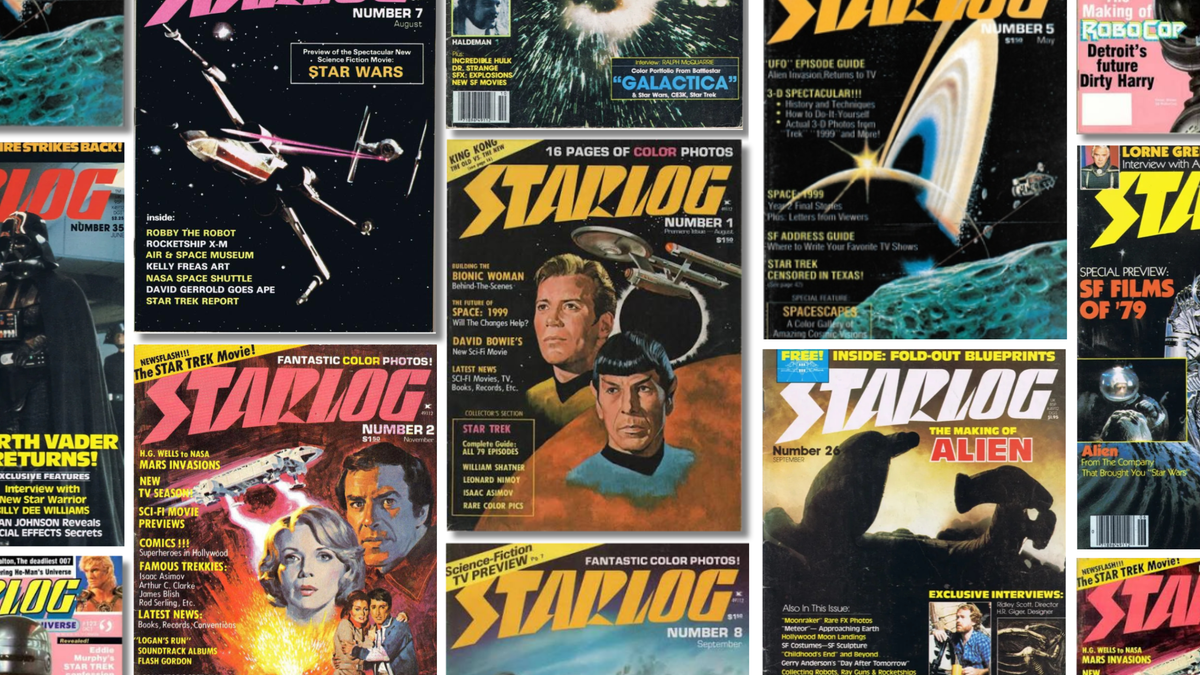
The classic science fiction magazine Starlog is returning, just in time for its 50th anniversary.
Starlog was an enormously influential magazine devoted to science fiction media, covering news about the genre starting in 1976 before it eventually closed down in April 2009.
At the end of June, word broke that the storied magazine would be resurrected as a print publication and that it would have an impressive editorial roster behind it: Annalee Newitz (founder of io9 and author of such books as The Terraformers and Automatic Noodle) will serve as the magazine's Editor-in-Chief, with Meredith Borders as Senior Editor and Jason Kauzlarich as Senior Art Director. The first issue of the magazine is expected to be released this fall, and it'll go both to subscribers and be available on newsstands.
Accompanying the magazine will be a podcast, which will be hosted and edited by Jordan Hoffman, with Dave Gonzales as Podcast Producer. That's already begun, with the first couple of episodes now available.
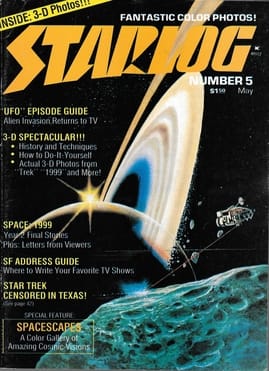
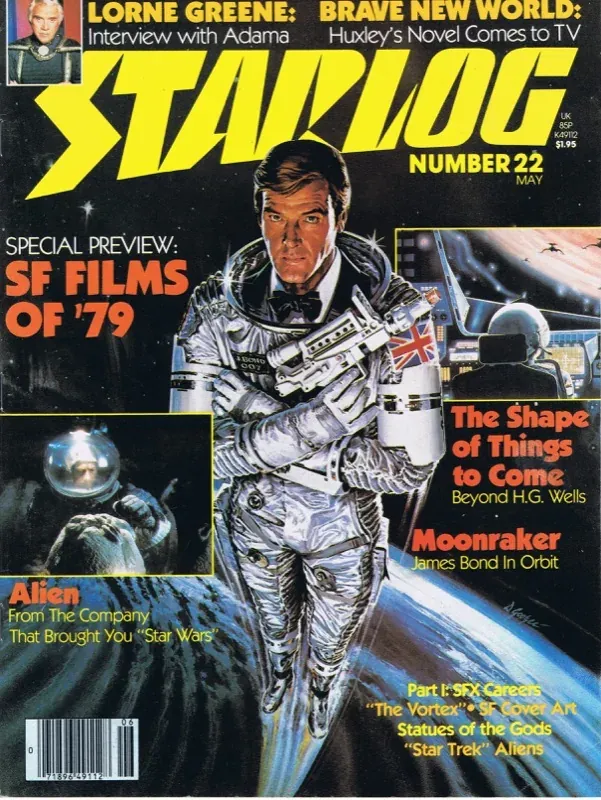
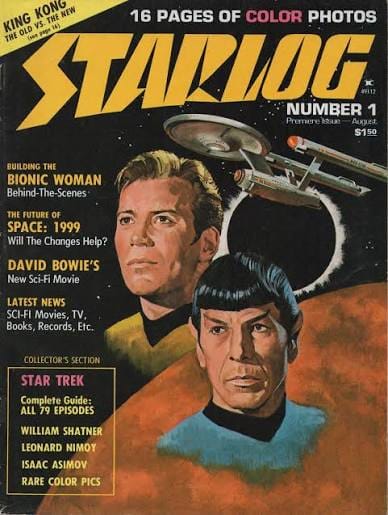
Images: Starlog
The 1970s were a transformational moment in the history of genre fandom: Star Trek had premiered a decade earlier and while short-lived, was proving to be enormously influential amongst science fiction fans new and old, while films like 2001: A Space Odyssey, Planet of the Apes (and sequels), The Andromeda Strain, THX-1138, Silent Running, Soylent Green, and many others were steadily demonstrating that science fiction could take well to cinemas. Print magazines and books were no longer the sole home for quality science fiction and fantasy content, and accordingly, fandom was changing: new fans, hooked on these films and television shows and eager for more, began looking for new places to nerd out on them.
Enter Starlog, which was founded in 1976 by two fans, Kerry O'Quinn and David Houston. O'Quinn had gotten into the magazine industry a couple of years earlier, starting with Daily TV Serials, a publication dedicated to soap operas. As he wrote on his website, "after 4 years of success with soap opera activities, we could afford to launch a publication that would celebrate a realm I knew much better, a universe dear to my soul – the future, space exploration, other worlds, science fiction."
In his book Gateways to Forever: The Story of the Science-Fiction Magazines from 1970 to 1980, Mike Ashley pointed out that there had been some media-focused genre magazines before, like Forrest J. Ackerman's Monsters of Filmland and Frederick S. Clarke's Cinefantastique, which paved the way for publications like Starlog. "It owed its initial success to its coverage of Star Trek," Ashley wrote, "but it broadened its scope to covering not just new but also classic sf films and looking at the books and authors behind them. It also looked to further science fiction in all its forms and included features and interviews with writers and artists."
O'Quinn noted that distributors told him that there wasn't much of a audience or market for such a publication – Star Trek, they pointed out, had been off the air for years at that point. But they went ahead anyway. "We started publishing Starlog quarterly. But the premiere issue sold better than anyone expected, and we quickly went bi-monthly. By the time Star Wars created a science fiction explosion on the cover of Time and Starlog (issue #7), we were monthly, and from that moment on, we were the voice of science fiction, for fans and professionals – before the Internet connected kindred spirits, and answered all our curiosities."
It established itself by deeply embedding itself within science fiction culture, reporting news of new productions and projects, conducting interviews with the people working behind the scenes, like Harlan Ellison, George Lucas, and Gene Roddenberry, profiles of actors like Leonard Nimoy, commentary from figures like Isaac Asimov, and features that helped connect fans to one another, like reports about upcoming conventions and gatherings. Long before the internet provided all of this information at one's fingertips, Starlog was an indispensable resource.
It was also at the forefront of the transformation of fandom. With the release of Star Trek in 1966 and Star Wars in 1977, science fiction fandom was no longer just confined to fans who were interested in SF literature. In my book Cosplay: A History, I noted that this period was one of balkanization as fans began carving out their own spaces, either devoted to single franchises, or to the SF content found in these growing mediums. Starlog helped with those changes by providing a space for those fans learn and think about these new stories.
In addition to their novels and nonfiction books, Annalee Newitz is best known for founding io9 in 2008. The site carried with it many of the same sensibilities that guided Starlog (and Omni Magazine), with a wide focus on science fiction, fantasy, film, television, comics, and everything in between. (I wrote for io9 as a freelancer under Newitz between 2009 and 2016.) This new version of Starlog, Newitz told me in an email, is being planned "as an annual print magazine, with the first issue coming out this year on November 13."
They explained that this new iteration of Starlog is being stood up by the folks behind the magazine Fangoria, and that they took on the job after a couple of conversations that assured them that the magazine would be in good hands. "[Abhi Goel, owner of both magazines] reassured me that this operation was entirely independent, with no AI slop or corporate strings attached, and basically gave me carte blanche to shape the contents however I wanted."
Newitz says that they're thrilled about joining the project, and that they feel particularly connected to the publication and the enormous footprint it left behind. "I couldn't be happier about stepping into a legacy that was always about centering the fans and bringing us together as a community."
Starlog never pretended to be anything other than a labor of love, created by and for people who actually care about sci-fi media and want to know more about how art gets made. One of its founding editors, Kerry O'Quinn, was openly queer at a time when there were not a lot of out gay Star Trek fans (or magazine editors), and I think that made him more open to celebrating the Vulcan ideal of "infinite diversity in infinite combination." As a queer nonbinary nerd, I feel very at home in the world that O'Quinn helped to create.
As Editor-in-Chief, they have a lot planned: like its prior iterations, the magazine will cover books, comics, fantasy, games, movies, games, science fiction, television and more – through articles, interviews. They'll even "incorporate the legacy of the Starlog spinoff publication Future Life, which explored science and tech." The first crop of contributors is also an impressive bunch: Mahmud El Sayed (The Republic of Memory), Mike Chen (The Photonic Effect), R.U. Sirius, Charlie Jane Anders (Lessons in Magic and Desire), Mia Tsai (The Memory Hunters), Evan Narcisse, Riley Black (The Last Days of the Dinosaurs), C.L. Polk (Even Though I Knew the End), and Josie Riesman (True Believer: The Rise and Fall of Stan Lee).
While known for their work online (and Newitz says that there'll be "a healthy dose of io9 vibes" in Starlog), they noted that there was a considerable appeal to tackling a print publication at this point in time, where the SF/F news and commentary landscape is dominated by sloppy clickbait and AI. "Starlog of yore was full of media news and information about fan events, which is now something people can find online," they say. "Today, what we really need in a print publication is deeply researched, beautifully illustrated essays and deep dives. That's what we have here."
Starlog will return in November. You can subscribe, sign up for its newsletter, and follow the podcast here. I'm eager to see what's in store for readers.