Amazon closed the iris on its Stargate revival
The series was ordered back in November
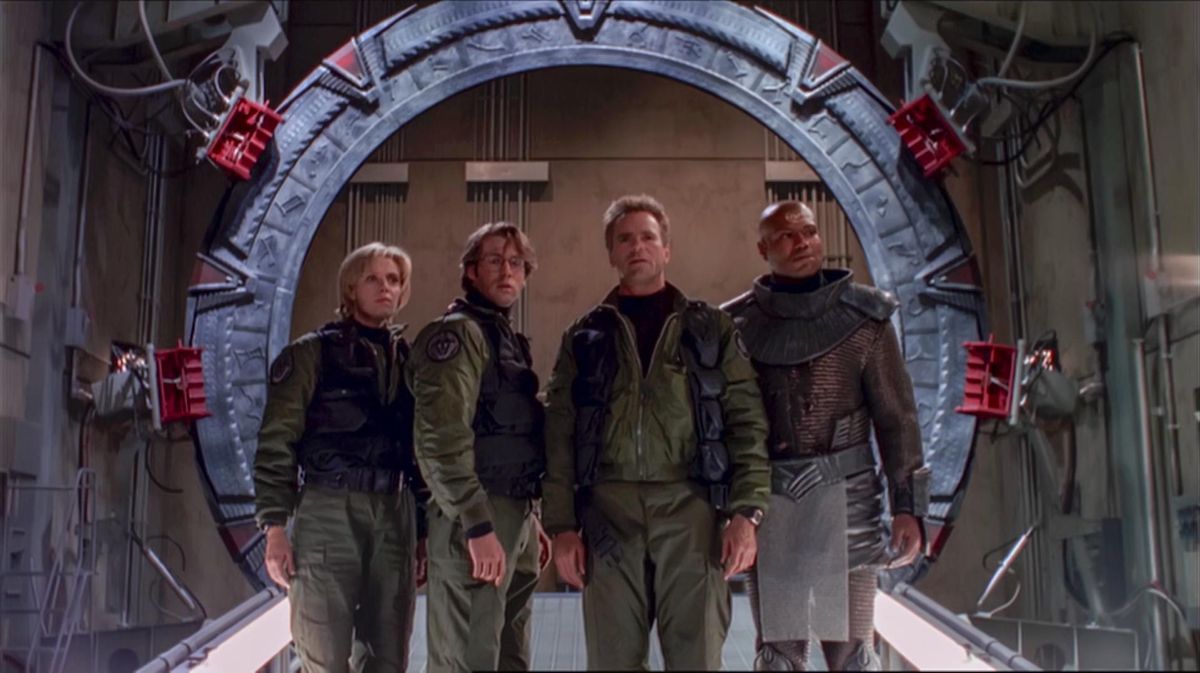
Well, this is a bummer: just a couple of months after announcing that it had ordered a revival of the long-running Stargate franchise, Amazon has decided to shut it down. The series had been in preproduction in London, and Variety reported that work on the series has been brought to a close. The reason? "Amazon execs were concerned that [Martin] Gero’s take on the series would not have broad appeal beyond the franchise’s already dedicated fanbase." Former series showrunner Joseph Mallozzi confirmed the news on Twitter and said “My heart breaks. For the incredibly talented writers who worked tirelessly to bring this show to life. For Martin who maintained an unwavering positive outlook throughout despite the challenges, and who always strove to make a show that would honor the fans while welcoming a new audiences. And for the long-suffering Stargate fandom who waited so long and came so close to getting a show they truly would have loved.”
Starting in 1997, the Stargate SG-1 was a spinoff of Roland Emmerich's 1994 film, Stargate, in which archeologists discovered a mysterious gate that turned out to be a piece of alien technology that allowed for instantaneous travel throughout a vast gate network in the galaxy. In the series, the United States Air Force put together dedicated teams of explorers, soldiers, and scientists to explore the worlds that the gates led to, discover new civilizations, and tangle with various alien threats that they encountered.
SG-1 ran for ten seasons and led to a spinoff series, Atlantis, in which an expedition headed off to another galaxy for their own series of adventures, while in another series, Universe, an unlikely group of personnel escaped through a gate and found themselves across the galaxy on an ancient starship. With Universe's cancelation in 2010, the franchise largely came to an end (there was a webseries called Stargate Origins that ran in 2018 with the launch of a dedicated Stargate streaming service called Stargate Command, as well as a short-lived animated series, Stargate Infinity, in the early 2000s), and with Amazon's acquisition of MGM in 2021, there was hope from various creatives and fans that the company would find a way to bring the series back in some form.
 Andrew Liptak
That had been the plan as of last year. The series was to be run by Gero, who had worked on prior iterations of the series, Stargate SG-1, Stargate Atlantis, and Stargate Universe, and according to Mallozzi, the series wouldn't have been a reboot of the show, but a continuation: "it's not a reboot or a wholesale reimagining that will wipe the slate clean on 17 seasons and some 350 hours of Stargate history."
Instead, it would have served as a new introduction to viewers, presumably remaining within the same continuity. That seems to be the sticking point, according to Variety and Deadline. In her report on Deadline, Nellie Andreeva noted that the Amazon felt that the series didn't align with its "programming strategy" and that despite nearly two year's worth of work on the show, the company opted to kill it outright rather than try and salvage it. "The differences apparently ran so deep, they required an outright cancellation vs. retooling the existing version of the project by giving notes to Gero."
Amazon's television has undergone some considerable changes in recent months: Peter Friedlander, the former Head of U.S and Canada Scripted Series at Netflix took over MGM back in September (and then greenlit this new Stargate series), and in January, he reorganized the place, putting into place Blair Fetter for the studio's genre and worldbuilding team. Fetter in turn reorganized their genre efforts back in April (and who appears to be responsible for axing it.) And, the streaming environment has changed quite a bit in recent years.
 Andrew Liptak
That's a lot of change – something that James S.A. Corey alluded to when asked about their own project at the studio. Personnel changes at studios are notoriously dangerous for in-development projects, with new executives often wiping the slate clean of projects that they weren't involved in creating.
What's stands out for me about this cancellation is two things: Amazon's continued focus on programming and content that appeals to a "global" audience, and that there were apparently tensions over how closely this new series was tied to the original series.
"Global" comes up a lot with Amazon's programming directives: the company wants its series to be viewable by a very wide audience, and it's worked to try and pull in stories with wide name recognition, like Lord of the Rings, The Wheel of Time, Jack Ryan, and Stargate.
I'd argue that there's something globally appealing to Stargate in theory: the original series imagined its teams visiting all these civilizations that had some influence on Earth's ancient societies, but at the same time, it's a very American-centric story, something that later seasons often leaned into when interstellar problems threatened to spill over.
The bigger issue at play comes down to the classic tension you have when approaching these legacy franchise: how do you ensure that you don't alienate the passionate fans who are rooting for a revival while also ensuring that you aren't just doing a carbon copy or alienating them by throwing it all out the window and starting anew (as Emmerich had planned back in 2014)?
We've seen this done to varying degrees of success with Star Trek – with J.J. Abram's Kelvin films and the more recent Paramount+ slate of shows like Star Trek Discovery and Star Trek: Strange New Worlds and Disney's Star Wars films and shows. Those experiences have shown that you can revive and continue those worlds successfully and with general buy-in from fandom and viewers (as in the case with Strange New Worlds, Lower Decks, The Mandalorian and Andor) and mess things up and rile up people (like with Book of Boba Fett, Ahsoka, various seasons of Star Trek: Picard, and depending on who you talk to, Star Trek Academy.)
Reading between the lines of these reports, it sounds like Amazon wasn't thrilled with a series that was tied close to those original shows and that "the series would not have broad appeal beyond the franchise’s already dedicated fanbase." That is a real concern: if you're trying to revive this bigger piece of IP, you want to make sure that it goes beyond the core group of supporters and to your much larger viewing audience. Stargate collectively had enough episodes for MGM to try out its own streaming service (354 episodes!) with years and years of build-up stories, characters, mythologies, and tropes that any new approach would have a lot of work to adhere to, while also remaining accessible.
That Amazon opted to just end it says that its executives didn't think that what they had was salvageable. That's a shame, because Stargate is a show with a simple concept: send a team of people through a gate to a new world and explore. It already spawned three series: jump it far enough in time, or move it over to another location, and you can start up again.
In a tweet, Mallozzi pushed back on the idea that the project wasn't welcoming to newcomers: “We were ever mindful of creating a show that would have broad appeal.”
This speaks to the general difficulty that you have with a legacy show's canon and fandom: fans want more of that same world and story, while that might not appeal to your general audience. Stargate did have issues when it tried to change things up: Stargate Universe was a take that was a little darker, a little more serialized, and a little more mature than the prior shows' "planet of the week" style, and ultimately the franchise saw dwindling audience numbers after nearly 15 years being on the air.
I doubt that they'll give up on the franchise after this: there is a dedicated fan base out there after all. But I have to wonder if this is just the end of this particular world and if they'll just take the general concept and reboot it outright. I'd be sad about that, but Stargate has been off the air for a while, and seeing a new take on the concept could be interesting.*
So: we'll see. It's a shame to see 20 months worth of work dumped down the drain, and I'd be interested to have seen what they were working on and where they could have taken it. And when they do try again, hopefully it'll be as interesting and fun as the original was.
*If I had the chance, I'd pitch for a ten-episode season where they spend the entire time on one planet figuring out some weird archeological mystery or language or technology, and really have some fun with planets that aren't Vancouver dressed up a little, before jumping to another planet in the next season.