Power imbalance
James S.A. Corey on The Captives War, The Book of Daniel, and how the only way to survive an alien invasion might be appeasement
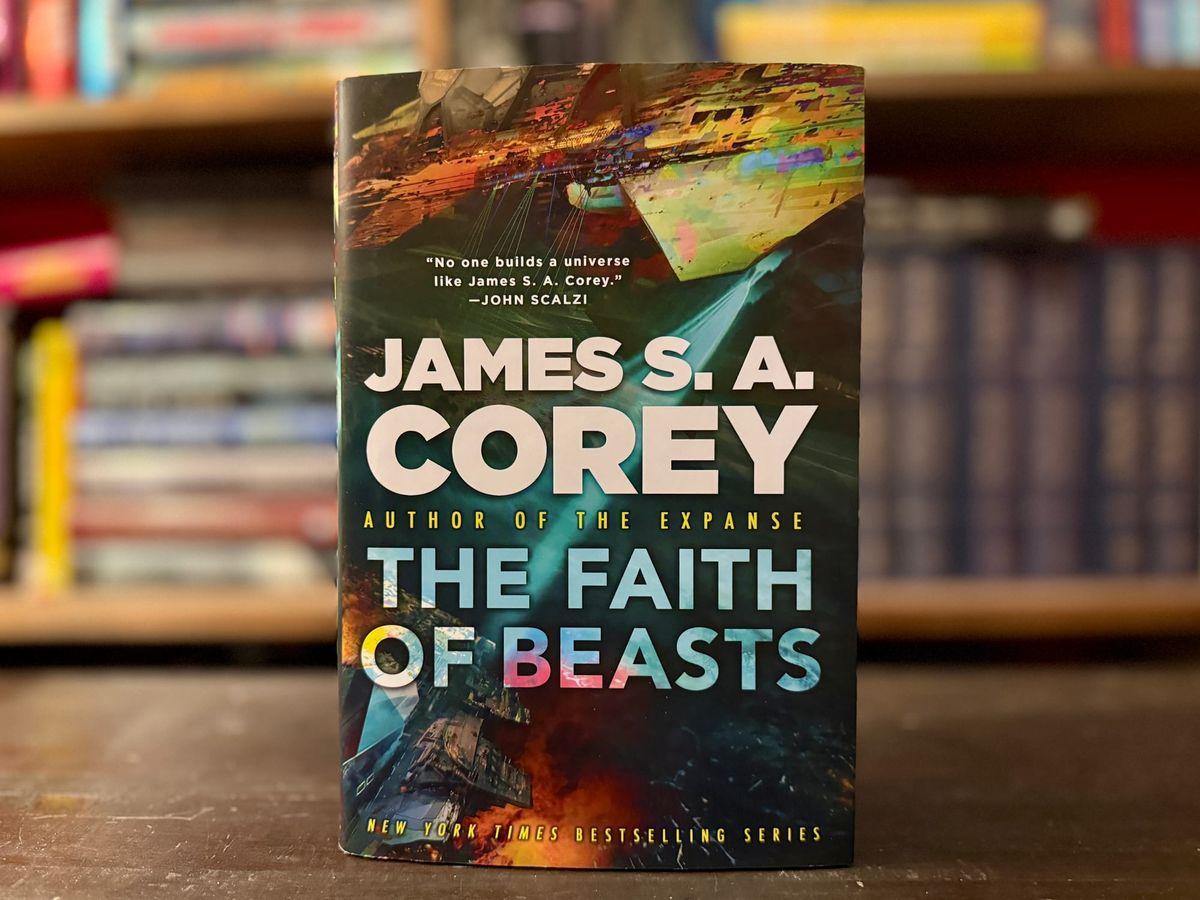
When James S.A. Corey finished their long-running space opera series The Expanse, they had another project lined up: The Captives War, a new space opera set in a far-flung corner of the galaxy that finds humanity quickly taken over, subjugated, and integrated into a brutal empire.
In The Mercy of Gods, we're introduced to Dafyd Alkhor, a research assistant who finds himself playing an integral role in ensuring humanity's survival, and who's forced to make some incredibly difficult decisions to do so.
 Andrew Liptak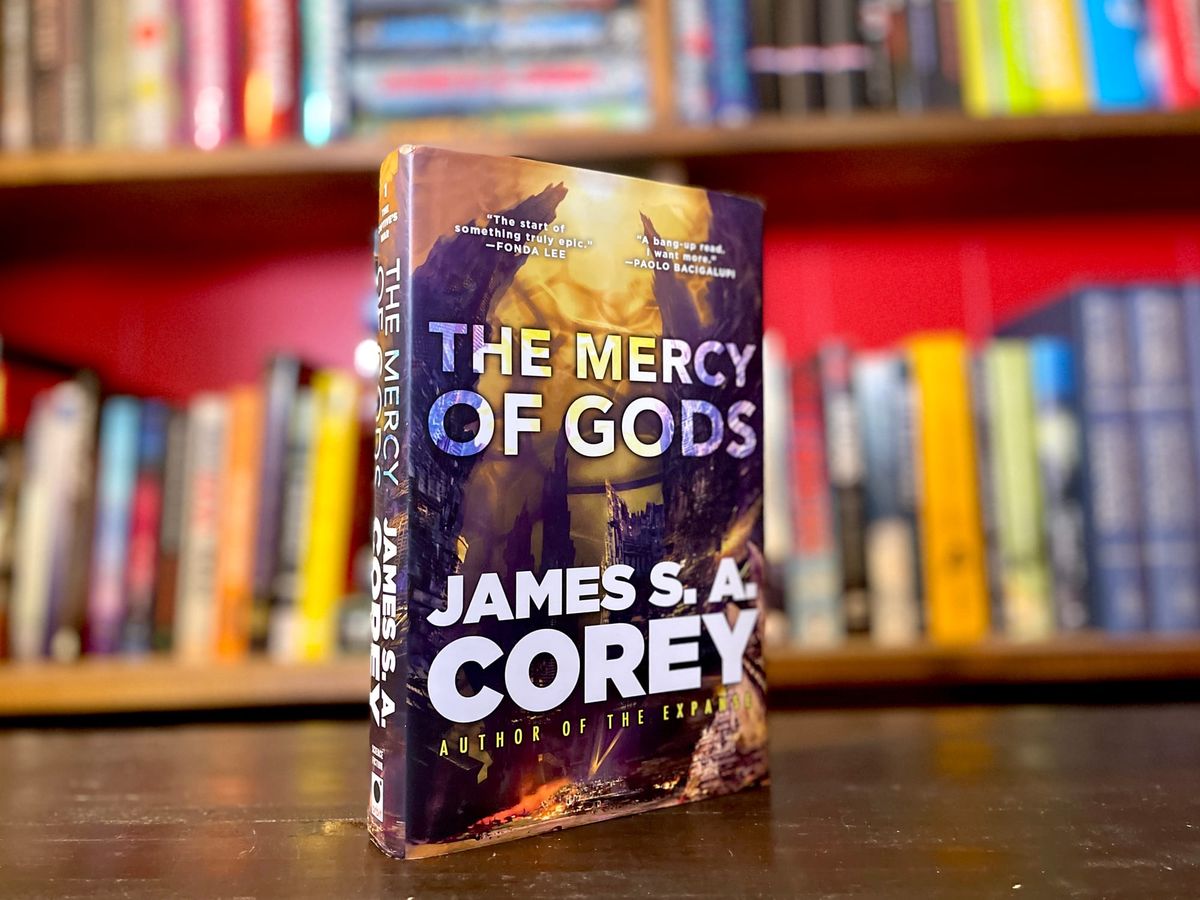
The next book in the series is The Faith of Beasts, which picks up the story and follows the remnants of humanity now that they're part of the Carryx's empire. They have to continue to prove useful to their conquerors, and Dafyd finds himself caught between the two forces: his overseers, and the people he's trying to protect. He's aided by one of the Carryx's enemies – The Swarm, which is trying to find a way to take down the Carryx from within.
I've been reading and enjoying it, and had the chance to chat with Daniel Abraham and Ty Franck about the series, what to expect, and a couple of other things.
This interview has been edited and condensed for clarity.
Can you talk to me a little bit about what the original kernel of an idea was for The Captive Wars, and how you built from that idea to the books that we have now?
Ty Franck: Well, we were wrapping up The Expanse and Daniel kept saying "what do we want to do next?" I had pitched him an idea a couple of years before that of doing the, the biblical book of Daniel as a sci-fi story, the guy who basically gets kidnapped by a gigantic empire and carried off to their capital city and forced to become a bureaucrat there.
I always found that a really interesting idea that this empire that annihilated your culture and your home carries you off and says "oh, by the way, you work for us now. We're putting you in the bureaucracy. Do a good job or we'll kill you and your friends." That was pretty unique to Babylon at the time that they did that, that forced integration of cultures through this program. And, I always was interested in it as a sort of a sci-fi idea.
Daniel: And then once you have that kind of base idea, a whole bunch of other stuff just kind of stuck to it. So, Ty was talking to someone who we saw a presentation by who had done this program on soft robots – like cloth robots with contractile fibers in them that could become their own shape depending on what they needed to be. And that turned into a bunch of the stuff in Livesuit. There was a Radio Lab episode that I listened to years ago and kind of half forgot that I wound up unconsciously lifting a bunch of the philosophy and questions of anthropomorphizing aliens and anthropomorphizing other animals and that wound up in there.
So there's a – Ty's idea was absolutely the base of the whole thing, but then a whole bunch of other things sort of stuck to it like Christmas ornaments.
One of the things that I was struck the most while reading The Mercy of Gods was – I'm sorry, I'm going to try not to do too many Expanse comparisons – but you set The Expanse in an advanced but fairly recognizable world. Here, you've got a much bigger, more complicated world. Was that a challenging thing or was that a freeing for you?
Daniel: Well, The Expanse was really intended to be in conversation with a bunch of the stuff we were reading when we were growing up, like, Larry Niven, and [Alfred] Bester, and [Robert] Heinlein books. One of the things that was important to us kind of from a career management thing was not to – to see how much latitude we have as James S.A. Corey for people to follow.
So the idea was to to still do space opera, but to, instead of being in conversation with Larry Niven, to be in conversation with Frank Herbert; instead of being in conversation with The Stars My Destination, rub up against The Left Hand of Darkness and just explore those different parts of the genre.
Andrew Liptak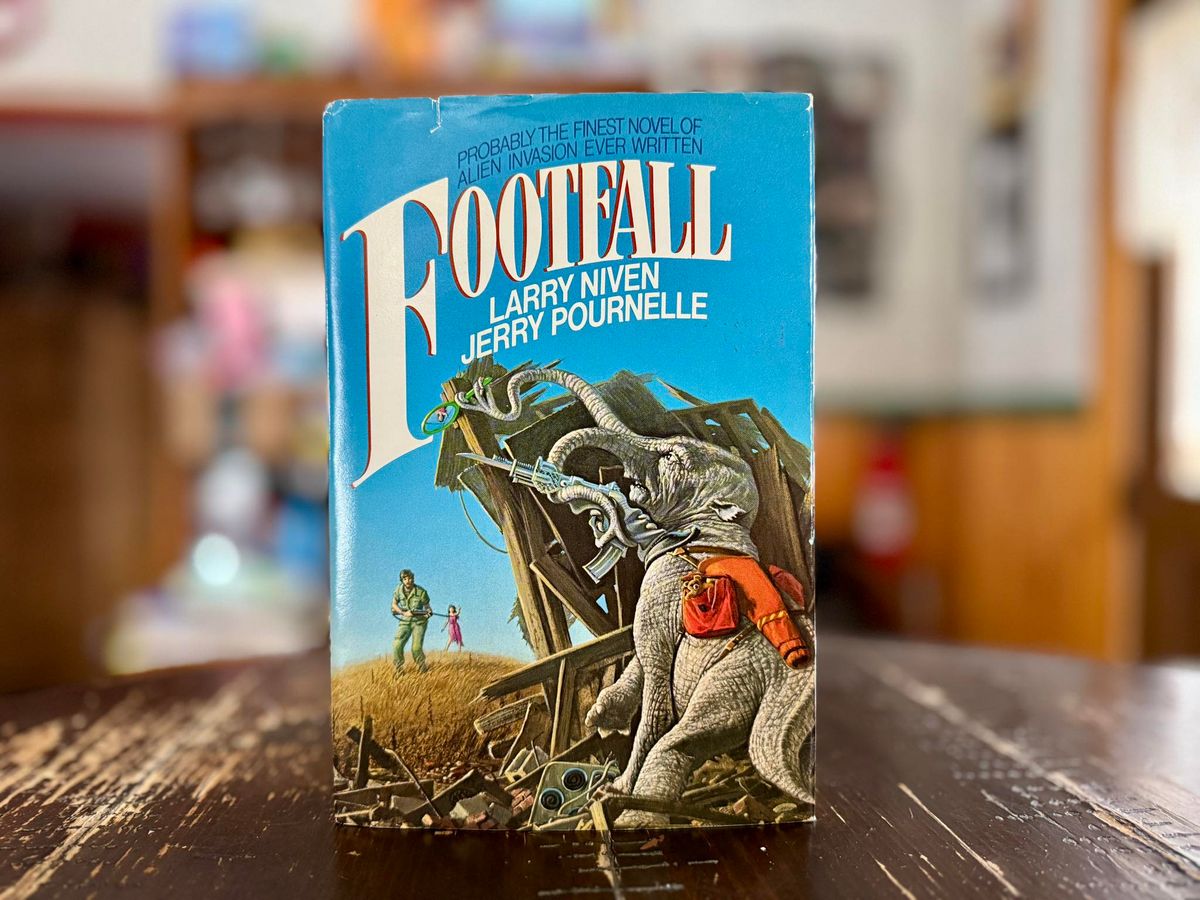
It's funny that you you mention Larry Niven – I picked up Footfall by him and Jerry Pournelle earlier this spring, and it felt a bit like The Mercy of Gods in some ways – you've got the alien invasion, but also some of the digging into the details of the Fithp's civilization and whatnot. They felt a bit congruent.
Daniel: The Expanse was more like The Long Arm of Gil Hamilton stuff, for me anyway, I mean, that's, the detective vibe, right?
Ty: I mean, any alien invasion story in prose is gonna kind of feel like every other alien invasion story in prose. I don't know that we were aping Footfall, at least consciously in any way. It's been a long time since I've read that book. I just remember that the aliens were like elephants, right?
Yes! It's a weird book.
Ty: Yeah. But also now that I'm remembering it, Footfall does the thing that we were specifically responding to and sort of avoiding doing in The Captive's War. Footfall does the thing where the scrappy humans find a way to fight back with guns.
Yeah.
Ty: Which is exactly the trope we were trying to avoid. When the superpowered aliens show up and conquer you, you're not going to beat them with F-18s. The point of the whole thing is – and this is true for the Book of Daniel too. The Israelites of the time, at least as described in the biblical book of Daniel, were nowhere near the power of Babylon. Babylon wiped them out in without even really thinking about it. Babylon was the most powerful empire in the world. They had enormous technological advantages that the largely agrarian Israelites just couldn't match.
So we really wanted to have that, where the humans – while our instincts might be to fight back to grab guns and knives and go after the aliens that way, make it very clear that that is instantly a failing strategy, whereas in Footfall, they build the big spaceship and they take off and go attack the alien spaceship and somehow win. We're trying very hard not to do that.
Space opera and science fiction has a lot to say about that sort of imbalance of power – looking at the impact of empire and how characters contend with this sort of unstoppable force that they're facing. How have you guys been thinking about this?
Daniel: I think it's in the water right now. I think it's – Ty always talks about the idea that any book is about the time in which it is written. That's true for these too. I don't think you can be part of our culture right now and not be thinking about things like how do you survive when you're at the whim of a huge bureaucracy that you don't have a voice in.
Ty: I mean, it's also a little Kafka, right? The giant bureaucracy is operating by rules you don't understand but you're expected to abide by. Your life is constantly at threat by this gigantic machine that is incomprehensible to you. That's also part of it and I think people feel like that, because our society is so large, so complex, and so tied to various technologies that we – most people don't understand those technologies. We use them every day, but we don't understand them.
It does start to feel like you're inside a giant machine that you barely comprehend, but you're expected to live by a bunch of rules that the machine imposes upon you. Which I, which I think is what Daniel was kind of talking about.
Daniel: That's well said.
I'm reading a book about the history of UFO culture and the general progression of how it evolved. One of the most interesting things is about it is how in the past decades, gotten better around wrapping our brains around how small we are and what our existence might look like should we encounter other civilizations.
Daniel: There's also a lot of that experience locally. I mean, I'm in New Mexico, living on traditional Pueblo land. My city was founded by Spanish conquistadors. Where the new wave or new empire comes in and just wrecks your shit, that's been going on for a long time here, without the need for the space opera metaphor. It works really well in the space opera metaphor. Lots of people have have engaged with this one way and another, but it's speaking to a scenario that doesn't actually require any of that.
Now, how we play it out involves a bunch of science stuff because it's a field we like playing in; the astrobiology, the xenobiology, the evolutionary speculation, that's cool. But the power imbalance thing at the heart of it, that's a human experience.
Ty: Yeah, absolutely right. And if you, if you study history (which is kind of my thing), the imbalance that comes from even relatively minor technological advances is enormous. But if you think about it from an alien perspective, like the level of imbalance that could exist – when a guy had a spear and the other guy had a gun, the guy with the gun had an enormous advantage, but the guy with the spear could still come stab you. So it wasn't an impossible-to-overcome advantage.
Then you advance up to the modern age. If you're on the ground with a spear and the other guy has a fighter plane, you are literally incapable of harming that guy. He just wins, right? And then you advance again, say you're down on the ground with a spear and the other guy has a fleet of spaceships, the level of power imbalance is something that we humans have never really had to overcome. It's something can only imagine, but it is many, many, many orders of magnitude greater than the guy who has the gun and the other guy has the spear. That's part of what we're talking about too: what do you when when you have a spear and the other guy has world-ending energetic forces that are incomprehensible to you?
Daniel: It's not really an accident that we are leaning back toward titles that talk about gods and faith and almost religious level scales of disparity. If you're facing some kind of seraphim, yeah, you're outclassed, there's nothing you can do.
Ty: Yeah, at the point where you're facing literal gods, at least in mythological terms, the only thing you could do is propitiation, right? The only thing you could do was appease them in some way. So we're trying to put our characters in the position where the antagonists so outclass them in power that the natural inclination is "let's find a way to appease them, so they don't hurt us."
You've set up my next question: when you left off in The Mercy of Gods, Dafyd had reported the resistance faction and was elevated to becoming the spokesperson or conduit between the Carryx and the rest of humanity. Where are you taking him in The Faith of Beasts?
Daniel: Well, this one also very much pulls from that idea that Ty brought in at the beginning. As you make yourself important within the empire, how do you protect yourself and your people by becoming part of this empire, and at the same time, maintaining your faith, yourself, and who and what you were before. It's rough! It's gonna suck: this is not a romantic comedy. So that tension is fundamental to the story that we're telling.
Yeah. I've always found the idea of encountering something and being changed by it fascinating – not just in combat or warfare, just anytime you encounter something that's vastly different. It's interesting to see how humanity is being forced to adapt here.
Daniel: One of the things that comes up in this new book is the generational change that comes, when you have the people who remember how it was before the conquest, who remember what that life and society was, and then have to plan to raise children and new generations who don't have that context.
Ty: I mean that's certainly a well that we've dipped in before. I think both Daniel and I are fascinated by the generational change thing. I mean, I used to work for a Chinese company. Half the people I worked with were first generation immigrants, and the other half were people who were children of first generation immigrants. And the differences in the way they saw the world, between the people who were born in Taiwan and then emigrated and the people who were born in America, they almost couldn't talk to each other. They almost couldn't understand each other. So that idea of the children who are born in captivity, captivity is the only thing that they've ever known, it's not going to feel weird to them.
How far have you plotted ahead for this series: I know you've got the three books planned, so what does the general future look like?
Daniel: We write and turn in the third one? I mean, we told you what the end of the story was in the prologue of the first book. There's not a lot of big, structural changes that aren't already right in there. But we spent a month last year doing a really detailed outline of the third book, and we just need to finish writing it down.
How's that going?
Daniel: I could be going faster. [laughs] I'm a little late on this one right now.
Andrew Liptak
This is coming right after The Expanse series – 9 novels plus the short stories. What were some of the things that you learned from that experience that you've incorporated into this one?
Ty: Yeah, the number one thing we learned is nine books is too many. That's why we're only doing three.
Daniel: [laughs] Good answer. No, I think Ty's right, actually. I mean, that's glib, but 9 books was a huge project and it did sort of kick the shit out of me. So doing something that's a little more contained is a pleasure.
But I think we got really good at outlining. I mean, the thing that the writer's room was really good at and the thing that we got a lot of practice on before was kind of, figuring out the structure and the scenes and the moments and finding places for them before we started finding it on the page, as opposed to, for example, the one we're doing on Patreon, where we're we're just figuring it out as we go. I feel like that process and this one are different in the amount of fundamental work we did before we started putting things to page.
Speaking of the Patreon project, how has that been going?
Daniel: We're right at the end of that one. We've got a big climactic fight and then some falling action and then just so much rewriting. Oh my gosh. It'll be great.
What's your ultimate goal with this project? Is that something you're going to publish as a regular novel or is it just something that you'll keep online there for the community?
Daniel: The point of the Patreon project is showing the whole process. So yeah, we'll pop it out. We'll see if anybody wants it. If anybody does want it, we'll show folks what it's like to get editorial notes, how to address editorial notes. We'll show them what the copy editing looks like. We'll show them what the page proofing looks like. As far as we can take that from, first principles to a published novel, that's kind of what that project is. And the idea is that once we're done with that, and we have the novel out, and we've gone through the whole process, and folks have seen it, we'll take the Patreon down and be done.
It is undignified, man. There was a lot of us sitting around going, "fuck, what were we doing? What key is it in? Shit!"
I feel like that's almost even more important because if you're just interacting with writers online, you're only seeing the high points, but not necessarily the day-to-day stuff. For an aspiring novelist, I can see that being pretty useful. Have you had anybody who's said that it's been helpful there?
Ty: Uh, we haven't we haven't had anybody who's told us they sold a story because they watched it.
Daniel: We've had some folks who are enjoying the process. I don't know how helpful we actually are and how much we're just a dancing bear, but we're doing what we do.
Now that The Captives War has been out for about two years now, do you have Expanse fans or do you have James S.A. Corey fans?
Daniel: We have more James S.A. Corey fans than I was worried about. It seems like there are a fair number of folks who have followed us into the new project. That's great! It gives me some hope that we might be able to keep this going without getting day jobs.
When The Mercy of Gods came out, there was the announcement that it was being developed for TV. Are there any updates about that?
Ty: We never do announcements. We forward other people's announcements. So.
Daniel: When there is anything to say, we will send you a link, but we're not going to say anything first.
Ty: I will say one thing that's happening right now is there's been a massive shakeup in management at both of the big streamers, at Netflix and Amazon. So we'll see if anything survives that process.
Did you have a project on Netflix?
Ty: No, but we but some of the people who were at Netflix are now at Amazon.
Oh, I gotcha.
Ty: So, obviously those new people are going to be taking those jobs at Netflix now, and who knows what their tastes are going to be. So yeah, I think the next couple years we're gonna see what Amazon and Netflix look like as streamers with the new managements in place.
I have to have to ask, is there any any updates about the future of The Expanse as a TV show.
Daniel: As soon as we have it, you will get the link, honest to God.
I had to ask, I had several people demand it.
Daniel: The Owlcat game is kinda cool.
The visuals look great. That's something I've been excited to see: this story spilling out into all of these other mediums. It's cool to see it continuing to persist.
Daniel: I really like seeing other people's take on it. I like the stuff that I'm not doing. I mean, we finished up our thing and other people –
Ty: We've sort of walled off our little garden, but if if other people want to grow tomatoes next door, they're allowed to.
You mean, as in, like, official, like, tie-in projects as opposed to more –
Ty: Yeah, there will never be a book 10 of The Expanse. But if people want to make video games, (licensed, obviously) but if there's an interest in making video games and RPGs and comic books and tie-in things like that it's cool to see other people doing stuff.
Thanks for reading! Let me know what you think of the series so far.