Ancillary Interview
Ann Leckie on Ancillary Justice, finding the personal stories in galactic empires, and what she's learned about writing
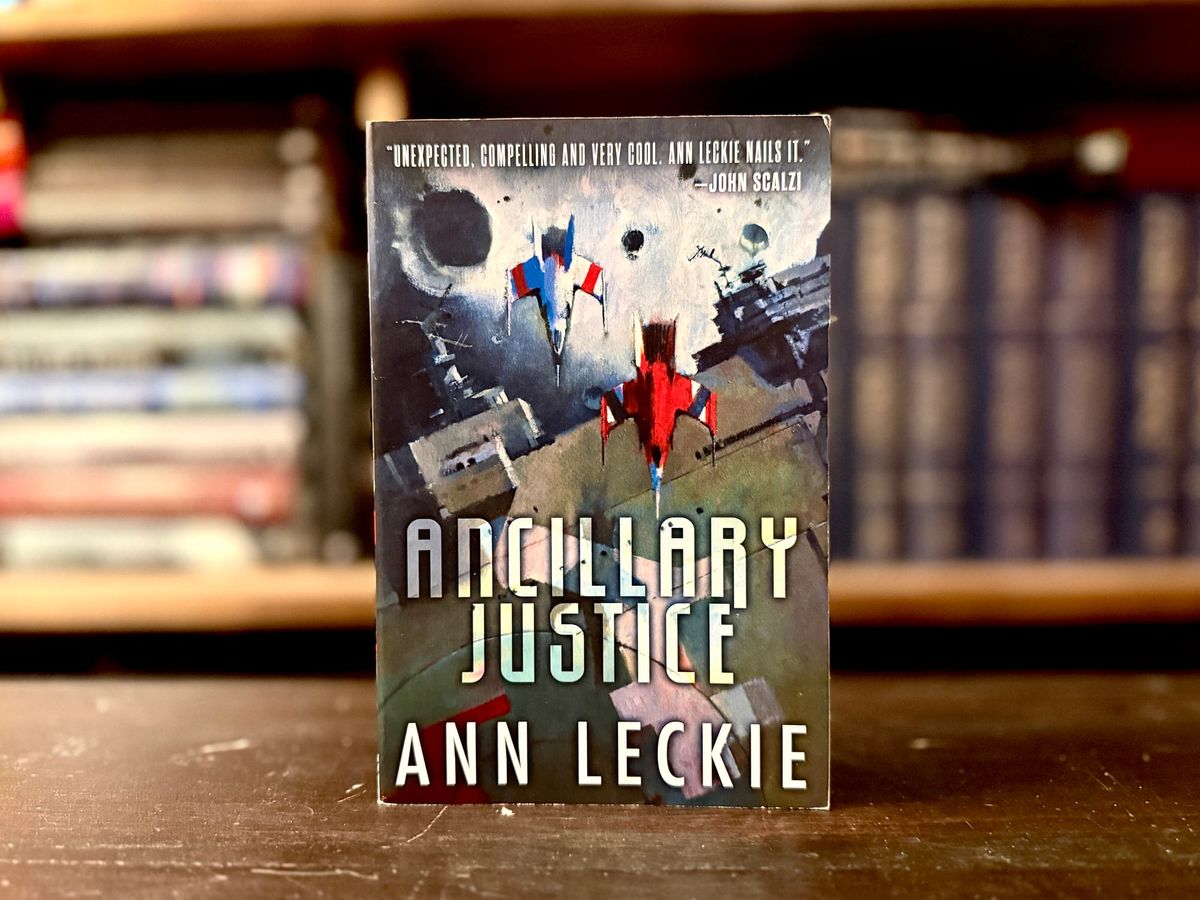
Sometimes, a story arrives at just the right moment to take the place by a storm. That was the case in 2013 when Ann Leckie published her debut novel, Ancillary Justice.
It's set in a distant future where the galaxy is ruled by the Radch Empire. It's headed by the Lord of the Radch, Anaander Mianaai, who maintains her consciousness across hundreds of cloned bodies, and who has developed various factions that have begun fighting against one another for control.
Caught in this is the Justice of Toren, an artificial intelligence that is a warship, and who controls thousands of "ancillaries" – human bodies that it uses for its operations. When the ship is destroyed, it survives in a single ancillary, Breq, and sets off on a decades-long quest to extract some sort of vengeance, teaming up with a former officer named Seivarden.
It's an engrossing read, and when I revisited it a couple of years ago, I was taken by her exploration of the nature of empires and their impact on their subjects, as well as her depiction of gendered language – the Radch don't recognize gender and default to the word "she". It was an interesting and pointed thought experiment, and while not the first, and it felt like it helped lead to plenty of other novels that were playing with similar ideas about depicting gender and oppression in science fiction in the decade since its publication.
Leckie followed up Ancillary Justice, with Ancillary Sword, and Ancillary Mercy, and has added some additional, standalone novels set in the same world, 2017's Provenance and 2023's Translation State. Her latest novel is Radiant Star, which came out earlier this week, and which follows some of the ramifications of the events in her trilogy.
I had planned to write something in conjunction with Ancillary Justice's tenth anniversary in 2023, and conducted this interview with Leckie in the late summer of 2023. That piece never materialized for a variety of reasons, but the arrival of a new novel was a good excuse to get it transcribed and out to you.
This interview has been edited for length and clarity.
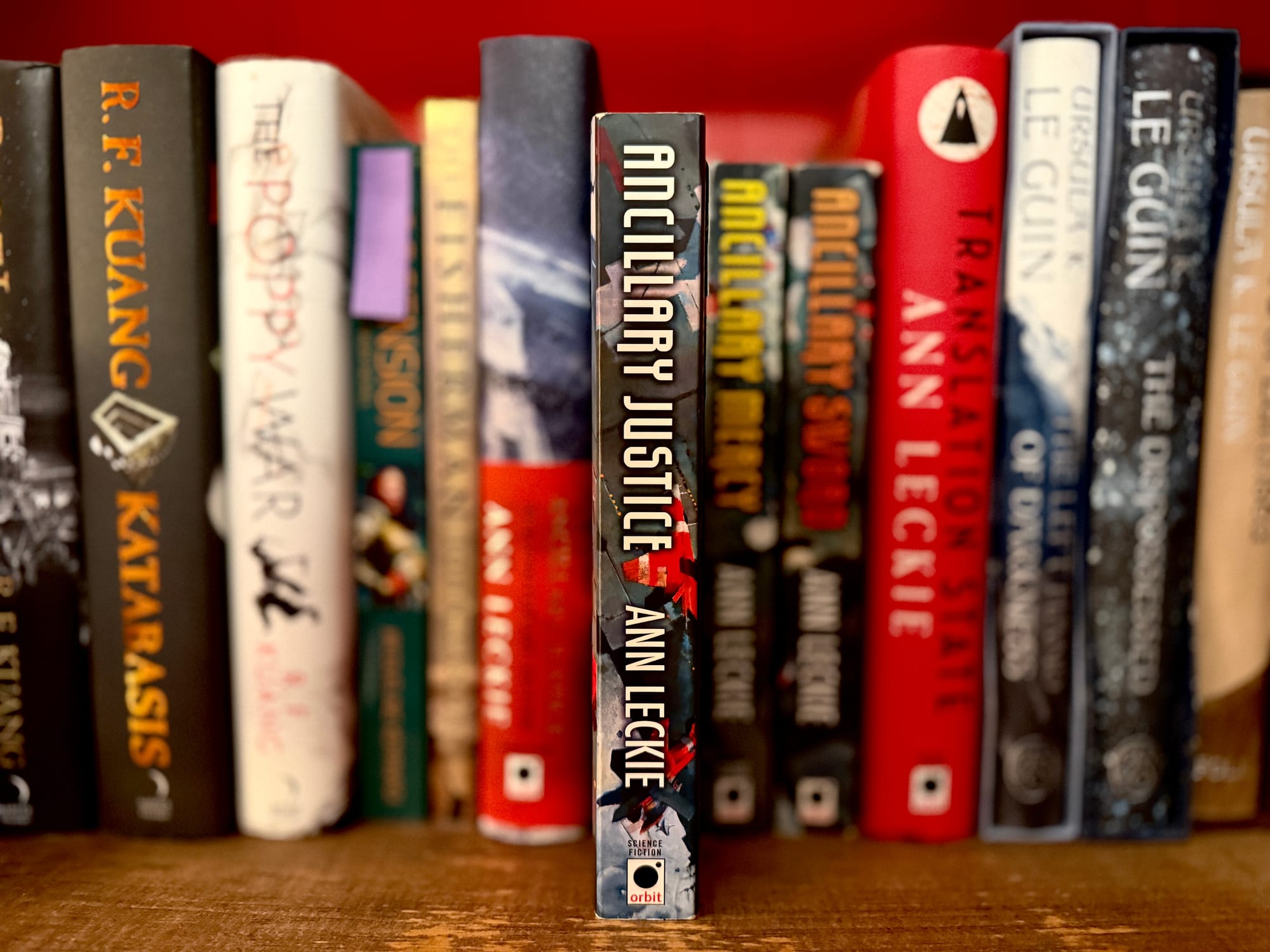
When I reread Ancillary Justice, I had the feeling that history played a big influence on the story, and I was curious about your background and when you became interested in the field.
It's not technically part of my academic background because I got my degree in music, but I have a sort of a hobbyist interest in history and anthropology. A lot of times if I'm stuck, I will go walk up and down the history of anthropology shelves at one of the local university libraries, pull books off the shelf that seem like they call to me, and find stuff that way. So it is an interest of mine, but it's not technically – I don't have a degree or a minor in anything.
Was there any era of of history that you were casually interested in? What I'm getting at is when I was reading it, I felt like I was reading about Rome. I'm curious if it was an influence.
I knew that was coming.
It absolutely was. Because, well: Rome, for better or for worse, has been a model for galactic empires for decades, for longer than you or I been alive. But it's often a model in a very simplistic way, like it's the pop culture version of Rome.
[Isaac] Asimov used Rome obviously for Foundation and he was just reading [Edward] Gibbon's The Fall and Decline of the Roman Empire. It's a classic for a reason, but it's a little bit like everything; it's bound by Gibbon's assumptions and worldview, and it's simply oversimplified a in number of ways, but it's really strongly influenced how we look at Rome.
But I had been reading some super interesting, random stuff on Roman history, and I was really intrigued. Not specific things like the emperors, but what was really Roman religion. There's this fabulous book called Religion in Roman Egypt: Assimilation and Resistance by David Frankfurter. Super readable book, super interesting; a period of Egyptian history that most people pay attention to, because we're all interested in the pyramids.
So I wanted to use Rome, but obviously change the things I needed to change for my story, but also use it in a less certain type of way.
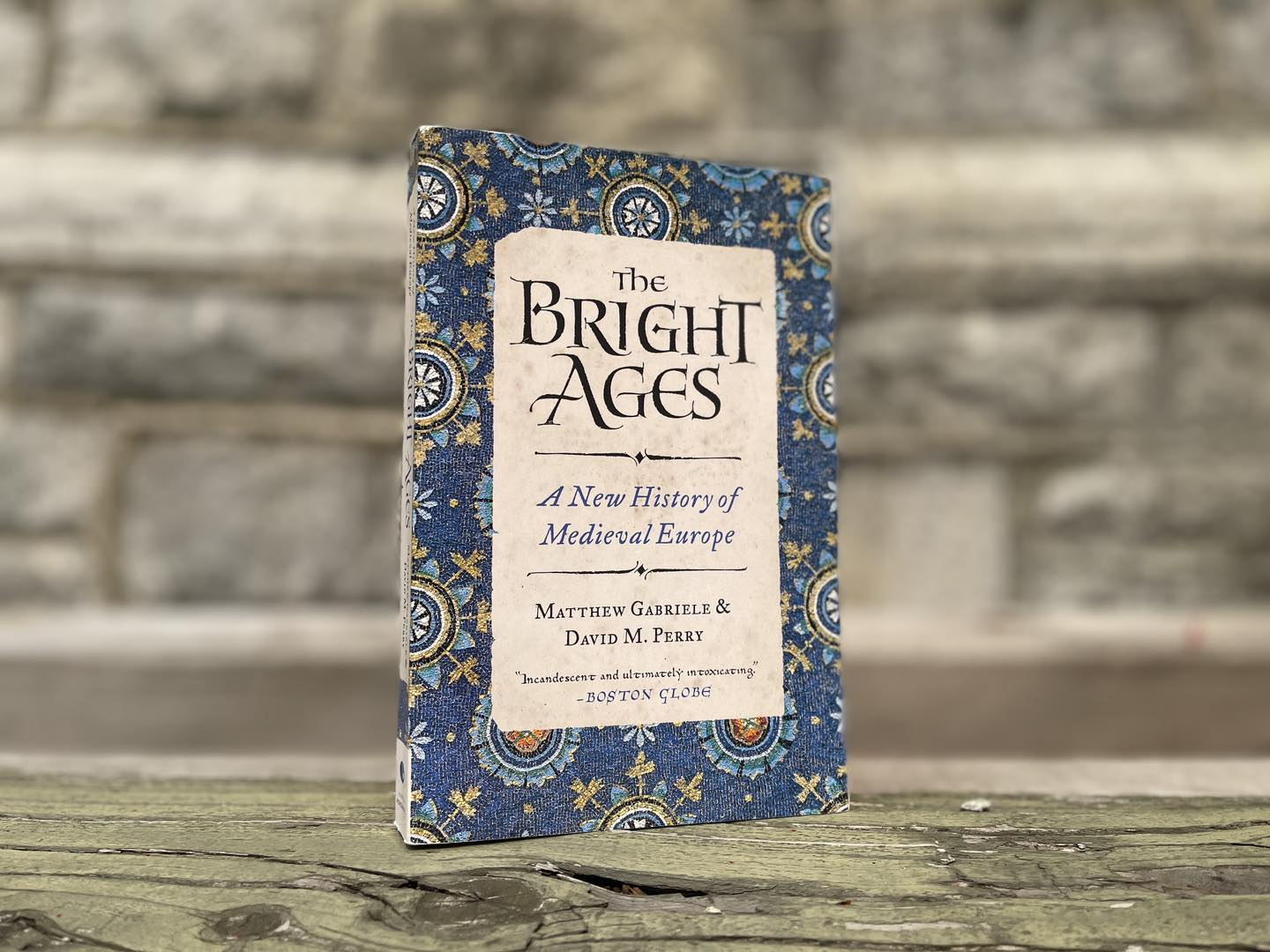
I recently read The Bright Ages by Matthew Gabriele and David M. Perry, which takes a new look at the post-Roman era and refuting the idea that Rome collapsed and that it was more of a transformation.
I mean, in some ways it was a collapse. But also (sorry, this is a bit of a pet peeve of mine here) it's talked about like "there was the glorious Roman civilization, which then declined and then everybody was living in ponds full of shit until the Enlightenment came along, and then we're all better." For one thing, Rome falling was a horrible, traumatic thing and probably millions of people died. It was dreadful.
But at the same time, people were people and there was a huge amount of technological advances being made by folks during this time that were supposedly the dark ages. My pet peeve is one of the things that often people don't see when they talk about that (and this probably comes from my background and maybe I have a chip on my shoulder: I'm not currently religious, but I grew up Catholic) that whole narrative is intensely anti-Catholic.
Yeah. This book talks a lot about the art of the era, but also that people didn't fundamentally change: they were still creative, they were still inventing, were making art and stories and going to war. They might have lost some of the infrastructure and governance, but they were still doing what they were doing, which I found to be pretty fascinating.
Yeah! The "nobody in the Middle Ages ever took a bath" is bullshit! People in the Middle Ages love taking baths: they were bathhouses all over the place! The intellectual and technological history of the Middle Ages and the "dark ages" is actually way more impressive than most people realize.
But yeah, the thing that really sticks in my craw is that there was the decadence of the Roman Republic, then there's just Catholic superstition, until finally the Protestants came along and saved us all from it. That's essentially what the narrative is, and I think it's taught so commonly that people (I was taught that in my Catholic education) and people don't even see what that narrative is. But it's absolutely an inaccurate narrative.
I read that you had started writing Ancillary Justice in 2002, well before the recent bubble of novels that explore this trope through a post-colonial lens. How were you thinking about this when you were initially writing it?
The 2002 versions of the book are way less sophisticated than what I eventually came to do. But part of that was because I was not 100 percent happy with my early efforts, and also the more I was like, 'well, okay, Empire, Rome, everybody loves a galactic empire.' And then the more I thought about it, it became "why is everybody love a good galactic empire? Why is it that such a common trope?"
Looking back, I read some things and was thinking about how a lot of science fiction (particularly the kind where you go to another planet and it's really) allegories might be too strong a word, but very often, the aliens or natives of the planet are standing in for the colonization on Earth. Even when it gets to a point where maybe the first person was thinking about that (we know H.G. Wells was thinking about that when he wrote War Of The Worlds) as people just keep using the tropes, they don't realize that they're echoing a plot that comes from a different time, and that they haven't thought fully about it. "Oh, these are cool toys."
I was like "what is the implication of that?", "what are empires really like?", "if this were really happening, what would this be like, how would people deal with that?"
I can't say that I've produced an exact portrait of a real empire, but I was thinking about those things and was listening to those conversations that were becoming more and more prominent at conventions. I was at WisCon and somebody brought up the phrase "the colonized mind." I hadn't finished Ancillary Justice yet, but I was like, "wow, that's a relevant phrase for me."
Were you seeing this trope in other works at the time, or were you approaching it as something that you wanted to see in science fiction?
It was something I was not seeing in science fiction, except I knew it was there. In some respects I probably hadn't seen it because I hadn't become aware that it was a thing, right? Because like I said, those conversations were happening, and I hesitate to say that no one else was doing it because somebody will come along and go, "there's 4 million things that pre-date you where they were doing it."
But I was definitely sitting down saying, "I'm not seeing this particular approach, so I'm going to take this approach."
It's been a decade since Ancillary Justice hit bookstores. How have you looked back on it and think about what's changed in the science fiction community and world since then?
So in some ways, looking back at the way I was handling gender, particularly in the early chapters of the first book, I can definitely see how much I've learned over about the ways that other people think about gender. I still stand by the choices that I made, but it's very clear in the early chapters that I'm thinking about gender as an absolute binary, and I wouldn't think of it that way now.
But my choice to use all "she", I would definitely still do it no matter what people – even people who I know and sympathize with my decisions had criticisms to make about that. I did think about those and decided in the end that they absolutely have a point, but I would still have done what I did.
I guess that's kind of how I feel about the book as a whole. There are maybe some things I would have changed, but probably not. I still stand by it. I think it was good work. I am still astonished at how many people seem to agree with me that it was good work, because, you're writing all by yourself and there's never any guarantee that everybody will like it. Nine times out of ten, you do your best with writing and then it sinks back into the ocean. And so that whole thing is just deeply weird to me.
How did you come to to address gender the way you did?
I started out thinking that it would be fun (and this is why it took me so long to write the book) that it would be fun and easy to write a culture where gender was genuinely not an issue, where nobody cared. Like it was the equivalent of "the person has dark hair. It doesn't make a difference."
I then had trouble writing that, and I figured it was because I was assigning supposedly random binary genders to my characters, because I didn't feel like I could do anything else given the way English is structured. But I was still putting folks in stereotypical positions, character-wise, based on the gender that they were assigned. I didn't like it and I was like, "well, how do I avoid that?" If the reader doesn't know that's what I'm doing, it doesn't have the effect.
So I was like, "Well, what can I do?" I can use "they" and there's nothing wrong with singular "they". However, in this context in the book, a number of characters have multiple bodies, so that really throws the plural singular ambiguity into relief in a way that I wasn't sure I could make work. I knew about some neopronouns and I was like, "well, I could use a new pronoun."
But I didn't feel comfortable with it. And I thought, "well, Ursula K. Le Guin used all 'he' in a situation." And in fact, I wrote a short story in that universe and used "he" for everything, and it just read like a Golden Age science fiction story, not like a world where gender doesn't matter. I was like, well, "Le Guin did that in Left Hand of Darkness," (which I hadn't read at this point, but I knew I was going to have to at some point and I did when I was writing Ancillary Justice) and she later very famously said, "I could have used 'she', [but] I didn't think I could have used 'she' at the time."
Ages ago, I also read Stars in my Pocket Like Grains of Sand where [Samuel R.] Delaney is using 'she' as a default pronoun, although in a different way than I was doing it. I don't know if you've read that, but...
I haven't.
The main character's language calls everyone 'she' unless one finds the other person sexually attractive, in which case they become 'he'. It's really interesting and I remember it weirding me out when I was in college. I said, "well, what if I use 'she'? These two writers have done this. Le Guin specifically did this in a situation, that's sort of similar to my situation, so let me try it."
I started out doing it and it was really weird, but the more I did it, the more I liked it. And so that's how that came about. It was just me trying to write complete, absolute irrelevance of gender into a culture in a way that would come across on the page as my doing that.
Of course, I didn't actually manage to do that, but I did something else that I thought was really interesting.
What was that?
It really highlighted the fact that English has a masculine default, and that default is not transparent. People will tell you the masculine embraces the feminine right? You don't use he/she, you don't use singular, it just means everybody, just like "mankind" means "everyone", men, women, any other gender. And so they treat it like that's just how grammar is and everyone understands it.
But what it really does is insist that the whole world is masculine and that anyone who isn't is an exception or not part of the story. So when you throw "she" into that position instead of "he", it makes it really obvious that the pronoun affects the way the reader envisions the characters.
That was the thing that I found super interesting was that I had started out the draft assigning binary genders to the characters. When I went and used "she," my internal picture of the characters who had previously been called, "he" actually shifted. That's how powerful those those pronouns are.
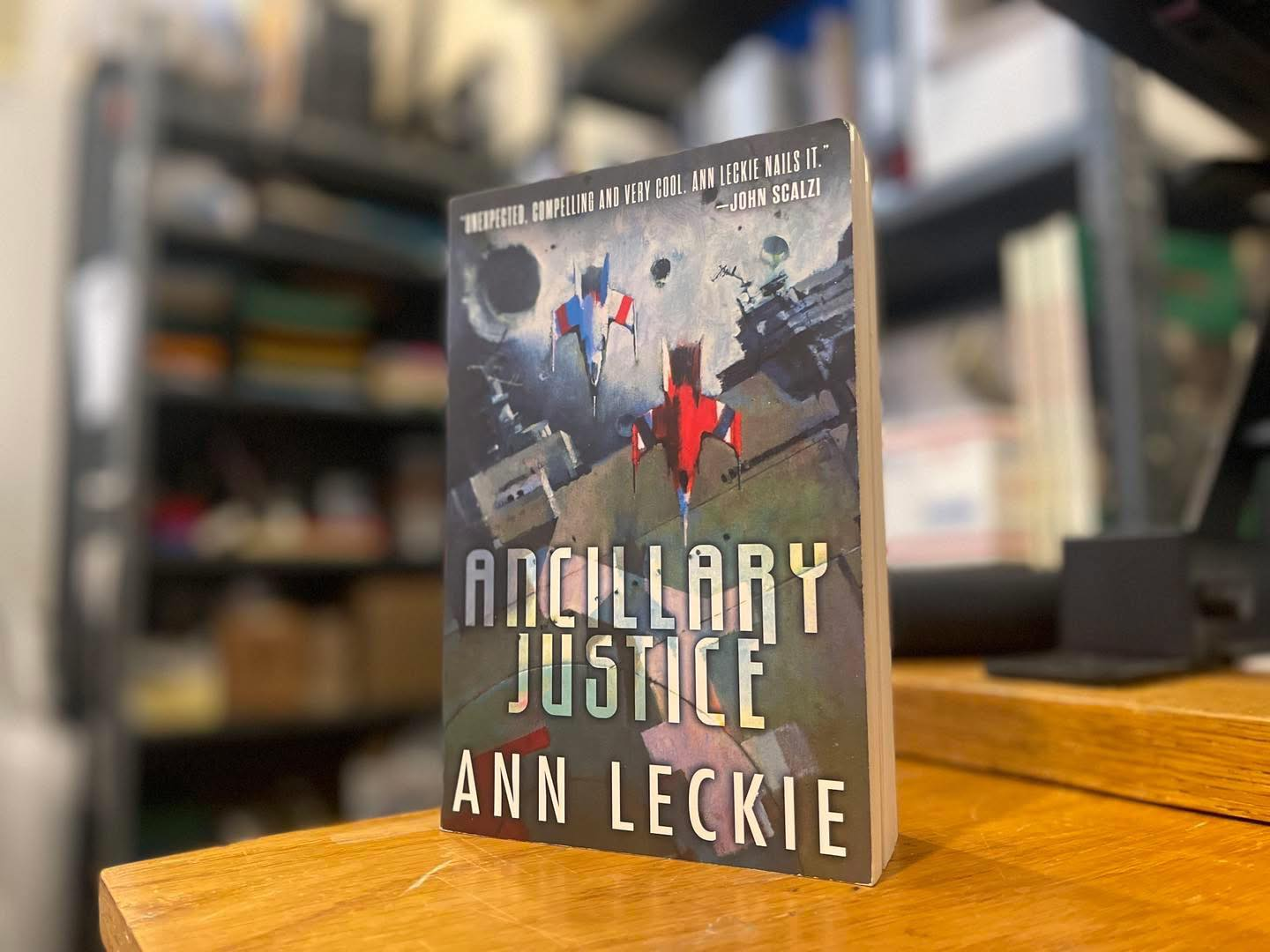
I remember when I came to the part where Breq discovers Seivarden, and I didn't realize that the character was male until later. When it became more apparent, the image flipped in my head.
It's really weird!
When I assigned her "she" for all of her pronouns, my view of her changed just a little bit more; she became a slightly different person. I'm not a believer in strong words, where words dictate how you think, but that's how powerful words can be.
I think it highlighted that and said, "hey, how come 'he' is the default and what does that mean if 'he' is the default?" I think that's what using 'she' did: it did not portray a society where gender didn't matter. It wasn't quite the naturalistic way I was hoping for, but it did get the point across more or less, and I felt it provided some other interesting things to think about.
It's interesting to see how other authors have begun experimenting with this. I've found that it adds more to one's craft and upends reader expectations a little bit.
Yeah. Well also, it's science fiction, and science fiction and fantasy should be no holds barred. You can do whatever weird thought experiments, imagine a world. I still think it's important to push in all of those directions, and I hope (I can't claim this is the case) but I really hope that the success of Ancillary Justice has made a little more space for publishers to go, "Oh, buy find this thing that's using new pronouns or does this interesting stuff with gender."
Tropes are something I've been thinking about a lot. They can be useful for readers, but can also be a trap if you're not careful – there have been a couple of books I've read recently where they don't really do anything with them. I generally think that if you're using these elements, you should be examining them or at least play with them in a meaningful way rather than just having a set dressing.
I mostly agree, although I'm hesitant to say that people should write science fiction in one way or another. I can see the attraction of just having a beautiful backdrop and then exploring, but I guess it's hard for me to have the beautiful backdrop and not think about the ways that the characters in the foreground are showing up against the backdrop.
Or how how the influence of the evil/malevolent/uninterested empire trickles down to the to the average person.
Right, because you know it does. It does it absolutely has to. It always does. Every now and then somebody will ask how I make it so that there are great big stakes with little stakes and they all feel like they're tied together. And I'm like, "well, they're all tied together." Like in the real world, they're all tied together, you know?
But I can totally see if I just want to sit down and have popcorn, I actually don't mind chomping the popcorn while watching the two galactic empires fighting each other, and nobody cares about the empires, okay, that's fine. But science fiction is a genre that can do more, and I'm really happy to see that people are pushing in those directions.
What's an example that you'd point to for things being tied together?
In the real world? I mean, there's tons of them, but it's it's goofy stuff like no toilet paper at Costco because of the plague, right? The way we think about a huge epidemic, there's these stories of people dying in the streets with blood pouring out of their eyeballs and civilization collapsing. But what actually happens is that people get sick in one part of the world, it moves across the world and all of a sudden, your supply chain collapses. Maybe there was a time when you could be in a village and you were making your own toilet paper. It wasn't, you know what I mean, but I don't think anybody was ever quite that isolated.
If you're not getting instant news onto the Internet, there's going to be these domino effects that come through and cause you problems where you are from these great big world events happening. A volcano explodes in the Aegean and civilizations collapse. There is stuff in the air, crops fail and that comes down to one family trying to feed their kids.
That's a good way to look at it. Thinking back to the Bright Ages, something the authors kept hammering home was that these were not isolated people. There was a cross-border transference of knowledge, of DNA, of everything. Even though we think about this period as a dark time, they were not these isolated villages that didn't have any contact with each other.
There may not have been the level of import and export that there was when the empire or I should say, when the Western empire was running (because the Eastern empire continued for another thousand years.) But there were still people – some housewife in England could get up and go on a pilgrimage to Jerusalem. There were Vikings leaving graffiti in the Hagia Sophia. And so when they tell you in grade school that a villager would live and die in their village and nobody traveled and they never took a bath, when you actually look, that's not what's going on. And even if it were, you still have plagues rushing across Europe. Just a couple of traders and you have the Black Plague. But it wasn't just a couple of traders, it was all of European trade trading with the Near East.
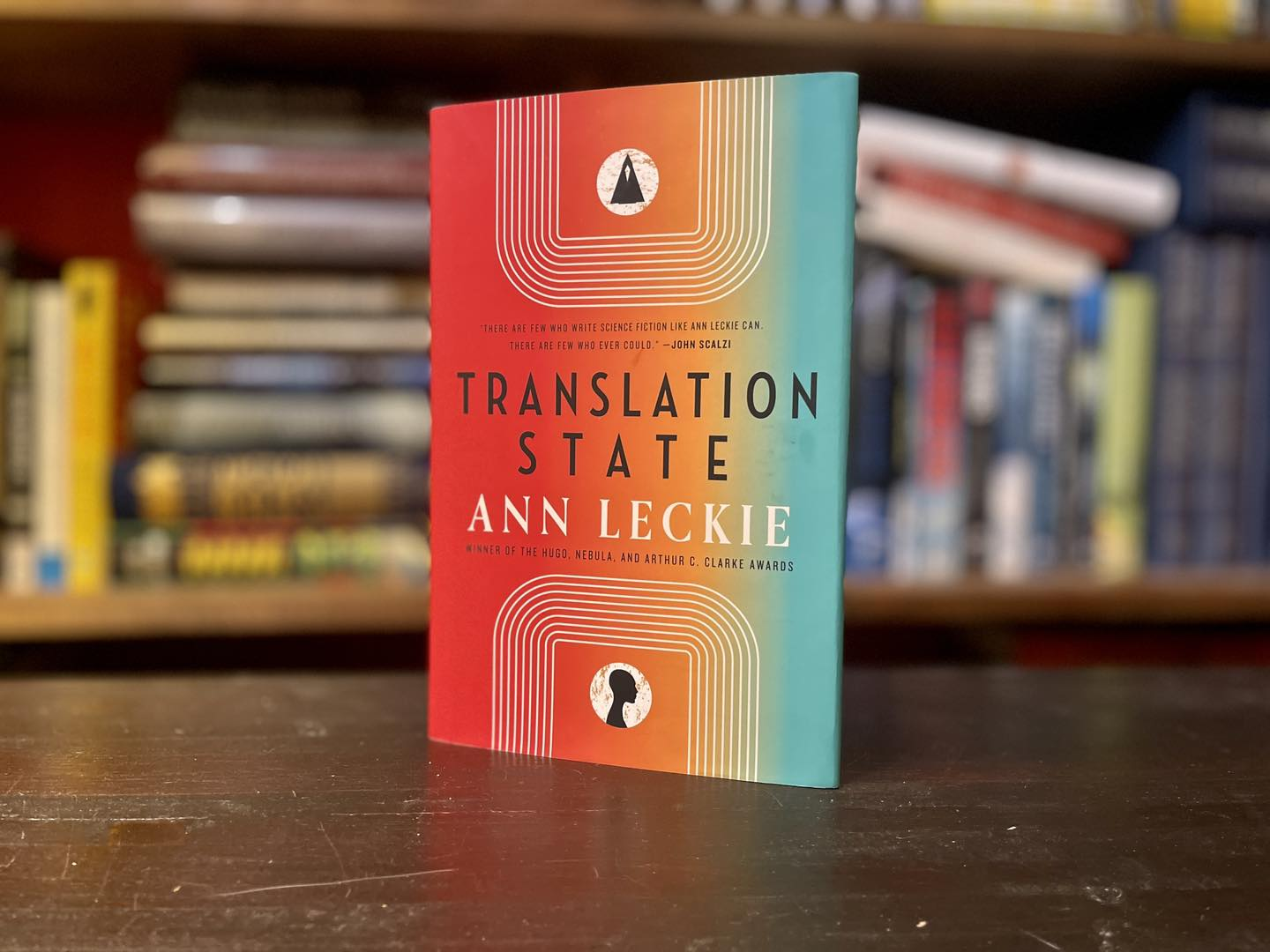
I want to jump over to Translation State: can you set up how this came about?
So while I was writing the original trilogy, I was also thinking about the Presger, because obviously they play a larger role ultimately in the trilogy. The Presger translators were just kind of fun, but I already had an idea of how they worked.
The whole complex of ideas involved in this universe were ones that I'd been slowly playing with, so I had a few characters from back when I was thinking about the translators that I had never used. I was sitting around during lockdown and reading Murderbot and the Goblin Emperor over and over again and playing Minecraft and Stardew Valley. I was like, "Oh maybe I'm about to lose my mind. Maybe there's a story I could write with those characters." I sat down and started to work on it and there was a story here.
I'm particularly interested in just the idea of translation, how one communicates with other intelligences and how one recognizes other intelligences. I'm curious what your thinking is when it comes to this world.
So translation isn't isn't something that I know a whole lot about, but once again, I'm aware of different conversations [about it]. I also like (on a very low, hobbyist-level) linguistic stuff. Those were things that I was interested in going in.
Whatever you're starting with, when you translate it, you're making a new thing. But at the same time, it's recognizably a version of the previous thing, but it's not the same thing because you can't get the same effects. You can use language to actually make things happen in someone's mind, and it's very dependent on them having the same linguistic context that you have. When you're translating something, you don't have access to the things that the original writer was doing to the minds of their readers in the original language, and the person whose work is being translated isn't actually producing the effects in the readers of the translation because the translator has to figure out how to produce those effects. It's really weird!
I guess in some ways, the Presger translators are meant to be a translation of something that the Presger think humans are, and in some ways they're sort of something of what humans think the Presger are. But the Presger are their own thing, even if they're standing in the middle there.
What was something you were able to to accomplish with Translation State that you weren't able able to do for Ancillary Justice? That's my roundabout way of asking what you've learned in the last decade?
I've always been the kind of person who, when asked "what have you learned in school?" answers "I didn't learn anything in school" which is bullshit because obviously I learned things in school! Once I learned them, they were part of my stock of things and I didn't really remember not knowing them.
But I think actually Translation State is the first novel that has more than one point of view that I've written. Everything else has only had one POV. I intended Provenance to have three and I was like, "No, that's not right for this book." And so this time I was like, "I'm going to have ten points of view!" I only ended up with three in this book. So that was new, handling multiple points of view. It sounds like a weirdly technical thing, but I think the technical things you can and can't do really influence what you're doing, right? They dictate what form you choose and what kinds of strategic choices you make. So that was a big one that I hadn't done before.
I was feeling – because I started writing it before anybody knew I was writing it, there was no deadline, there was no contractual requirements, that it be a certain kind of thing. So I was like "I'm just going to fill this full of stuff that I think is cool and fun, because these past two years have not been full and fun."
I feel like back in the day, I would have been kind of afraid to do that, because I would have felt the stakes were higher for me as a writer. I would have been really worried about who's going to buy this, even though ultimately I decided nobody was going to buy Ancillary Justice but I decided to continue anyway. In this case, I was like "people buy it or they won't buy it." That in and of itself is an interesting place to be. It felt very different writing this book.
Other than that, I know that my skill has increased in a number of different things, and I have no idea how to articulate what those are because I don't really see them. It's like you see your kids every day and somebody who hasn't seen your kid for few years is like "oh, they're ten feet tall!" Then you see a picture of them when they were a little kid and you're like "Oh, my gosh, they changed!"
Do you notice this with your books at all, looking back?
I sort of noticed – I've semi-recently gone back and looked at short fiction. There's definitely a change. I'm definitely a lot more assured putting stuff down, like openings in particular, where a writer or whoever does a sort of throat clearing of like "I'm getting to the story, okay, here's the story." I can see that I have a lot less trouble just going "okay, here's the story" and sounding more assured and authoritative. Boy, the increase in my ability to handle exposition is really noticeable. Some of that is my just being less afraid of infodumps, because when I first started out, my first couple of science fiction stories are almost incomprehensible because I didn't want to just tell the reader stuff, because of course we fetishize "the door dilated" and that's all the exposition I'm going to do. I'm going to hint at everything and the reader is going to magically pick it up, which is a great technique.
I was trying to do everything that way, and I think I had better at that, but I also think I'm less worried about, "Oh no, I'm going to take a paragraph and tell the reader something, I failed as a writer." I don't worry about that anymore. And I just I feel like I've gotten a lot better at getting information across onto the page. So, I mean, practice, right?
I sort of wonder if things like that are a product of where fandom was – the community was so much smaller and you could conceivably read everything that was being published, whereas now SF/F fandom is so balkanized – it was easier to make those assumptions.
I feel like those sorts of things go in and out of style. We don't talk about them as if they're fashion, but they absolutely are. We talk about it like this is just how you write well. It's not! I feel like the extreme "The door dilated" is helped that it's a Heinlein quote. Of course, Heinlein's worshipped by a lot of people and he left a lot of influence on the field. That is a really cool technique. It's a great sentence, and they were probably reacting to a time when, particularly in short fiction (but probably also in longer fiction) – in order to make a living writing fiction, you had to write tons of it very quickly, and when you're writing very quickly, you don't go back and make things more elegant and more beautiful. You type and type and type and then you hand it in. That's going to lead to a lot of three paragraphs on the history of Omicron 7, and that can can be really dull.
But I think a number of folks, especially in the sort of workshopping communities that grew up in the sixties and seventies, look back at that and go, "Oh, well, that's just wrong, because when people do it, it's boring." Except when Jack Vance does that, it is not boring in the least!
It's not a question of "that technique is bad." It's a question of "it's easy to handle that technique badly." I think actually that's a a weakness of writing pedagogy techniques generally, not just in science fiction and fantasy, which is where you tell newbie writers to not do things because it's easy to do them wrong instead of showing them how to do them right. You just reduce the number of tools in their toolkit and send them out into the world. I don't think that does anybody any good. Maybe some people don't need those extra tools, but if you're training fiction writers to make a career, they do need those extra tools, whether or not they ever actually use them or use them as intended. But I think fashion is a lot of it.
There's a weird thing that I noticed: watching people react to work that I had produced. It's been a really interesting experience. One of the things I noticed is that people who liked Ancillary Justice would say, "oh my gosh, she does it with no infodumps at all," which is not true! There are definitely infodumps in that book. People who didn't like the book would say "oh my God, it is crammed with infodumps, this is terrible writing."
That's really interesting to me, which is that it's called an infodump it's bad, it's called an infodump if you don't like it. But people still talk about infodumps as though you shouldn't do them: they're just default bad. I just found that super interesting the way that that prohibition just becomes sort of a justification for why someone doesn't like a piece.
People will really hang on to very thin justifications when they don't want to admit certain feelings about a story, and it's interesting to see how some criticisms like "the writing was terrible," are spread verbatim to become almost memes.
They didn't want to say why they didn't like it! They didn't like a book because they were homophobic, right? "But it was badly written" is like ... yeah. I find that super interesting. And they might have found it badly written, right?
That's another thing when people talk about good writing or bad writing. This is going to sound really snobby, but I don't think most casual readers know the difference between really good writing and not very good writing. That's not necessarily a bad thing! The numbers of people who love The Da Vinci Code (which I have more problems with then the writing) – my mother-in-law enjoyed The Da Vinci Code and she thought it was quite well written. It's not well-written, but I am also coming at that from a different – I'm like the chef talking about whether or not food is being prepared well. I'm trying to rescue myself from sounding like a snob. But nine times out of ten, when somebody says "this was badly written," what they mean is either "I had trouble reading it" or "I didn't like it."
Thanks for reading: I'm glad that I've finally finished transcribing this and gotten it out of drafts to you. I'm looking forward to reading Radiant Star (it's high on my TBR), and I'm excited for what it'll bring. Let me know in the comments what you think about the series.
If you enjoyed this conversation, please consider signing up as a supporting member. Members help power this newsletter, not sponsors.
There's a lot of work that goes into interviews such as this: I not only re-read Leckie's Ancillary Justice, but I looked over other interviews and reviews to prepare for the interview and held the conversation. After that was the transcription, fixing the transcription, editing out my "you knows" and "mmhmms", and cleaning up the conversation so that it's readable.
I really enjoyed this interview, and it's members and readers like yourself who helped make it happen!