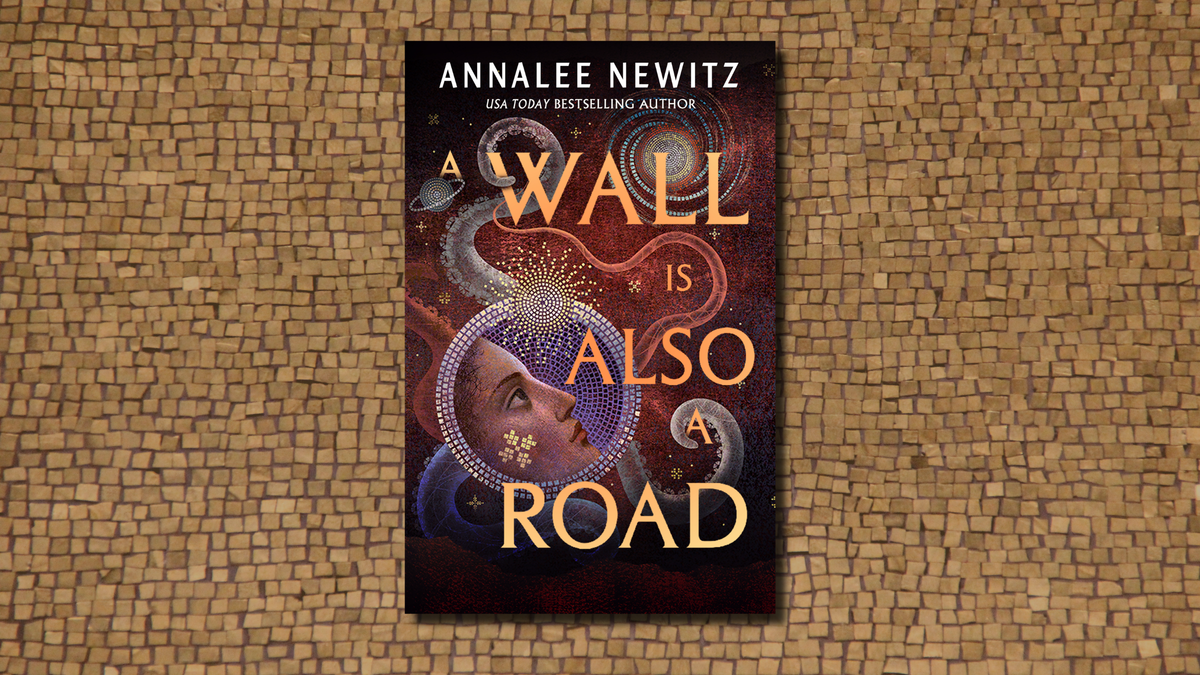
Here’s the cover for Annalee Newitz’s next book, A Wall Is Also a Road
Coming in October
One of my favorite science fiction authors writing at the moment is Annalee Newitz. Back in 2002, they co-founded the website io9 (where I wrote for a number of years, an experience I'm enormously thankful for) and has written some fantastic novels, Autonomous, The Future of Another Timeline, The Terraformers, and Automatic Noodle, as well as some mind-expanding nonfiction books that blend science and history, Scatter, Adapt, and Remember: How Humans Will Survive a Mass Extinction, Four Lost Cities: A Secret History of the Urban Age, and Stories Are Weapons: Psychological Warfare and the American Mind.
Their next book is A Wall Is Also a Road, a science fiction novel about a sentient slime mold named Gardenpath, which comes out on October 6th. I'm very excited for it, and I'm very pleased that Tor Books has provided the cover for me to reveal. It's illustrated by acclaimed Italian artists Anna and Elena Balbusso, also known as the Balbusso Twins.
Here it is:
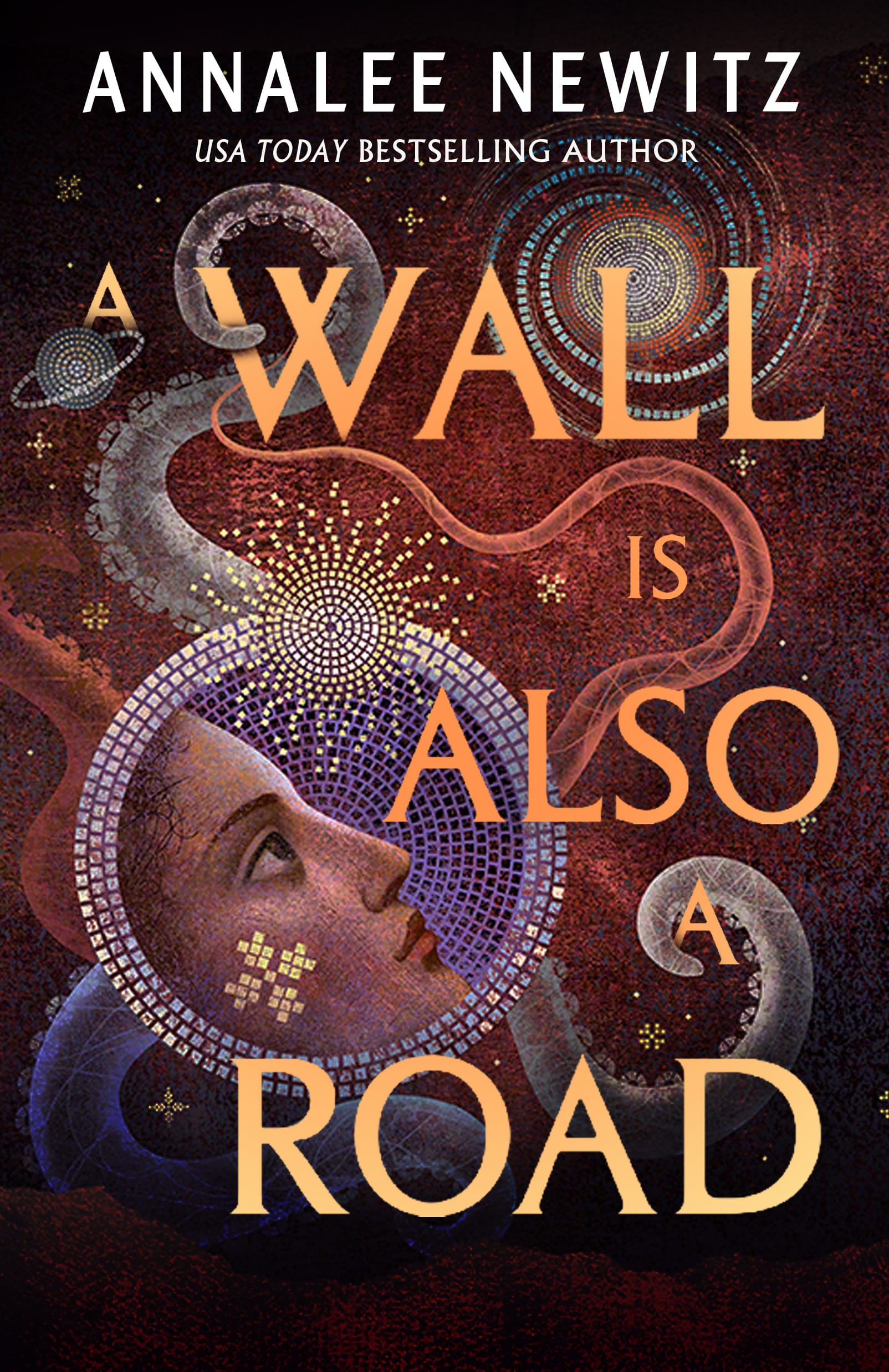
Gardenpath is a graduate student studying biology and is working toward a academic prestigious prize, in which they have to discover a novel thing within the universe. They head off to a remote planet that everyone thinks is uninteresting, and discovers a civilization of multicellular creatures. When Gardenpath changes their shape to mimic them, they meet a woman named Murtis, a brothel worker in a city called Pompeii, and who introduces them to life in this bustling city. It's an encounter that profoundly transforms Gardenpath and changes their priorities as they get closer to their subject, and realize that there's more to life than the world of academia.
I had a bunch of questions for Annalee about the book. Here's my interview with them:
I'm excited to read this new book! Set it up for us: how did this story come to you?
This story has been in the back of my mind, slowly evolving into something deeply weird, ever since I researched and visited Pompeii for my book Four Lost Cities. I was reading Sarah Levin-Richardson's superlative archaeological investigation The Brothel of Pomepii, where she goes through all the material evidence from the lupanar, or brothel, including graffiti.
Some of the graffiti was written by women who worked there, and Levin-Richardson talked briefly about one piece of graffiti which read "Murtis * Felatris," which she translates as "Murtis, fucktress." Another, more poetic, translation might be something like "Murtis, queen of the cocksuckers." Either way, the sex worker Murtis was boasting about her powers.
Something that I've noticed with all (I think?) of your novels is that you have some sort of non-human protagonist – Whistle in The Terraformers and Staybehind/Cayenne/Sweetie/Hands in Automatic Noodle. Now we've got Gardenpath in this one. What draws you to these types of characters?
I've always identified with the non-human creatures in stories. When I saw Star Wars as a kid, I thought R2D2 was the hero (which – let's be real, he kind of is); and when I watched kaiju movies I wanted to be either Gamara or Ghidorah.
Like many nerdy people, I have to put on my "normal human" mask in social situations. So it feels natural to write characters who wear literal human masks to hide their alien bodies and predilections. In the case of Gardenpath, I wanted to write about what it feels like to be a graduate student trying to succeed at a big, hyper-competitive university.
I got my Ph.D. at UC Berkeley, and I'm grateful for what I learned. But also, to be quite honest, the reality of academic life crushed my spirit and made me feel like an alien monster. Gardenpath is an expression of all the impostor syndrome, alienation, and rage that many grad students feel when they realize that there is no such thing as a pure, free "life of the mind." Instead there are abusive bosses and corrupt status games, like in every other industry.
 Andrew Liptak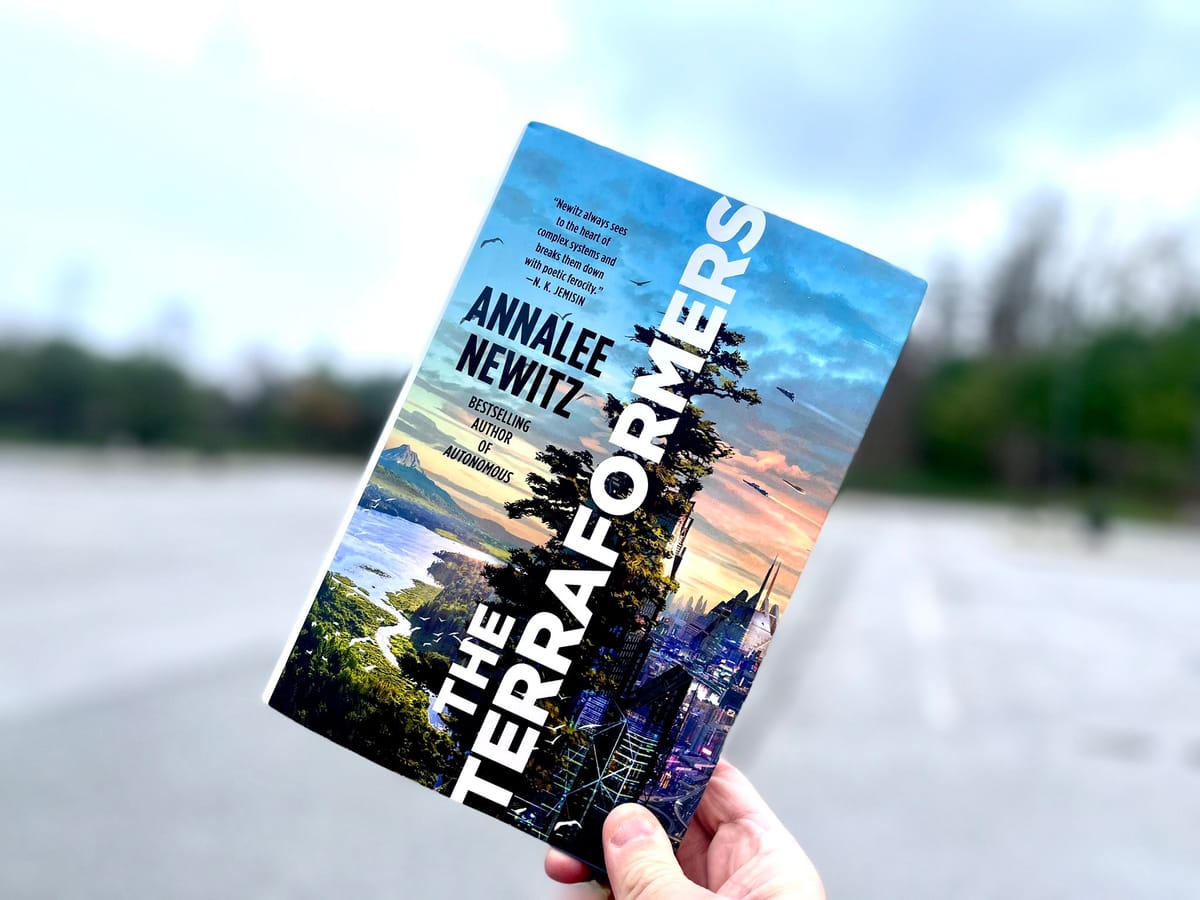
Science fiction often uses aliens as a sort of camouflage –humans in disguise for some issue. I've never gotten that impression with yours: how do you go about building these characters and make sure that they're really different from us?
I'm really interested in how our bodies and environments shape our perceptions, and so I always start with the physicality of a character. When I set out to write a slime mold, I imagined being a single-celled organism that could stretch in every direction and climb walls as easily as they ooze across a floor. A cell communicates by sending and receiving molecules and ions through receptors on its surface, and that would obviously affect how and what they can say to each other.
I talked to Allyson Sgro, biologist and slime mold expert, and Wesley Swingley, a molecular biologist. I made long lists of the kinds of movements that a slime mold might make, and how they would do things like smile or look upset (I decided they would elongate to smile, and wrinkle their membrane if they were upset). I thought about all kinds of weird shit like what it would feel like to communicate with someone by literally sticking an arm inside them, or how slime mold protesters could use a diffuser to "amplify" molecular speech. And then I had to think about the environment where Gardenpath lives, which is the circumgalactic medium, a sphere of gas that surrounds our galaxy (it's also where the Magellanic Clouds are).
I took all of those alien bodies and perspectives and plopped them down into the familiar terrain of organized academia. And my characters started blobbing around and squirting each other with ammonia and having debates about life in the galactic plane.
A Wall Is Also a Road is about a researcher who finds that there's more to their subject than meets the eye, when they get close to what they're studying. From the outside, it always feels like science has to be this sterile, observational thing, when it's really not that: researchers and scientists often get close to their subjects. What are you hoping to explore with this book?
Gardenpath comes to Earth because they just want to figure out whether life can evolve on a planet in the galactic plane – after all, their whole civilization evolved in a gas cloud very distant from the terrifying radiation and pressures of the Milky Way's flat disc. They're doing what we call basic research, with no aim other than pure knowledge. And then they find this life form with language and culture, which most of their professors say can't exist. So they have to hide some of their findings, because they can't risk being laughed out of their program by making the outlandish claim that they've discovered intelligent life inside the galaxy.
This is a book that is very profoundly about university politics, and why organized academia can sometimes prevent people from discovering new things – or sharing what they have found. It's about why academia is broken, and how a brave band of weirdos try to fix it.
You mentioned recently that you're focusing on coziness. The Terraformers and Automatic Noodle felt like that to me: people finding their communities and working to make the world slightly better, but there's also an edge to them that coziness is something that you have to actively make. How does A Wall Is Also a Road fit into this?
I think cozy stories work when they show us something that is dark or scary, but instead of wallowing in the horror, they offer a humble way for the characters to survive it. Often a cozy tale will foreground the way people resist the darkness by forming communities of safety and acceptance, or by taking a whimsical, unexpected action that winds up defeating a powerful malignant force.
All of that is in A Wall Is Also a Road. Plus, you get to learn a bunch of silly stuff you never knew about the Roman Empire, and there is a satisfyingly complicated romance. (Don't worry – it has a happy ending.)
 Andrew Liptak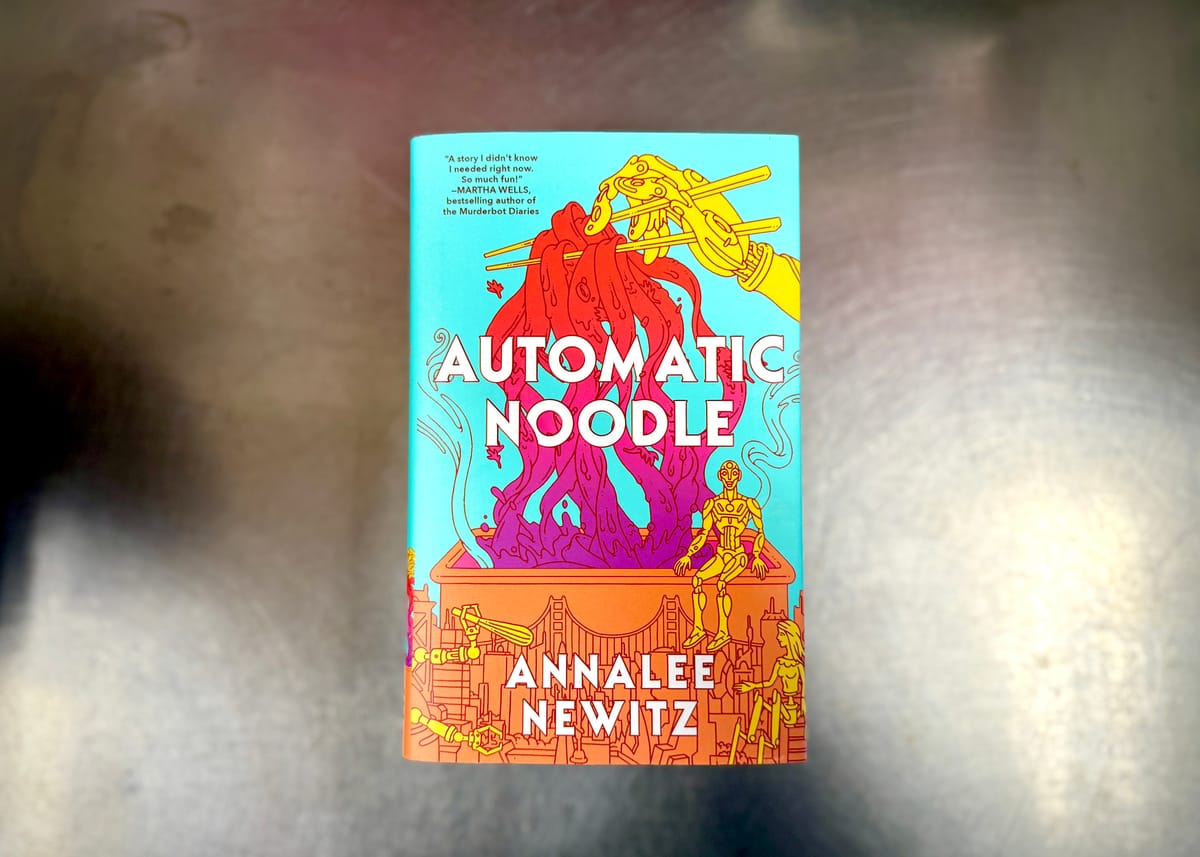
What do you hope readers will walk away from this book with?
I want to remind people that there are ways to educate ourselves outside organized academia. We can build new communities devoted to learning, doing science, and preserving our ancestors' knowledge. Universities did not always exist, and maybe now is the time to come up with the next great institutions devoted to knowledge.
Also, I hope everybody develops a deeper appreciation for sapphic tentacle sex.
A Wall Is Also a Road will be released on October 6th and is now available for preorder.