20 years of trials and tribulations
Clarkesworld Magazine celebrated its 20th anniversary in 2026. It's come with plenty of challenges in that time.
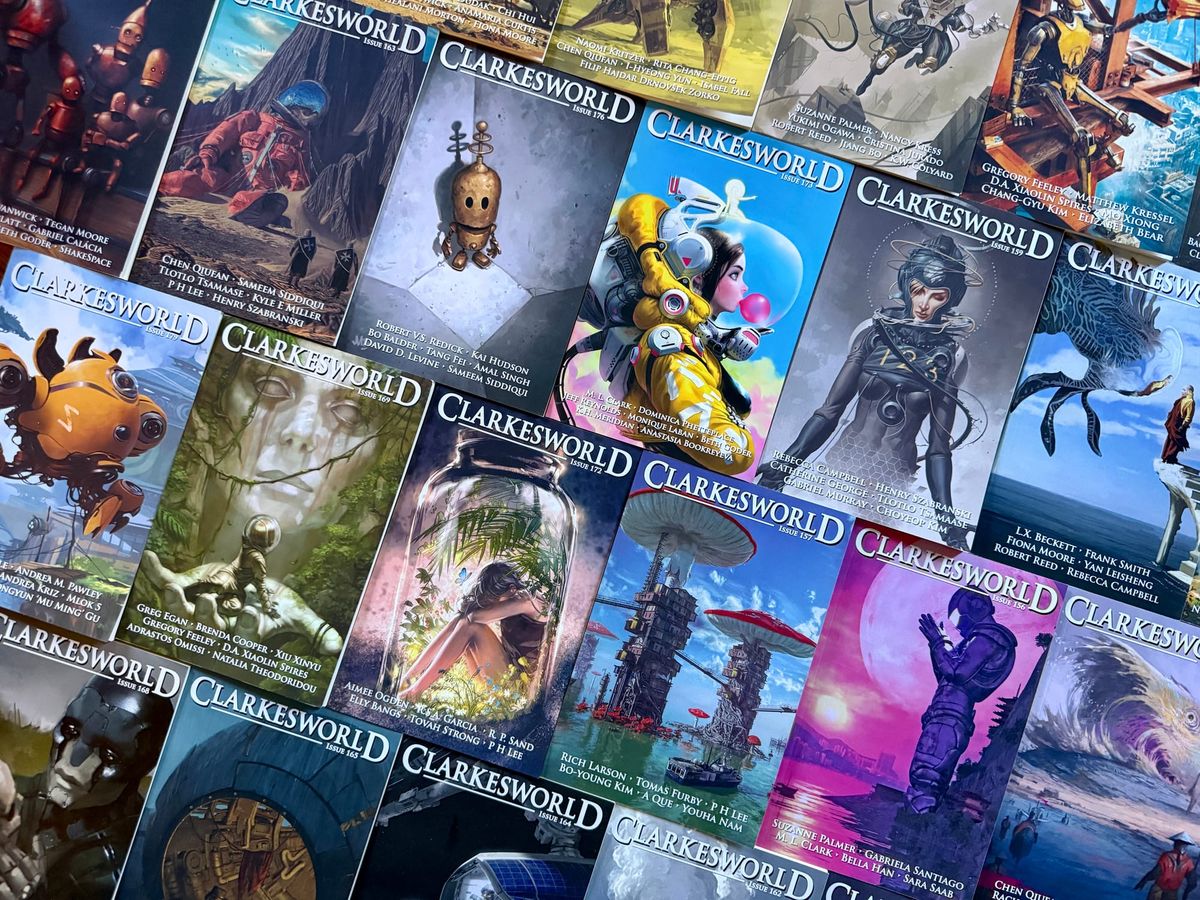
When I first began immersing myself in the world of science fiction fandom and as an aspiring writer after college, one of the places that I'd see the most was Clarkesworld Magazine. Since its founding in October 2006, the publication has produced hundreds of outstanding short stories across 241 issues, which it's published on its website, in print copies, and on its podcast feed. Over the years, I've discovered some of my favorite authors and their works through its pages, and when I've gotten around to finishing a short story, their submission form is usually the first place I take it.
This month, Clarkesworld celebrated its 20th anniversary. Big, round numbers are always worth a bit of introspection, and I've long wanted to take a look at the longer story behind Neil Clarke's publication and to see why it's endured. I spoke with him briefly at this year's WorldCon, and again on the phone after the fact to do that. I wanted to get a good sense of what work goes into the publication, and how it's fit into the larger short fiction world.
This is the type of reporting that I strive to do more of: in-depth conversations with folks within the SF/F world to provide readers with better idea of the world that produces and supports the stories they love. This work takes time to produce. For a piece like this, it's involved a good amount of background research and reading about Clarkesworld Magazine, time to interview Clarke, and of course write it.
Transfer Orbit is supported by its readers, and if you find this work valuable and informative, please consider signing up as a supporting subscriber.
Two notes about this piece: Clarke and I had about an hour-long conversation, but fifteen minutes into our chat, the recording stopped, and I'm relying on my notes for his account of Clarkesworld's recent years. I had planned to write about the magazine's publication of Isabel Fall's "I Sexually Identify as an Attack Helicopter" and the controversy that followed, but I'm only touching on it briefly because of the sensitive nature of the situation and I don't want to rely just on my notes.
Secondly, a disclosure: I've contributed a handful of nonfiction pieces to Clarkesworld over the years on a freelance basis, but I've approached this as I would any other piece of reporting.
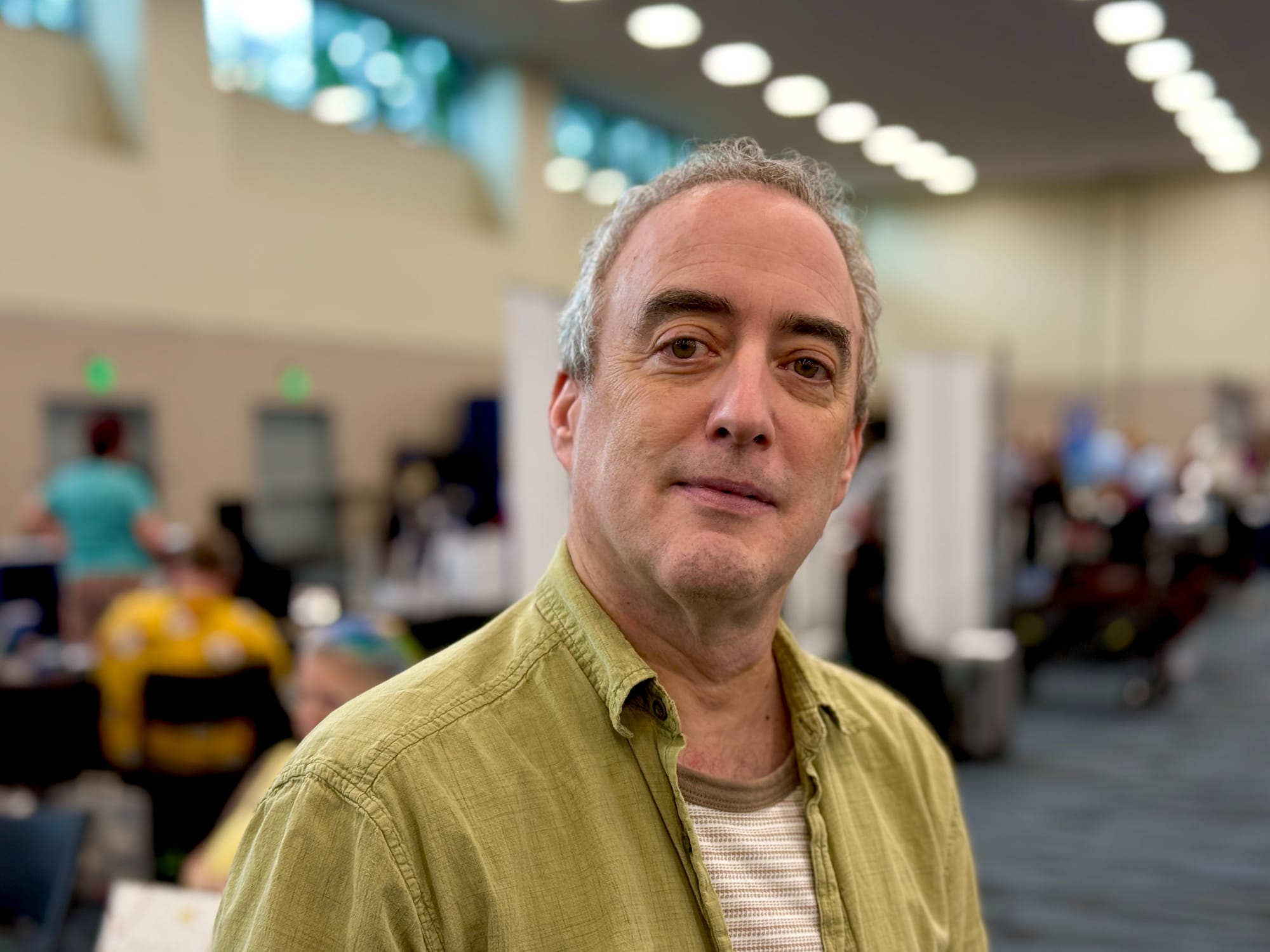
Clarke first discovered science fiction at the age of 10, in the form of CBS's series Lost in Space, and later, thanks to a cousin. "My cousin gave me three books books because he knew I'd probably be interested in them," he told me in a phone call. One was "an anthology called Adventures in Time and Space by Raymond J. Healy and J. Francis McComas, which is this massive, Golden Age retrospective anthology. He also gave me The Hobbit [by J.R.R. Tolkien] and Stranger In A Strange Land [by Robert Heinlein]. I will not judge giving those books to a 10 year old. The anthology was eye opening, [because] it gave me a wide range of authors to hunt down."
Clarke lived within walking distance to his local library, and it wasn't long before he worked his way through its small science fiction selection. From there, he moved on to a used bookstore a town over, riding his bike over to pick through their selection. "I just kept reading voraciously throughout school and into college," he explained. It was there that he was introduced to the larger science fiction community and began attending conventions. " I developed this really bad habit of collecting authors that were harder to find, someone like Philip K. Dick, whose novels at the time were ones you'd have to actually dig to find."
It was that search that set him down the path of collecting and bookselling. He started "initially on eBay and then with a storefront, which was Clarkesworld Books. It started as a subdirectory on my family's domain [and eventually] got its own domain, but by then the damage was done and the name stuck."
In 2006, Clarke attended the Massachusetts-based ReaderCon, which would prove to be the start of an entirely new chapter for Clarke. "I'd been reading short fiction for a long time [and] it's always been my first love," he explained. he had begun amassing a large collection of science fiction magazines and had begun importing them from all over the world. "One of the things that struck me was that as an bookstore, we weren't able to give [readers] the browsing experience. So I reached out to some of the magazines and offered to host sample stories in the bookstore in hopes of selling more copies or subscriptions for those magazines. Sean Wallace was one of them."
Wallace had been running Fantasy Magazine at the time, and at ReaderCon, the two struck up a conversation. "This is around the time that Sci Fiction announced that they were closing, [and] conversation drifted into that and why online magazines hadn't done so well: how come no one managed to find a – or even try to build a business model that could work in that environment?" Clarke recounted. "I was coming from an experience [and education in the technology field], so the bookstore was really a side project. Sean had the publishing experience and we were bouncing ideas back and forth, and came up with, 'this might work'. Somehow it turned from this might work into 'we should do this.' He talked me into it and by the end of the weekend we were fully staffed and three months later we had an issue out."
They recruited another writer and editor who was attending the convention, Nick Mamatas, and set to work. Through their conversation, Clarke noted that he had specific experience designing online courses and was familiar with academic work on reading online, and noted that online magazines at the time just didn't provide "a good reading experience," while others "hadn't tried to monetize anything. They were just sort of like build it and they will come models. We knew that we needed a product to be able to sell [in order] to do that."
This was a point long before most of the infrastructure that's now familiar today, with established file formats and distribution systems existed. There was also considerable resistance to reading fiction online, something that the trio would have to contend with as they began working on their first issue. "When you'd ask an established author, if they'd, see you were online, they would say 'oh, online publishing is for newbies, and my work would be pirated.'" Online publications were also seen as being fleeting, publishing a couple of issues before shutting down, "because they would either underestimate the amount of time it took or, they would have overly optimistic theories about where their money would come from," Clarke explained. "
They decided to produce a print edition of the first issue to make sure "that those stories would be seen by more authors." Their initial plans were modest. "We don't want to go bankrupt quickly, so we're going to start small and grow, so we did two, 4000 word stories. One of them would be from an author that was more known at the time and one of them would be an author who was less known." They were also working to ensure some sort of connection to the online bookstore, with the idea being that if one of the authors had a book on sale, they could promote it at the same time."
The trio released their first issue in October 2006. It featured two stories: "A Light in Troy" by Sarah Monette and "304 Adolph Hitler Strasse" by Lavie Tidhar, with cover art by Tomasz Pietrzyk. From there, they continued in the same model and featured work by an impressive slate of authors, including Elizabeth Bear, Caitlin R. Kiernan, Jay Lake, Cat Rambo, Paul Tremblay, Catherynne M. Valente, Jeff VanderMeer, and more. Clarke pointed out that they paid a rate of 10 cents a word, "which was unheard of at the time. We made a splash with that and it was a statement that 'Hey, we we take this seriously. We regard the work highly enough to to pay a premium for it.' We could have doubled the issue size and done four stories [per issue] but to us, it seemed more important that we didn't want to pay minimum wage."
Initially, Clarke left the editing to his partners, but eventually began to take more of a hand in that work. "I refused to even call myself an editor at that point. I just didn't feel like I was experienced enough to, to call myself an editor." After a year, Clarke shut down the bookstore in favor of the magazine, and at the end of the first year, they produced a print anthology that collected the year's stories, which "paid entirely" the first year of the magazine, and which introduced the stories to a wider audience that wasn't reading fiction online. "We wanted to make sure we had a lot of different ways to bring in revenue and attention," he told me.
The second year brought some additional changes: they began publishing nonfiction articles (edited by Ekaterina Sedia in 2008, Cheryl Morgan from 2008 through 2011, Jason Heller in 2012, and Kate Baker starting in 2013), then alongside the stories, bringing in authors like VanderMeer and Sedia to provide their insights into the genre, while also conducting interviews with other authors. But they continued to face resistance from readers and the larger science fiction and fantasy fandom at large. "SFWA wouldn't consider us," he explained. "I mean, we were one of the first online magazines to get into SFWA's qualifying market list, [along with Strange Horizons.] I think were the first two to get in and we had some people who were lobbying on our behalf. But at the time, you had a lot of places where various awards were like 'well, I don't know, if it's online, maybe it doesn't count."
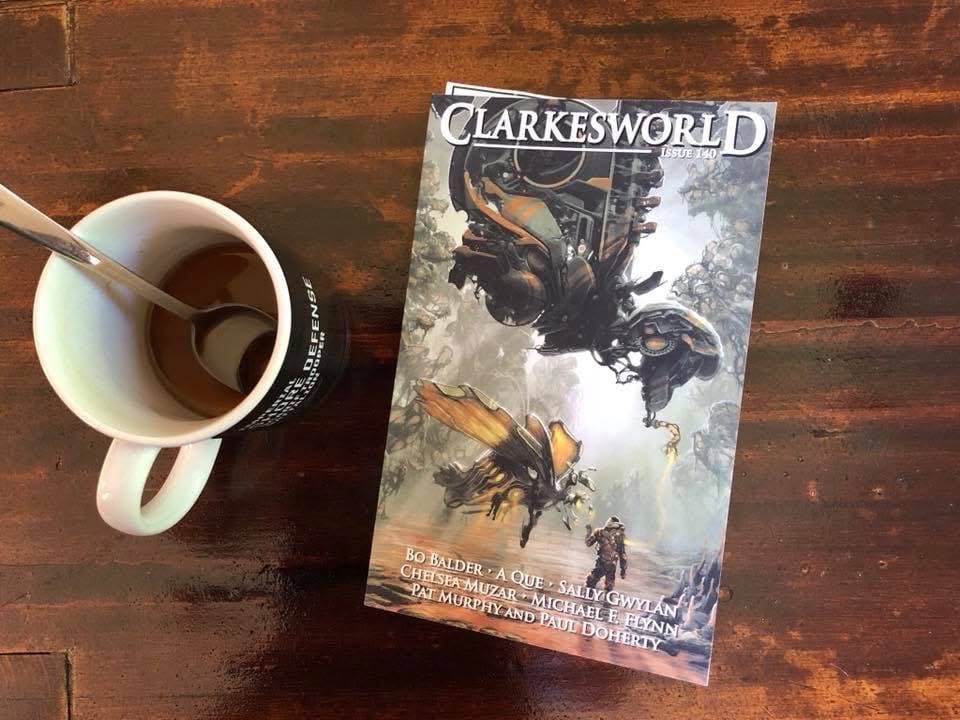
But the tide was beginning to shift as readers began to recognize that the magazine was producing high-quality stories. In 2008, the publication was a finalist for the 2007 Locus Award for Best Magazine, a category that they would continue to be nominated in for several years, and in 2009, they earned a nomination for a Hugo Award in the Semiprozine category, as well as a nomination for Non-professional for that year's World Fantasy Awards. In 2010, the magazine won its first Hugo Award for Best Semiprozine, the first of many that followed. Its stories were also beginning to receiving acclaim through nominations and wins throughout the genre's award circles.
And there would be a larger changes to the media landscape that would have a profound effect on the publishing landscape. On November 19th, 2007, Amazon announced its first eReader device, the Kindle. Founded in 1994 by Jeff Bezos, Amazon began as an online bookstore, before eventually expanding into a much wider range of products, eventually going public in 1997. In the mid-2000s, as internet access became more widespread, momentum was building for the development of digital books and readers. A handful of companies, like Sony, had begun producing eBook readers, but the infrastructure was still uneven. Amazon, now quickly becoming one of the dominant online booksellers, realized that it had the connections and ability to close that gap by producing both the device and the storefront through which to provide the books.
At the same time, Amazon also provided the infrastructure for magazines to sell subscriptions to readers through its store. This was a major opportunity for magazine publishers – while magazines had been a dominant medium for science fiction writers and fans, subscription revenue for the major print publications had been falling for years. In 2008, Clarke noted in an editorial that while alarms were ringing amongst fans that the short fiction market was in danger because of declining print subscriptions, the internet offered the opportunity for plenty of additional experiments, all while the tastes and habits of fans and readers was changing.
Amazon's subscription model was one such opportunity for the field. In June 2011, Clarke revealed that Clarkesworld Magazine was the third publication – after Asimov's and Analog – to join the program. He set out an ambitious goal: if they could build a subscriber base of 500 subscriptions through the platform by October 2011, they would be able to publish an additional story each month. By the next month, they were well on their way toward that number, and Clarke took the opportunity to dispel some of the criticisms about eReaders and eBooks, revealing a continued bias against those forms that remained.
That fifth year brought an unexpected challenge for Clarkesworld: Clarke suffered a major heart attack while at ReaderCon that July. He was rushed to the hospital, where he received a pair of stents, and later that year, announced that he had become a cyborg with the implantation of an implantable defibrillator. He continued to make light of his situation in 2014 with an anthology about cyborgs, Upgraded.) Clarke also began the work to pay his staff, who had largely been working as volunteers up to that point, and in his October editorial, reminded readers that subscriptions through Amazon and Weightless Books "are responsible for the bulk of our income."
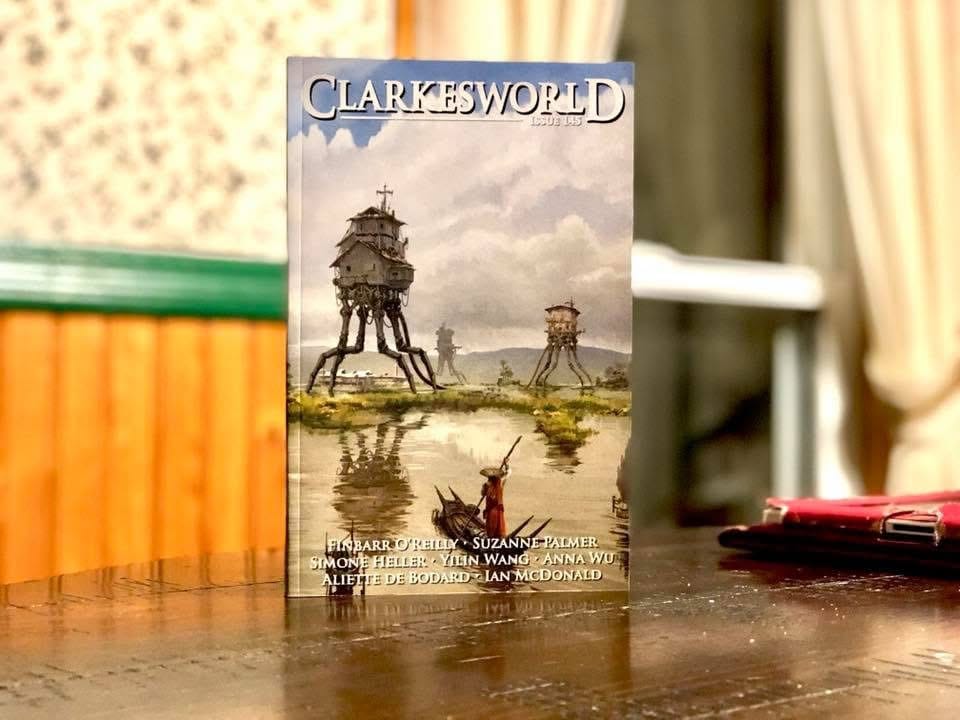
By this point, Clarkesworld had become a well-established publication in the science fiction community. Clarke's heart attack prompted him to begin taking the steps to focus on the magazine full time, and they continued to acquire a line of excellent short stories. Scanning through the tables of contents of its back issues shows off a rich collection of some of the genre's best-known storytellers, alongside entire generation's worth of up-and-coming talent.
Clarke and his team were also continually finding ways to add new features and initiatives to the magazine. In June 2008, Baker began narrating the occasional story (a practice which would eventually expand to encompass all of the publication's fiction), while in April 2013, editor Gardner Dozois joined the team to oversee each issue's reprints. Clarke would also bring the magazine to the Patron publishing platform in December 2013 as a way to connect with their readers and subscribers. Clarke also quietly launched a new publication in 2015, Forever Magazine, devoted to reprinting science fiction stories.
Another project came in 2014, when Clarke signed an agreement with a Chinese company called Storycom. It's goal was to provide a bridge from the country's science fiction community to western markets by providing money for translators. Aided by a Kickstarter project, his goal was to bring at least one story from China to each issue of Clarkesworld, with the funds going to paying the authors and some of the additional costs that came with it. He remained interested in publishing fiction from overseas, and in 2019, began publishing translations from Korea with the help of a grant from Literature Translation Institute of Korea.
Clarke explained to me that he didn't have much of a formula or approach to how he and his team selected the short fiction that they published: it was often whatever stories grabbed their attention and which they felt were of a high quality. The magazine has acquired a reputation for its quick turnarounds from its submissions pile – something Clarke explained as just coming down to making it a priority; if you're keeping up with a two-month submissions window, you're still keeping up with the pace, just two months behind.)
His selections were also sometimes controversial. He pointed to the publication of Kij Johnson's 2009 story "Spar" as one that was particularly polarizing. It generated a considerable amount of controversy over its prose and graphic imagery, but would eventually earn nominations for that year's Hugo and Locus Awards, and earned the 2009 Nebula Award for Best Short Story. Another story, 2020's "I Sexually Identify as an Attack Helicopter" by Isabel Fall also generated a considerable amount of controversy. Following a character who was gender was switched to become an attack helicopter, it ignited a firestorm online, with critics accusing the author and magazine of transphobia. Fall – a closeted trans woman – asked Clarke to remove the story from the site after the barrage and checked herself into a hospital. (Emily St. James has a good overview of the situation over on Vox.com.)
2022 would provide two new, existential challenges for Clarkesworld and the wider science fiction magazine industry. In November, a tech company called OpenAI launched a new product, ChatGPT, a chatbot based on its large language models that could generate responses to questions or prompts. The tech industry and companies like OpenAI had been experimenting with Large Language Models for several years, and some authors and entrepreneurs had begun experimenting with their utility.
Companies like Sudowrite, developed products and platforms that could incorporate these types of artificial intelligence into the writing process – a writer could ask it to generate text in a certain style, arrange notes or outlines, or help with suggestions for tone or voice. ChatGPT provided a much wider audience and attention to the nature of these products. Shortly after its announcement, it went viral as the wider public kicked the tires to see what it could do. Others followed: both Claude (created by Anthropic) and Gemini (created by Google) were released in March 2023.
Clarke explained to me that he and his team began to see signs of the technology by the end of 2022. In a blog post, he wrote that there was a constant, low-level hum of plagiarism that he and his team would detect in the submissions pile, but after the release of ChatGPT, they began to receive hundreds of stories to consider. Initially, the flood of stories were ones that they realized were generated by prompts, and Clarke made the decision to shut down submissions until they could get a handle on their processes. "The generated works were among the worst submissions we’ve ever received and sometimes bad in entirely new ways," he wrote in his April 2023 editorial. They would eventually reopen submissions and established a clear policy towards AI – "We will not consider any submissions translated, written, developed, or assisted by these tools. Attempting to submit these works may result in being banned from submitting works in the future." – but Clarke noted that they still receive submissions of stories wholly generated by AI, and instances where authors have incorporated elements of it into their works.
He pointed out that it's a wide-spread issue: while there are new authors who're trying their hand at writing and submitting for the first time, there are other established authors that they've caught trying to utilize it.
The presence of AI in fiction does more than clog up their submissions process, Clark noted: it undermines the trust that readers have in the author, the publication, and the industry as a whole that the stories that they're reading are original and the product of human creativity. In his editorial, Clarke wrote that it has enormous consequences for authors and creators: the reputational hazard of publishing AI-generated stories makes editors and slush readers wary of the stories that they're reading and creates barriers for submissions that disadvantages authors.
The flood of stories came at the same time that other changes were afoot: in December 2022, Amazon announced changes to its Newsstand program: in 2023, it would no longer sell dedicated subscriptions for periodicals, and instead encouraged readers to follow select publications through the company's Kindle Unlimited program, which would allow readers to read from a much wider pool of publications for one price – but in which publications were subjected to onerous terms and diminishing revenue.
 Andrew Liptak
The change had a devastating effect on science fiction publications. Clarke wrote that the program had been the magazine's single largest source of revenue, and that moving their publication to the Kindle Unlimited program would halve their income from the platform. Even worse, Amazon treated those with subscriptions at its customers, rather than each individual publication, and wouldn't provide Clarke with a list of the more than 1800 customers who subscribed.
Clarkesworld isn't the only publication affected by these changes: editors at Apex, Lightspeed, and Uncanny magazines have outlined the challenges that the program's closure have posed, and in other instances, the closure has led to the publication's closure, as in the case with Fantasy Magazine.
While there are genre magazines that have remained in print for decades, like Analog, Asimov's, The Magazine of Fantasy and Science Fiction, two decades is a significant achievement in the world of genre publishing. Clarkesworld – and others – have faced continual challenges in that time, from declining subscriber counts to an explosion of other forms of media to technological problems to an online fandom that's easy to rile.
In that time, there have been a number of outlets devoted to short fiction that have come and gone – publications like Daily Science Fiction, Electric Velocipede, Fantasy Magazine, Fireside, Future Science Fiction, Galaxy's Edge, Realms of Fantasy, and many others. These outlets rarely close because of the quality of their material: it's often the immense work, difficulty in retaining readers, and capturing a sustainable amount of revenue to keep going. That Clarkesworld remains standing after this time is a testament to Clarke's stubbornness and enthusiasm for the stories that he and his team publishes each month.
There are lessons to draw from Clarkesworld: it started small and was profitable early on, building and expanding as it could, with Clarke often making the case to his readers for the value in supporting their work in an age where content is often free.
Most importantly, the magazine's insistence on a simple metric, to publish good stories, is what I think has allowed it to persist in the last two decades. I've often come away from issues (and I've read far too few of them) with an appreciation for the worlds and words of the authors that they've decided to publish. In a moment where someone can generate a story from a prompt or publish it themselves on any number of sites, the taste and discernment of experienced editors and publishers is more important than ever, something that I've gone to Clarkesworld for many times over the years. I hope that I'll be able to do the same in the years and decades to come.