Bringing back the trees
An interview with Robert A. Mello, author of When the Trees Came Back
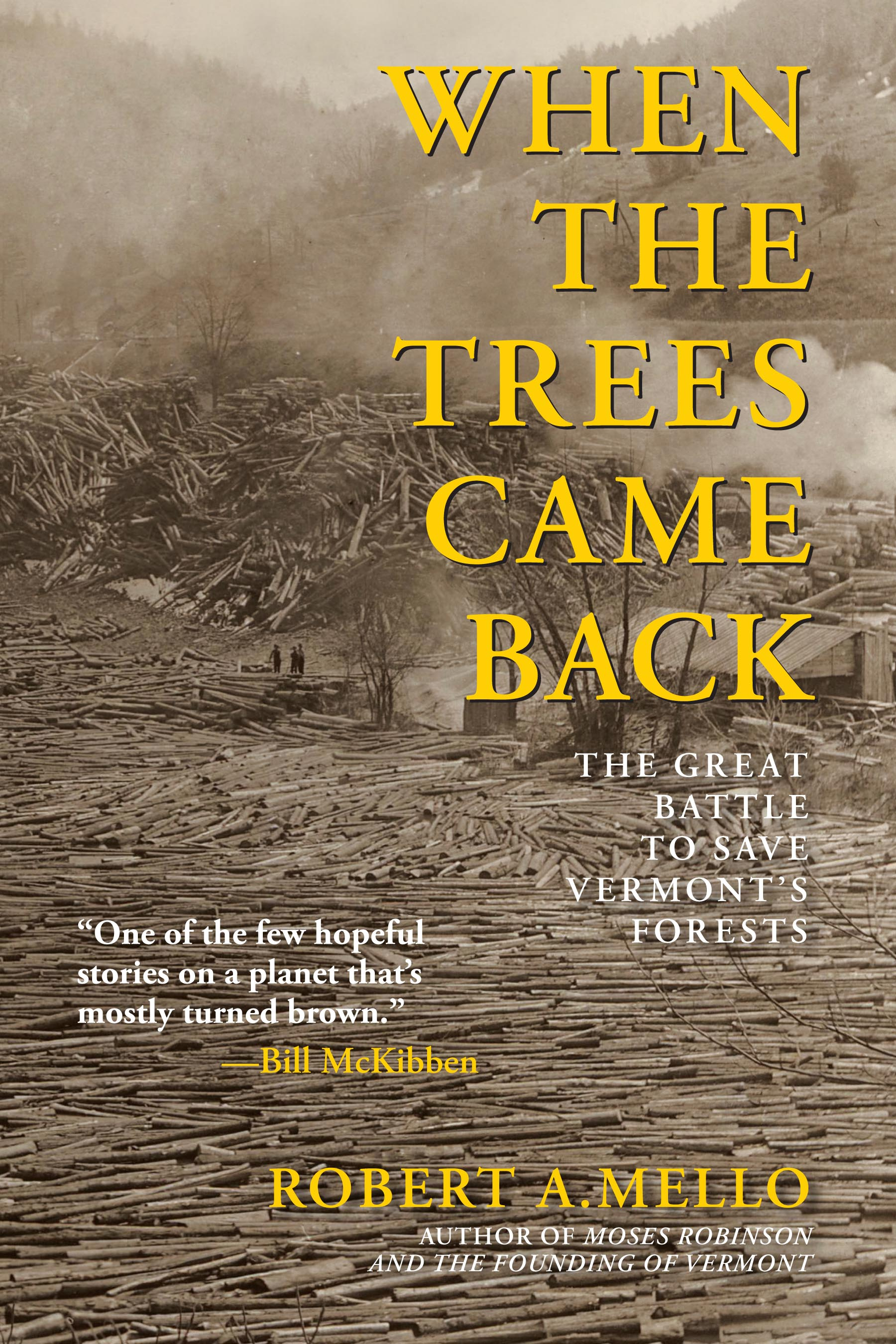
Part of my work at the Vermont Historical Society involves our publications: I run the bookstore and promote our books to readers and stores. This month, we're publishing a book that I've been excited about for months. It's called When the Trees Came Back: The Great Battle to Save Vermont's Forests, by Robert A. Mello.
The name "Vermont" means "Green Mountains" and if you've heard anything about it, it's likely that it's a beautiful place, with lots of forests covering the mountains and hills. It's true – we're home to some incredible forests, but a little over a century ago, the state was almost completely deforested, at great ecological cost. When European settlers arrived, they began to cut down the state's ancient forests were cut down for everything from timber to potash, and to make way for herds of sheep, cows, and other livestock.
Mello's book is about the efforts that citizens, lawmakers, landowners, and conservationists took to transform our severely-denuded hillsides and bring the trees back. It's a tremendous history, one that I'm personally inclined toward.
The book is coming out on Tuesday (April 21st) and when I had him stop by to sign preorders, we sat down to talk about his research and how he came to write this particular story.
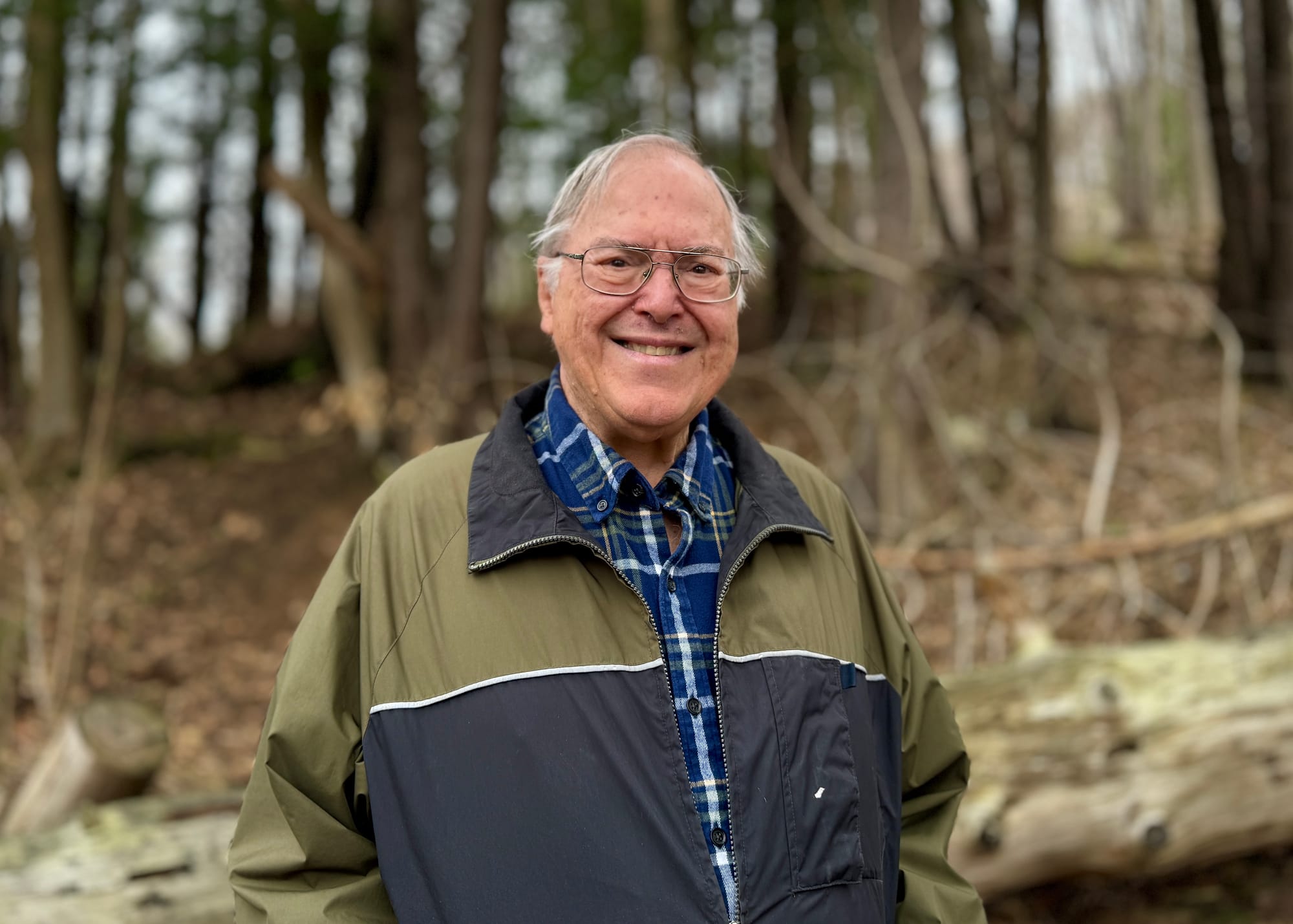
This interview has been lightly edited for clarity.
To start: can you tell me what got you interested in forestry and how this book came about?
So I've been interested in forests and forest protection for a very long time. I've loved hiking since I was a kid, and although my career has been in the law – I was a trial lawyer for 38 years and a judge for 12 more – I've always been concerned about our forests.
In 1987, almost 40 years ago, I wrote my first book, Last Stand of the Red Spruce, and it was about why Red Spruce trees were dying in large numbers on Camel's Hump, my favorite mountain. The Natural Resources Defense Council (NRDC) paid to publish the book. They flew me down to Washington to give a talk in the Mansfield room of the US Senate, and they used that book, as part of their big push that year to persuade Congress to amend the Clean Air Act, to regulate acid rain. And they were successful: Congress amended the Clean Air Act, the EPA issued regulations to address acid rain. Acid rain levels in the northeast dropped dramatically and the trees recovered.
So I've been interested and concerned about forests forever, but my job as a judge was very demanding. This book, When the Trees Came Back, has been percolating for a long time, but I really didn't have the time to sit down and actually begin to write it until I retired three years ago.
How did you decide to write about this specific segment of history?
Well, the history of the forest itself, you can't understand the history of the forest, unless you understand what happened to it, and what happened to it was the state was 75% deforested over a period of time, and fortunately today, thanks to the efforts of wildlife, and forest reformers, the opposite is the case: we are now 75% forested and the forests are doing much better than they were 100 years ago.
So I think it's an important story, and it's never been told, and I figure that I was probably one of the people in the best positions to tell the story.
What did you do to research this book?
So I went to the libraries that have, the information that might be relevant, starting with the Vermont Historical Society, the University of Vermont's Special Collections, the Middlebury College Special Collections, and the Bennington Museum, has some material as well. I read everything I could get my hands on.
I also interviewed people knowledgeable about Vermont's forests, particularly today's condition, including the state forester, and the former commissioner of Forest Parks and Recreation and others.
This wasn't a case of just letting the trees grow back, right?
No, it was, a lot of civic work that went into this. There was a period of 35 years when the first generation of forest reformers in Vermont were battling with the paper monopolies and the timber barons, to try to get control over the forests, and they had successes, they had failures, but there are a lot of lessons that can be learned from what they did, and over the past hundred years, reformers have followed their lead and taken heed from the lessons they taught us. It's because of those efforts that our forests have done so well. They would not be in the great shape they're in today, comparatively, if it hadn't been for the forest reformers.
There's been a concerted effort in the last couple of decades years for preserving forests, where landowners are putting their forests into the public's hands or having the state take stewardship of it. What are your thoughts there?
That's a very important part of why the forests are doing so much better today. Government ownership of forests is important and government ownership of our most sensitive forests is critically important. By most sensitive, I mean, ecologically important and significant. In addition, nature conservancies are buying conservation trusts on hundreds of thousands of acres of forests. That's another way to preserve them in their natural state. But 80% of our forests in Vermont are owned privately by people like you and me, you know, relatively small patches of 30, 50, 100 acres. Vermont has created this program, which we call the Current Use Program, under which homeowners get a very substantial tax break if they agree to manage their woodlands sustainably. Two million acres are enrolled in that program, being conserved and following sustainable lumbering practices.
So all these things were part of the lessons we've learned from the efforts of our forest conservationists, going back 135 years.
 Andrew Liptak
What do you hope readers will take away from this book?
I think it's important to understand that if left unregulated and uncontrolled, loggers will help themselves to the forests and put short term profits ahead of the long term interests and condition of the forest. That happened in Vermont, and the efforts to reform the problem were resisted – powerful forces resisted it. And yet, a handful of our earliest reformers made great breakthroughs, established the laws that are still in force today, which have helped us to restore the forests. It has taken a tremendous effort to bring our forest back to where they are today, much better condition than they were 100 years ago. But the risk of backsliding is ever present. We can't let that happen. The institutions that we've put in place, we have to support them. We have to provide them with the funding they need to do the job to continue protecting in the future, because the forests are still facing serious headwinds that we need to help them with.
You noted you own a bit of forested land – can you tell me about it?
I don't have a large wood lot, but I have a small forest. It's only about five acres, and we garden another five acres. We're mostly gardeners.
What's the makeup of it, tree-wise?
Hardwood mostly. We have maple, and we used to have butternut, but our ancient butternut died from butternut canker disease. We have oaks, we have some spruce and pine where we live.
Do have a favorite tree?
Yes: Red spruce.
Why is that?
My first book was about the Red Spruce. It's an amazing conifer. It lives at the highest elevations, from the Smokies all the way up into Canada, all along the Appalachians. That's the only place where it lives on Earth. It lives at the highest elevations, where only very few other trees can survive, where the soils are rocky and infertile. The growing season is short, the climate is really hard, and these trees are amazingly hardy.