Promethean horrors
Paul Tremblay's Dead But Dreaming of Electric Sheep is a Black Mirror-like tale of horror from our near future
In Harlan Ellison's landmark 1967 short story "I Have No Mouth, and I Must Scream", an artificial intelligence called AM has taken over the world. It has eradicated humanity, except for five people that it's trapped in a surreal and nightmarish simulation in a sadistic attempt to exact revenge against its creators. It transforms them in horrendous ways as it sends them on a fruitless journey for some form of relief, only to withhold it in increasingly cruel ways.
 Andrew Liptak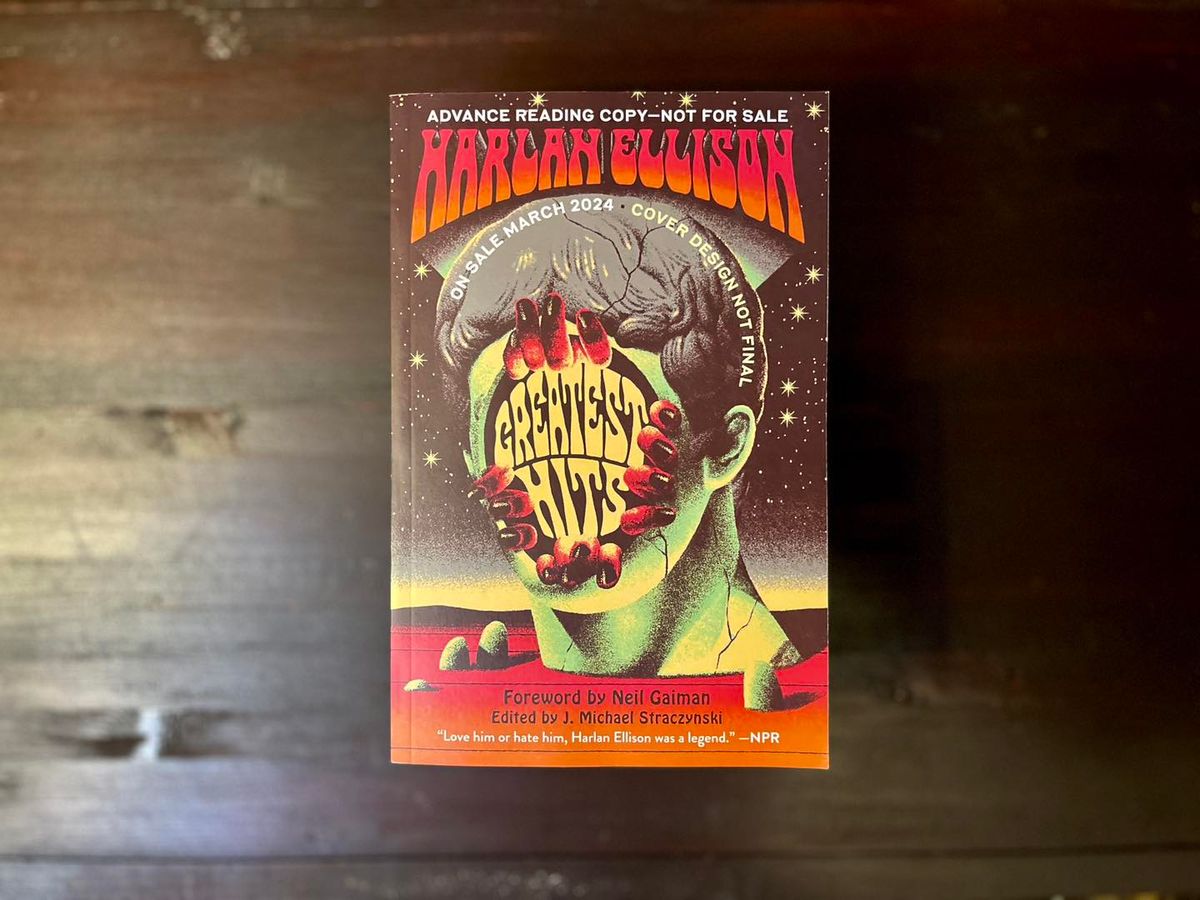
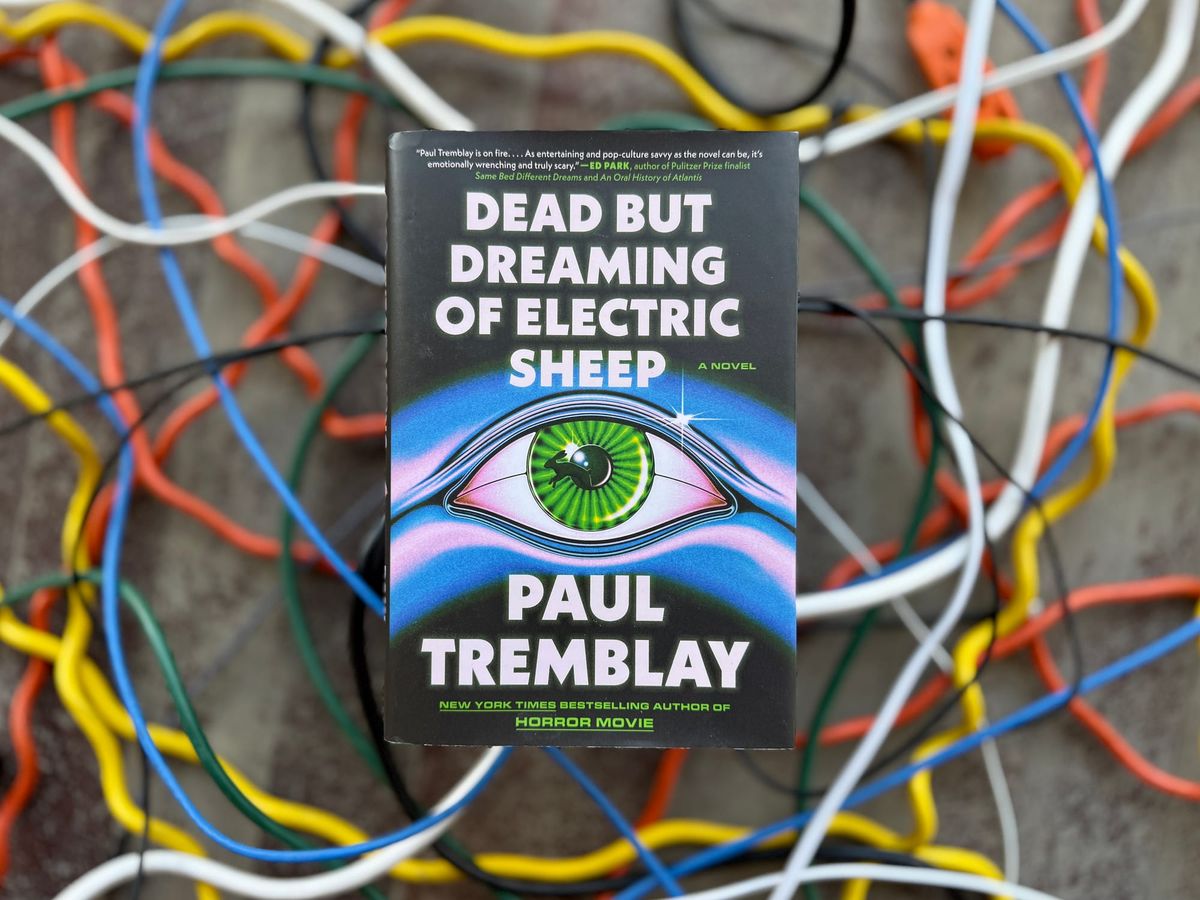
It's a horrifying story, and one that I kept thinking about as I read Paul Tremblay's latest novel, Dead But Dreaming of Electric Sheep, itself a horrifying parable about the toxic nature of Silicon Valley's "move fast and break things" ethos and the era of artificial intelligence that it's ushering us into.
Spoilers for the novel ahead.
Tremblay opens the book on a surreal note: "Your fluttering eyelids are mouths, mouths that talk too fast because they are lying. You press your palms into your eyes to slow the lids down, to shut them the hell up." You – in these second-person chapters – find yourself in a strange environment, questioned by mysterious people, and unable to remember who you were and how you've gotten here.
It's soon clear what's happening when we flip over to the novel's other perspective, Julia Flang, a former competitive gamer who's now working in a menial assistant's role in the entertainment industry. She's endured a difficult adulthood: after her parents split, her father died, and she ended up living with her uncle Charles (Uncle Fun), a fellow pop-culture aficionado.
She's not particularly close with her mother, an ambitious woman who's now the CFO of a "bleeding-edge, monopolistic tech company" called Decillion. That not-quite estrangement makes Julia somewhat reluctant to pick up the phone when her mother calls and texts. But when she eventually does, she finds that she's being offered a life-transforming opportunity: for an enormous sum of money, they want her to help them transport someone across the country.
That someone is – was? – a former Decillion employee who she's been told had debilitating stroke and who's now in a vegetative state that doctors say he won't ever wake up from. He'd indicated that in the event of a medical incident like this, he wanted to be brought home, where his family could end his life in a humane way. But he also donated his body to science, which the company is taking full advantage of: they've pioneered some cutting-edge nano and artificial intelligence technologies that would allow them to stimulate what remains of his neurons and control his movements.
When Julia arrives, she's given an orientation, brief training, and a specialized smartphone that allows her to "pilot" this man, who she begins calling Bernie. All she has to do is get him on two flights across the country from San Francisco to Rhode Island, before his body runs out of steam, and all will be well.
You can see where this is going: "Bernie" might be brain dead, but there's still something of his consciousness locked away in there, trapped and tormented by all of these outside forces and memories that he doesn't have any context for or control over. We follow him through this nightmarish scenario as he's brought from stop to stop as he works to figure out what's happening to him, and eventually how to try and escape.
Tremblay's known for more straight-up horror novels like A Head Full of Ghosts, Disappearance at Devil's Rock, The Cabin at the End of the World, Survivor's Song, and others, but this is horror in the vein of the Channel 4 / Netflix series Black Mirror: a story that showcases the pitfalls and drawbacks of the technologies that feel like they'll be commonplace in just a couple of years. The story here is firmly in that wheelhouse, where the horror comes not from the body horror or surrealism, but at how stripping away one's agency is one of the most frightening and devastating things, as Ellison's own story centered.
Julia's story is just as nightmarish and Black Mirror-esque, and she knows it. "This is yet another moment where Julia should say no and walk away. She should make a high-minded, ethical objection to this whole thing. It's beyond fucked up." She – like everyone involved in this situation – is tipped over the edge by the insane payday that's been promised to her: it's a potentially life-changing amount of money and there's just enough wiggle-room in her mind to justify taking it on: after all, didn't he and his family consent to this sort of thing?
The Decillion employees who walk her through her tasks and the hardware note that they've been careful to not humanize their subject: he was a low-level employee, and they were keen to withhold his identity and any details about him. It's Julia who begins calling him "Bernie" (after Weekend at Bernie's), and who begins to wonder who he might have been before his stroke. Those qualms are the leaks in the dam for her, and it isn't long before Tremblay shows off the differences between her corporate companions and Julia: the former are more than willing to treat "Bernie" as a piece of tech, whereas the latter recognizes his humanity, even if it's locked away behind layers of decaying flesh. The longer their journey goes on, the more pronounced those differences in attitude become.
There's a little bit of useful context here: in 2023, Tremblay was one of a pair of authors that embarked on a lawsuit against OpenAI, claiming that it had improperly used their works to train its systems in ways that violated their copyrights. That lawsuit – and others – have been working their way thought various courts, with some successes and some setbacks. This is very much a book that wraps up his attitudes toward the larger tech industry and its excesses, and it neatly showcases a world that's been made stranger and more frightening by the technologies that are supposed to make our lives better.
I don't think it's stretch to say that broad swaths of the genre are responding to the profound changes that the industrial revolution brought with it; changes that upended how we live and organize our lives, bringing not only new opportunities and lots of genuine improvements, but also uncertainty and upheaval at the same time. Mary Shelley captured that vibe perfectly when she published Frankenstein in 1818, showing an understanding of the role that humanity plays in the natural world and how our hubris can be our undoing.
Tremblay embedded more than a little Frankenstein embedded in this novel as he brings his not-quite-living-but-not-quite-dead character across the country, the product of some new technological advances. Those technologies, Julia is told, hold a lot of promise for the future of humanity. They probably do! But she also points out that what Decillion is working on probably has a ton of applications for the military and other not-so-world-improving applications.
We've had a lot of those advances in the last couple of decades. Social media heralded an age where we can connect with people all over the world, only to bring about a society and culture that can at times be incredibly divided. Smartphones are a window to limitless knowledge – while also unlocking all sorts of peer pressures, harassment, fixations, tics, and whatnot. And the new wave of Generative large language models came with a promise of efficiency and creative boosts for users, only to be used in any number of unethical, illegal, and downright terrible ways.
 Andrew Liptak
It's how they're used that defines a technology's usefulness, and in this modern technological revolution we're living through, it feels as though we're often leaping before we're putting any sort of thought into whether or not it was actually a good idea. Recall the line from Jurassic Park: "Your scientists were so preoccupied with whether or not they could, they didn't stop to think if they should." Silicon Valley technologies do have the potential to bring some incredible changes, and I'll admit that disruption is probably useful in the longer term.
But we humans are really bad at gaming out the longer-term consequences of our actions in favor of the immediate rewards that are sitting right in front of us. Silicon Valley's "burn it all down and rebuild" ethos wraps us up in a future that we didn't necessarily ask for or need. New technologies are deployed that have far-reaching consequences that sometimes take years to fully understand, but not before they can enact devastating consequences. Who could have imagined that a social platform that rated college girls hotness could domino into a tool that helped bring about a genocide?
In many ways, this is the real horror story that Tremblay's book digs into: a world where we're subjected to the whims of the products that tech companies unleash upon the world with little regard for how they'll actually be used, where a minor change or new feature or can spiral into enormous, real-world upheaval. Even more horrifying, there's an element of complicity here. We know that piling onto someone online is bad, but sometimes, we can't help but weigh in on the latest controversy. We know that tech companies (take your pick for which one) have their share of unethical practices, but we still buy their gadgets and use their services. Julia has her qualms about what she's going to do, but she goes through with it because she's being paid gobs of money. We make excuses for why we do these things, but in the end, we still have to acknowledge that we have some agency in our decisions.
Ellison's yarn about an insane and malevolent machine intelligence hit the nail on the head when it came to the horror that striping away one's agency brings. With Dead But Dreaming of Electric Sheep, Tremblay shows that's still horrifying, but that it's even scarier when it's an unintended consequence of human greed and indifference.