Amazon is taking another swing at Stargate
Jac Schaeffer will lead development on another attempt for the science fiction franchise
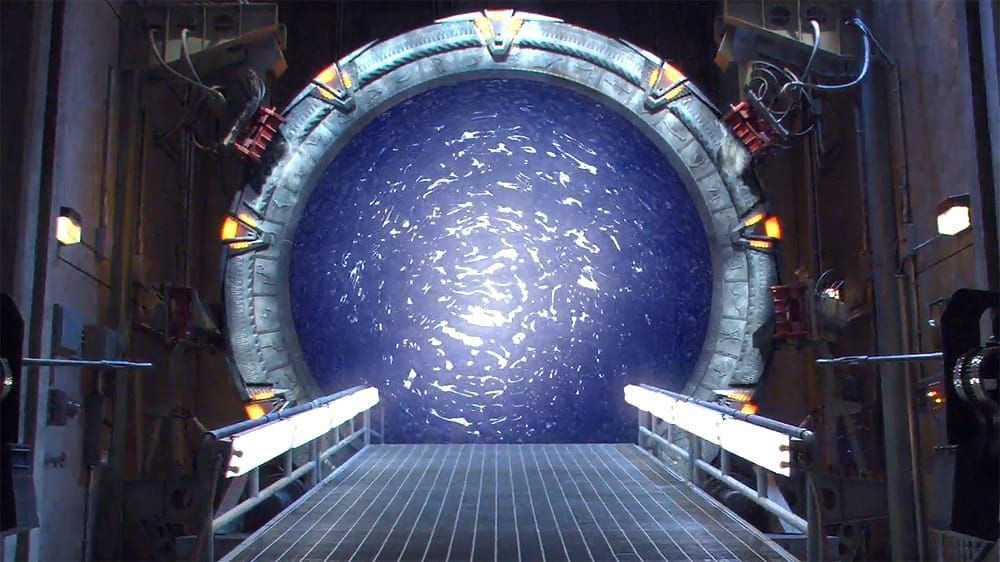
Way back in 2021, Amazon acquired entertainment studio MGM for its vast catalog of films and television shows. Back when it happened, I mused that one opportunity before the company was revitalizing the Stargate franchise, which had been largely dormant after Stargate Universe went off the air in 2011.
There had been some chatter over the years about efforts to revive the long-running franchise, which included Stargate SG-1, Stargate: Atlantis, and Stargate Universe, but nothing had really panned out until last November, when MGM announced that it had ordered a new series from creator Martin Gero, which would be set in the same continuity as its predecessors. It was an exciting development, because it reportedly wouldn't jettison the entire past canon of stories that a core group of fans were still devoted to, and because it retained a number of the same creatives who had brought it about.
It wasn't to be: in June, word came down that Amazon had canceled the project and closed down the writer's room over concerns that the series "would not have broad appeal beyond the franchise’s already dedicated fanbase." (SG-1/Atlantis/Universe showrunner Joseph Mallozzi pushed back on this). There's been a lot of outcry ever since, with a fan petition racking up nearly 125,000 signatures appealing for the show to be reinstated.
At the time, Variety reported that despite that cancellation, "Amazon is still exploring new ways to further the franchise." It seems that they have been actively looking: in September, Gateworld noted that Amazon was looking for a writer on the project, and this week, word broke that the studio had tapped WandaVision and Agatha All Along creator Jac Schaeffer to develop a new series.
Schaeffer will be setting up a writer's room for the series, which will have Safehouse Pictures's Joby Harold and Tory Tunnell attached as executive producers, who've written on projects like King Arthur: Legend of the Sword, Army of the Dead, Obi-Wan Kenobi (Harold) and produced things like Atlas and Monarch: Legacy of Monsters (Tunnell). Safehouse was also attached to Gero's attempt. On Twitter, Mallozzi noted that he had no involvement in this iteration of the project and that he was "moving on."
Schaeffer's bio on Wikipedia has an interesting factoid: her senior thesis from Princeton was titled "Splinter in the Mind: The Dilemma of the Political Dystopian Protagonist and the Cyberpunk Hero" which sounds all sorts of fascinating, and she's also worked on various projects like Captain Marvel and Black Widow and directed an indie science fiction film called Timer in 2009.
I point that out because there's already been something of a backlash brewing over the news. That's to be expected: Stargate ran for hundreds of episodes over a span of more than a decade, and while it's been off for years, it's still a franchise that's retained its fans and attracted new ones. But as of yet, there's no indication of what Schaeffer's series will be about, how it would hypothetically compare to Gero's work, and how it will relate to the existing shows. She strikes me as someone who's pretty familiar with science fiction media, and while I'm not thrilled at seeing the first attempt go nowhere, I'll be interested in seeing what this attempt will look like – if it gets to that point.
We've had some details leak out about the revival that Gero had been working on: it would have seen Michael Shanks reprising his role as Dr. Daniel Jackson jumping to a parallel Earth, were he'd continue his adventures in a timeline that had some familiar trappings.
That continuity is no small issue to overcome, and it's something that all long-running franchises have to contend with one way or another. Continuity and canon are inherently restrictive constructs for stories: if you want to maintain a coherent world, you try and ensure that you don't have too many things that contradict one another. There are a bunch of ways to address it: Star Trek has opted to set its various shows all out of the way of one another in different eras, with some notable crossovers and nods to one another. Star Wars maintained a strict continuity with its Expanded Universe, only to render all of the non-film entries non-canon to make way for the sequel trilogy. Gero's approach seems like it would take that into account: you wouldn't wipe away that continuity, but you also wouldn't need to strictly adhere to the established continuity of those hundreds of episodes.
There's no indication what Schaeffer will put together with her writer's room, although presumably, Amazon's concerns about appealing beyond the established franchise will loom over their work, and from an occasional scan through social media and Reddit makes me think that folks are feeling burned after this first attempt and are pretty much assuming that this round will be something along the lines of a complete reboot.
I'm of two minds here. Amazon would do well by somehow acknowledging the existing continuity and franchise that's already amassed a fanbase that's willing to put down 125k signatures on a petition. Established IP is a hot property because... people already like it. When it comes to Stargate, they have a ready-built mechanism for doing that: just set the thing in a parallel universe and go from there.
I don't have a sense of what Gero's series might have looked like, but it's entirely possible that Amazon's executives felt that the series leaned too far into the older shows, and while Mallozzi noted that they'd accounted for it, it just might have been too far outside of what Amazon's current priorities are for their streaming projects, especially given that the company's streaming executives have shifted around quite a bit.
But at the same time, while I'm sure that I'd enjoy Stargate SG-1 2.0, with a core group of characters going out to explore new worlds, I appreciate when a franchise tries something new and different. Where Atlantis largely followed SG-1's model in a new galaxy, Universe was something pretty different from those two. It was a bit darker and a bit more serious, following a group of Stargate Command personnel who found themselves stranded on an alien ship across the universe, and with no way back. It felt like an attempt to capture some of the feeling and of Syfy's critically-acclaimed series, Battlestar Galactica and adjust somewhat to the new model of serialized television that was becoming the norm on broadcast and cable networks. I thought it worked really well, even if it didn't catch on or have the same longevity as its predecessors.
The model that the original SG-1 came up under really doesn't exist these days: I think outside of procedurals like The Rookie or Law & Order SVU, it's rare to see those 22 adventure-of-the-week shows. Even long-standing franchises like Star Trek are more focused on the season-long storylines, and then, they're only running for around 10 episodes per season.
If I were asked to pitch a Stargate in this environment, I'd point back to what I suggested in 2021. In SG-1, you'd see the team visiting a planet and within 40 minutes, figure out their language, the big issue confronting that civilization, jerry-rigging a solution, and coming home safely. Take ten episodes and spend that time on a single planet, where you can really dig into the challenges that they'd face: have those characters really struggle with the complications of language, culture, weird alien technologies, colonization. Told in the right way, you can have a fascinating story that touches on these issues that aren't boring and academic or patronizing, and you wouldn't have to jettison the established continuity. The established franchise left behind a lot to play with. Amazon, MGM, or whoever, give me a call.
Like any project that's just been announced – or even greenlit, it's worth pointing out that it's futile to really get worked up over the possibilities, good or bad. A show in development is a long way from going into production, and at this stage, it doesn't really exist beyond a concept and pitch deck. I'll get more interested in the question of whether it's good or not when we have more concrete details, images, trailers – or better yet, the finished product – to go on. Hopefully, it'll be good and worth watching – if it's made.